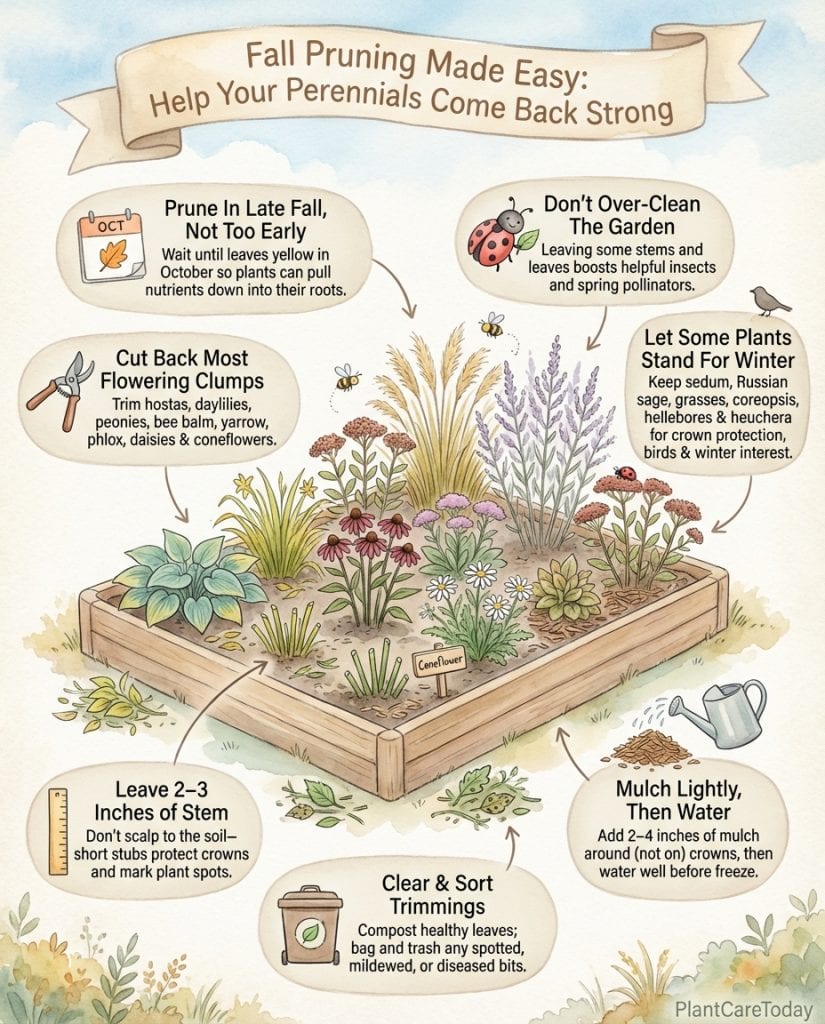
That crisp October air isn’t just signaling pumpkin spice season. It’s your perennials’ way of whispering, “Hey, we need to talk about my haircut.”
But before you grab those pruners and go all Edward Scissorhands on your garden, there’s something shocking you should know: up to 80% of perennial problems in spring can be traced back to improper fall pruning.
Ready to transform your garden’s future in the next 10 minutes?
Why Your October Pruning Session Could Make or Break Your Garden
Forget what you’ve heard about fall cleanup being just for aesthetics. October pruning is like setting the chess pieces for next year’s garden game.
Your perennials are quietly pulling nutrients from their leaves down into their roots like squirrels stashing acorns for winter.
The difference between amateur and pro plant parents is simply understanding this invisible process .
Cut too early, and you’re essentially stealing food from your plants’ winter pantry. Cut incorrectly, and you might as well be hanging a “Pest Party Here!” sign over your garden beds.

Here’s why proper October cutting matters:
- Disease Prevention: Dead foliage is basically a luxury resort for fungal spores and bacteria
- Energy Redirection: Pruning helps plants focus on root development instead of maintaining dying leaves
- Winter Protection: Prevents snow and ice from turning tall stems into broken plant disasters
- Air Circulation: Reduces humidity that leads to plant-killing fungal infections
- Garden Appearance: Transforms your yard from “abandoned property” to “intentional winter landscape.
The “Cut or Keep” Decision That Stumps Even Experienced Gardeners
I was shocked to discover that blindly cutting back every perennial is like using the same password for all your accounts, convenient but potentially catastrophic .
Some plants actually benefit from keeping their “winter coats” until spring!
Your plant is trying to tell you something important with its structure and growth habit. Are you listening?
Perennials Begging for an October Haircut:
- Hostas: Once frost turns those leaves to mush, chop them to prevent a slimy disease festival
- Daylilies: Cut back to reduce pest hotels
- Peonies: Essential pruning! Unless you want a fungal disease playground next spring
- Bee Balm: Prune to prevent powdery mildew’s return
- Yarrow: Trim for that “I actually take care of my garden” look
- Phlox: Cutting reduces mildew risk dramatically
- Shasta Daisies: Leave a few inches above ground
- Coneflowers & Black-eyed Susans: The gardener’s dilemma: cut for tidiness or leave for bird snacks

Perennials That Prefer Their October Dignity Intact:
- Sedum: Those sculptural seedheads aren’t just for show. They’re protecting vital crowns
- Russian Sage: Cut in fall, and you might as well write its obituary due to winter crown rot
- Ornamental Grasses: Leave standing as nature’s winter artwork (and pollinator condos)
- Coreopsis: Birds will thank you for the all-you-can-eat seedhead buffet
- Hellebore: Their evergreen foliage is literally a self-protecting winter coat
- Heuchera: Cutting back exposes crowns to freeze damage, like leaving home without a jacket in January
The 5-Step Pruning Protocol That Guarantees Success
Most people make this mistake with their perennials: they grab whatever cutting tool is handy and start hacking away like they’re in a horror movie. Your plants deserve better! Follow this proven system instead:
Step 1: Gear Up Like You Mean It
The game-changer for your perennial pruning isn’t what you think. It’s having the right tools:
- Bypass pruners: For stems under ¾ inch (your go-to for most plants)
- Loppers: For the thick, stubborn stems that laugh at your pruners
- Hedge shears: The efficiency expert for large clumps
- Garden scissors: For delicate precision work
- Gloves + Disinfectant: Because plant diseases spread faster than gossip

Step 2: Master the 2-3 Inch Rule
Here’s the secret most plant experts won’t tell you: the perfect cutting height isn’t about aesthetics. It’s about survival.
Cut most perennials to 2-3 inches above soil level. This magic zone protects the crown from frost damage while preventing moisture-trapping that leads to rot.
(Quick tip: For hollow-stemmed plants like hollyhocks, go higher, about 4-5 inches, unless you want plant stems filled with frozen water come winter. That’s a death sentence!)
Step 3: Clean Up Like Your Garden’s Life Depends On It (It Does)
Leaving pruned material scattered around your garden is like not brushing your teeth for months; decay and problems are inevitable. Rake thoroughly and follow this simple rule:
- Healthy trimmings: Compost pile
- Diseased material: Trash bin (NOT compost, unless you enjoy spreading disease)
Step 4: Mulch Like You’re Tucking Your Plants In For Winter
After pruning, your perennials are essentially standing there in their underwear facing winter’s wrath. Be a good plant parent and cover them up!
Apply a 2-4 inch layer of mulch (leaves, straw, or compost) around, but not directly on top of, the crowns.
Think of mulch as a winter blanket that insulates roots from the freeze-thaw cycle that can literally push plants out of the ground. That’s right. Plants can get “frost heaved” right out of their beds!

Step 5: Label Now or Regret Later
A properly pruned October garden can look like a crime scene by February. Unless you have photographic memory, use weather-resistant labels to mark plant locations now. Your spring self will thank you when you’re not digging up precious perennials thinking they’re weeds.
Deadly Pruning Mistakes That Are Killing Your Garden
Are you accidentally committing botanical homicide? Avoid these perennial-killing errors:
- Premature Cutting: Pruning before frost forces plants to abandon their nutrient withdrawal process, like interrupting a download at 90%
- Scalping Too Low: Cutting flush with the ground exposes crowns to freezing temperatures, a death sentence for many perennials
- Spreading Disease: Using dirty tools between plants is like using the same unwashed fork at a buffet during flu season
- Composting Infected Material: Those disease spores don’t die in most home compost piles. They multiply!
- Neglecting Watering: Plants need a good drink before winter dormancy, especially after the stress of pruning
The Wildlife Dilemma: To Cut or Not to Cut?
Here’s the brutal reality many gardening articles won’t mention: our obsession with tidy gardens has contributed to the decline in insect populations.
Many beneficial bugs, including native bees and butterflies, actually overwinter in hollow stems and leaf litter.
Consider a compromise approach: cut back disease-prone plants like peonies and hostas, but leave seedheads of coneflowers, black-eyed Susans, and ornamental grasses standing. You’ll create winter interest while providing crucial wildlife habitat.
Your garden isn’t just about plants. It’s an ecosystem. One study found that gardens with some standing perennial material through winter supported up to 65% more beneficial insect species than completely cleared gardens. Now that’s food for thought!

Your October Perennial Action Plan
Don’t let this information overwhelm you. Start with these simple steps:
- Identify your perennials (use an app if needed)
- Categorize each as “cut now” or “leave till spring.”
- Clean and disinfect your tools
- Prune on a dry, sunny day when plants aren’t wet
- Cut at the right height (2-3 inches for most)
- Clean up thoroughly
- Apply protective mulch
- Celebrate knowing your spring garden will be stunning!
Remember, October pruning isn’t just garden maintenance. It’s an investment in next year’s spectacular display. Your future self will be amazed at how this one afternoon of work transformed your garden into the flourishing showcase you’ve always wanted.