Forget everything you thought you knew about gardening “hacks.” These 14 gardening tricks use items you already have around the house to improve your garden without spending money.
The best part is that your kitchen scraps might work just as well as store-bought products.
Kitchen Scraps That Help Your Garden
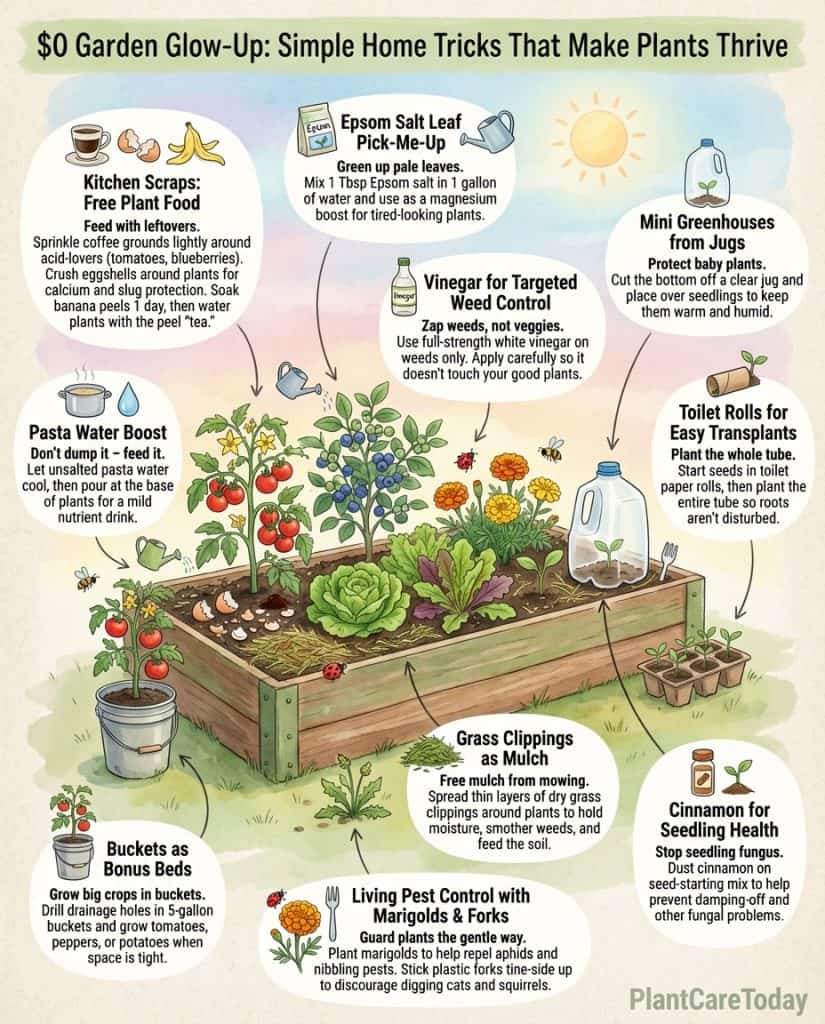
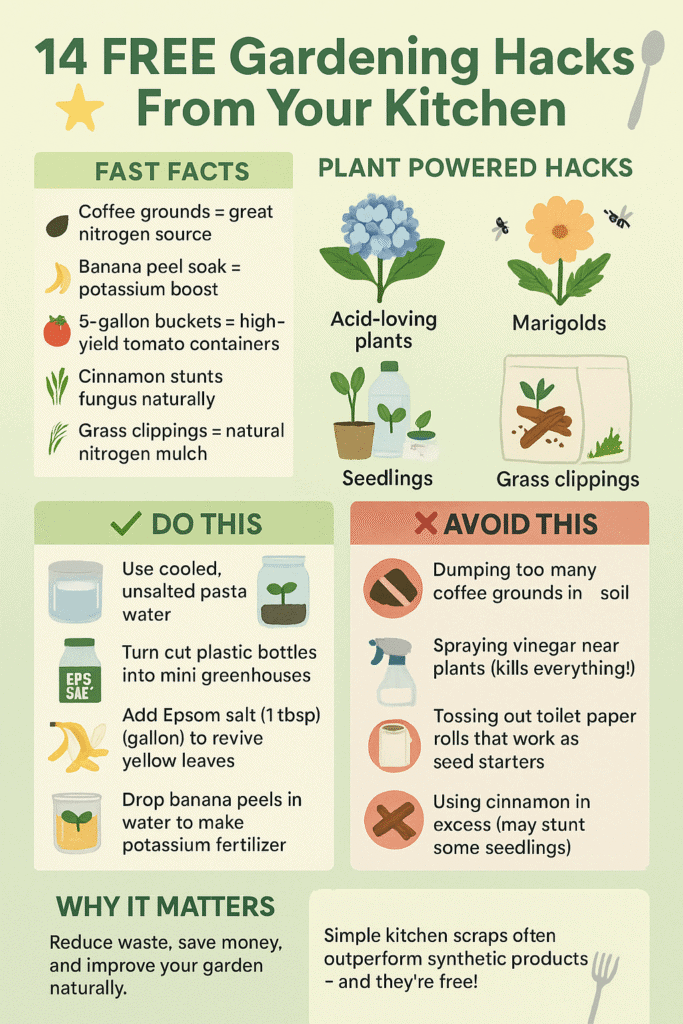
Your trash bin contains some useful plant food. According to research from the University of California, coffee grounds contain approximately 2% nitrogen, making them as effective as many commercial fertilizers for acid-loving plants.
• Coffee Grounds: That morning brew can help hydrangeas, blueberries, and tomatoes with a nitrogen boost. Just don’t use too much, or you’ll make your soil too acidic.
• Eggshells: Crushed eggshells add calcium to your soil and create a barrier that slugs and snails don’t like to cross. The sharp edges deter them from reaching your plants.
• Banana Peel Tea: Soaking banana peels in water for 24 hours creates a potassium-rich liquid that plants really respond to. One peel contains up to 42% of the potassium plants need.
Here’s something most people don’t think about: pasta water. That starchy cooking water (unsalted, of course) has nutrients that plants can use. Let it cool and pour it on your garden instead of down the drain.

DIY Solutions That Save Time & Money
You don’t need expensive equipment when simple solutions work just as well.
• 5-Gallon Buckets: Tomatoes, peppers, and potatoes grow well in 5-gallon buckets with proper drainage. A study from the National Gardening Association found that one 5-gallon container can produce up to 25 pounds of tomatoes in a single season.
• Self-Watering System: Create a simple watering system with a plastic bottle and a piece of rope. The rope acts as a wick, slowly releasing water to the roots. Your plants stay hydrated even when you’re not around.
• Toilet Paper Roll Starters: These cardboard tubes work as biodegradable seed starters . Plant them directly in the ground without disturbing delicate roots. The cardboard breaks down naturally.
• Mini Greenhouse: Cut the bottom off a milk jug or plastic bottle to protect seedlings. It creates a warm, humid environment that helps young plants establish.
Natural Solutions to Common Garden Problems
You can handle most garden problems without chemicals. Nature provides what struggling plants need.
• Cinnamon for Fungus: Sprinkle cinnamon on seed starting mix to prevent fungal diseases. It’s a natural antifungal that protects seedlings.
• Epsom Salt: Are your plants looking pale? Mix 1 tablespoon of Epsom salt into 1 gallon of water, then water as usual. The magnesium helps leaves turn green.
• Vinegar for Weeds: Full-strength white vinegar kills weeds without harsh chemicals. Just be careful because it will damage any plant it touches, so apply with precision.
• Grass Clippings as Mulch: Grass clippings retain moisture, suppress weeds, and break down to feed your soil. One summer’s worth of clippings can add nearly 4 pounds of nitrogen per 1,000 square feet of garden.
Pest Control That Actually Works
When pests show up, it usually means your garden is out of balance. Here’s how to manage them without toxic chemicals.

• Plastic Forks: Place plastic forks tine-side up around plants to keep digging squirrels and cats away. It looks a bit odd, but it works.
• Marigolds: These bright flowers repel aphids, nematodes, and rabbits with their natural compounds. Experienced gardeners know that certain plants do double duty as pest control.
The real trick to a good garden isn’t expensive tools. It’s about working smarter with what you already have. These methods turn everyday items into useful gardening supplies that get results.
Before you toss another banana peel or an empty coffee filter, consider whether your plants could use it. Your garden will show the difference.