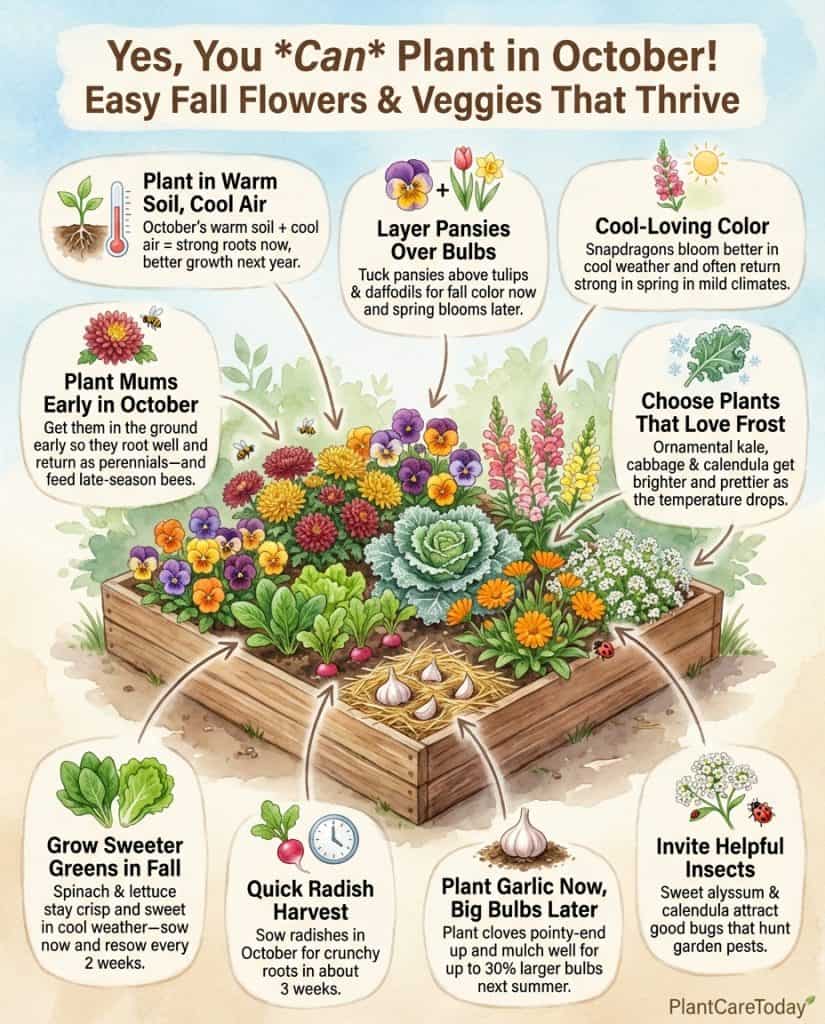
Think gardening season is winding down? October is actually a great time to plant. The soil still holds summer’s warmth, while the cooler air signals plants to focus on root development rather than fighting heat stress.
I was surprised to learn that plants established in the fall often outperform spring-planted ones by up to 30% the following year.
Here are the plants that do really well when planted in October.
Flowers That Transform Fall From Drab to Pretty
Fall doesn’t have to be flower-free. These cold-loving bloomers can keep your garden colorful through autumn.
1. Pansies: The Cold-Weather Warriors
Those cheerful “faces” aren’t just cute. They’re tough. Pansies actually get brighter colors when temperatures drop. Plant them now, and they’ll likely survive winter to come back in spring.
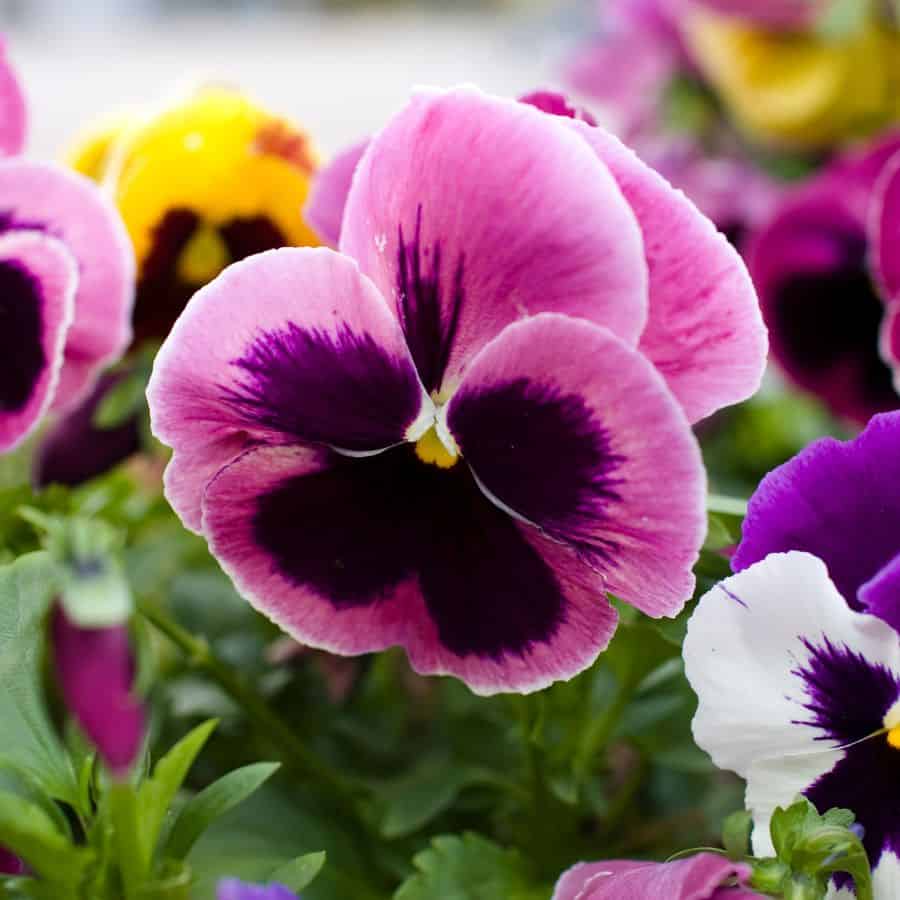
Helpful tip: Plant pansies above spring bulbs for layered color when daffodils and tulips emerge.
2. Mums: Fall’s Color Explosion
Chrysanthemums are autumn essentials. The real trick with those pot mums is that they can become perennials if you plant them early in October. This gives their roots time to establish before the ground freezes.
Your local bees will appreciate them, too. Mums provide important late-season nectar when most other flowers are done.
3. Ornamental Kale & Cabbage: Frost’s Canvas
Unlike summer flowers that die at the first frost, these plants actually look better in cold weather. Their ruffled leaves turn deeper shades of purple, pink, and cream with each temperature drop.
Group them in threes for visual impact that lasts until deep winter.
4. Calendula: Liquid Sunshine
These golden-orange blossoms brighten up gray fall days. Calendula (pot marigold) tolerates light frost and keeps blooming when everything else has stopped. It also works as a natural pest repellent for your vegetable garden.
The best part is that regular deadheading will keep new flowers coming until hard frost hits.
5. Sweet Alyssum: The Fragrant Carpet
Imagine walking through your garden in late fall and catching a honey-sweet smell. That’s sweet alyssum working its magic. These tiny white, pink, or purple blooms form low carpets that do well in October’s cooler temperatures.
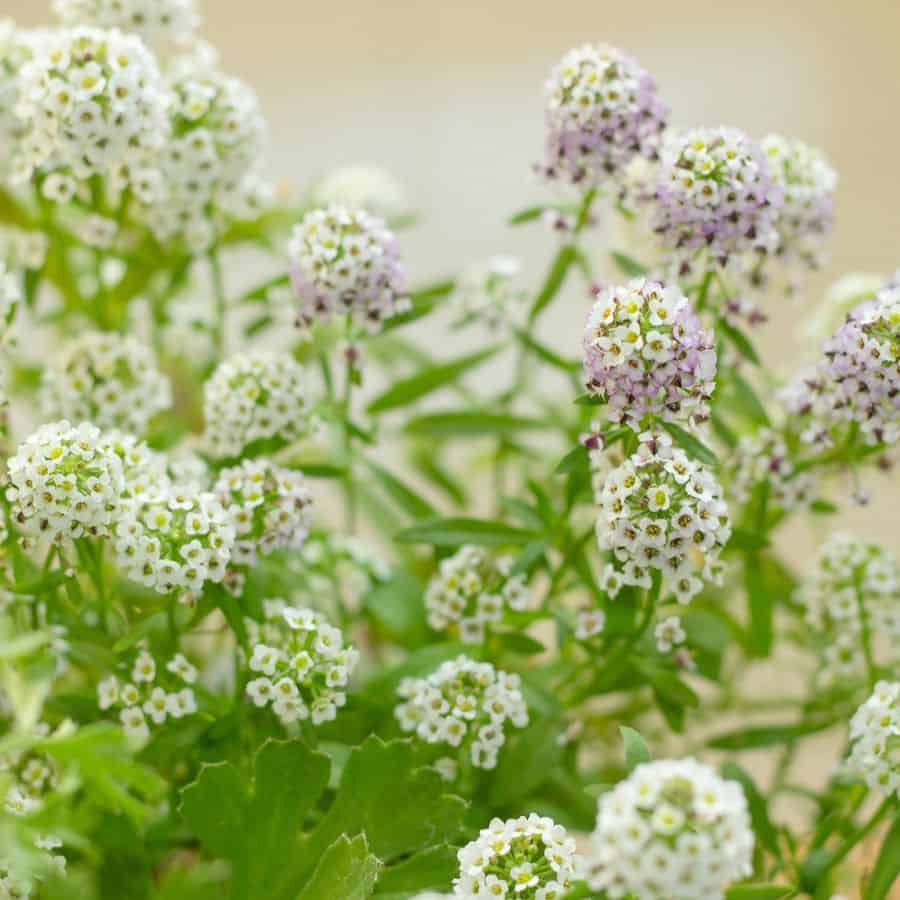
They also attract beneficial insects that hunt garden pests. Pretty and useful.
6. Snapdragons: Vertical Drama
When most gardens are flattening out for winter, snapdragons bring height with spikes of bright color. These tall beauties do better in fall’s cooler temperatures, often producing more blooms than spring-planted ones.
In milder climates, October-planted snapdragons often pause during the coldest days, then come back strong at spring’s first hint.
October Vegetables: Better Flavor
Summer vegetables are fine, but fall veggies taste better. The cooler temperatures actually trigger these plants to concentrate sugars as a natural antifreeze—turning good vegetables into great ones.
7. Garlic: Plant Now, Feast Later
Most people plant garlic in spring, but that’s a mistake. October planting allows cloves to establish strong roots before going dormant, resulting in bulbs up to 30% larger by summer harvest.
A little effort now pays off next summer. Just separate cloves, plant pointy-end up, and mulch heavily.
8. Spinach: The Comeback King
Spinach hates summer heat but does really well in October’s coolness. Plant now for baby greens in just 30 days. It can survive winter under mulch or row cover, then take off with growth in early spring.
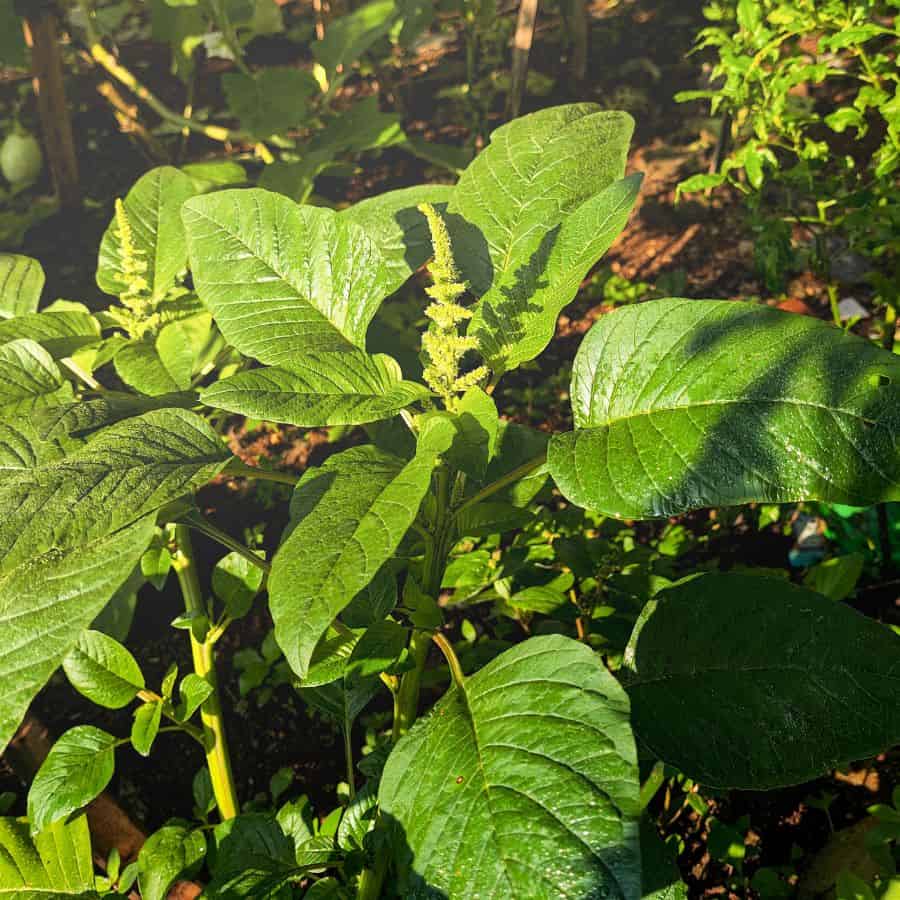
Your spring spinach will be weeks ahead of anything you could plant in March.
9. Lettuce: Crisp Perfection
The difference between new and experienced gardeners is knowing that fall lettuce tastes much better than summer lettuce. October-planted lettuce grows slowly, developing crisp texture and sweet flavor without the bitterness heat causes.
Plant every two weeks for continuous harvests.
10. Radishes: The 3-Week Wonder
Need quick results? Radishes mature in as little as 21 days when planted in October. The cool soil produces crisp, mild roots without the sharp bite that summer radishes often develop.
They’re quick confirmation that yes, you can still grow food as winter approaches.
11. Carrots: Nature’s Candy Factory
Carrots planted in the fall taste better. They convert starches to sugars in response to cold. It’s their natural antifreeze system, and your taste buds benefit.
October-planted carrots develop a sweetness that makes grocery store carrots taste bland. Just make sure your soil is loose and stone-free for straight roots.
12. Broccoli: The Gift That Keeps Giving
Fall broccoli produces tighter heads, sweeter flavor, and fewer pests than spring-planted broccoli. After harvesting the main head, the plant will keep producing side shoots for weeks.
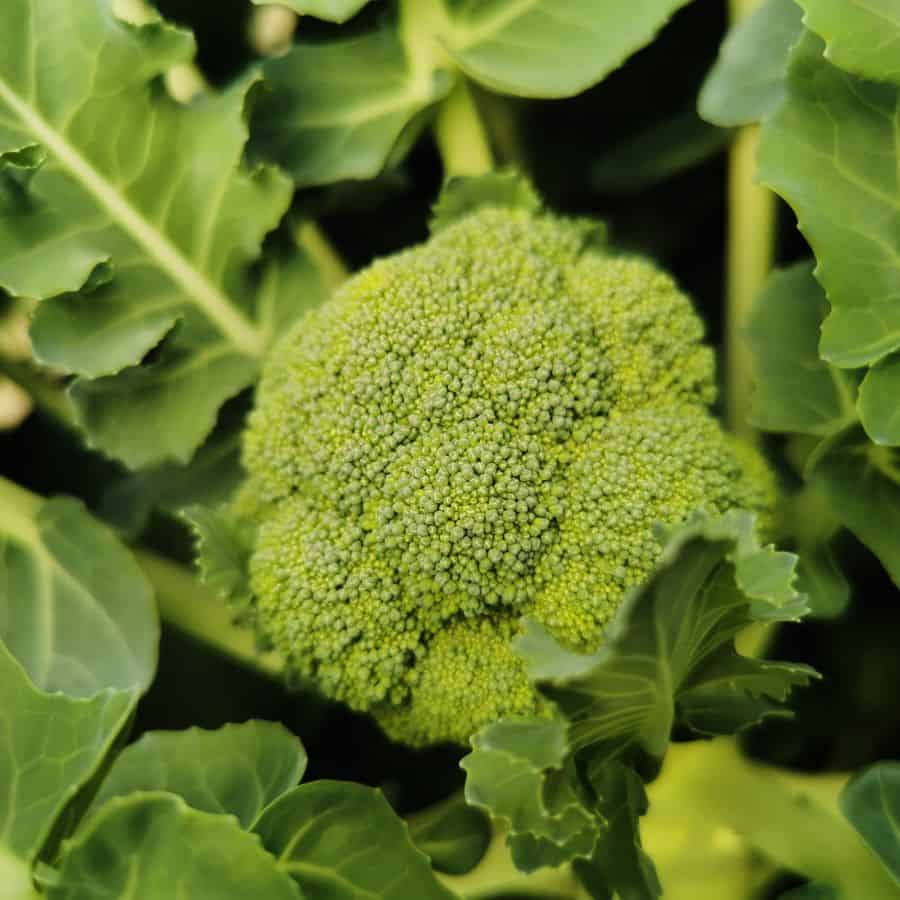
The trick is starting with transplants in October rather than seeds, giving them enough time to mature before serious cold arrives.
Why October Planting Works So Well
October hits a sweet spot: soil still warm from summer, plus air cool enough to reduce plant stress. This creates perfect conditions for plants to establish. Pests are also winding down their activity, and soil moisture tends to be more consistent than in spring.
By the time spring arrives, your plants already have established root systems ready to take off the moment temperatures warm.
So while your neighbors watch their gardens fade, yours can be just beginning. October is an often overlooked planting opportunity worth taking advantage of.