That adorable, fuzzy caterpillar you spotted might be nature’s most devious trap. The puss caterpillar looks cuddly but packs a venomous punch that can send you straight to the emergency room, or worse.
I was shocked to discover that many gardeners learn about these deceptive creatures only after a painful encounter. Let’s expose this backyard menace and arm you with life-saving protection strategies.

Nature’s Most Dangerous Disguise: Meet the Puss Caterpillar
The puss caterpillar (Megalopyge opercularis), also known as the asp caterpillar, woolly slug, or tree asp, is the larva of the Southern Flannel Moth.
Despite its innocent teddy-bear appearance, this tiny terrorist is considered North America’s most venomous caterpillar.
These deceptive creatures are typically 1-1.5 inches long and covered in soft-looking fur that can be white, gray, brown, rust-colored, or even bright orange. (But don’t let that cute exterior fool you – they’re about as cuddly as a cactus dipped in hot sauce!)
The game-changer for your garden safety isn’t what you think. While most people worry about bees and wasps, these caterpillars don’t even need a stinger to inflict serious harm.
Their entire body is a weapon, covered with hollow venomous spines ready to break off and pierce your skin.

The Terrifying Truth: Why This Sting Is No Joke
Forget what you’ve heard about typical insect stings. A puss caterpillar encounter delivers immediate, excruciating pain that many victims describe as worse than scorpion stings or jellyfish tentacles.
The venom can trigger:
- Intense, radiating pain that can last for hours
- Sudden drops in blood pressure
- Vomiting and nausea
- Seizures in severe cases
- Anaphylactic shock (potentially fatal for those with allergies)
The secret most plant experts won’t tell you is that these caterpillars are becoming more common across the Eastern and Southern United States, with climate change potentially expanding their range.
In recent years, schools in Florida and Texas have temporarily closed due to puss caterpillar infestations!

Where Are These Tiny Terrors Hiding?
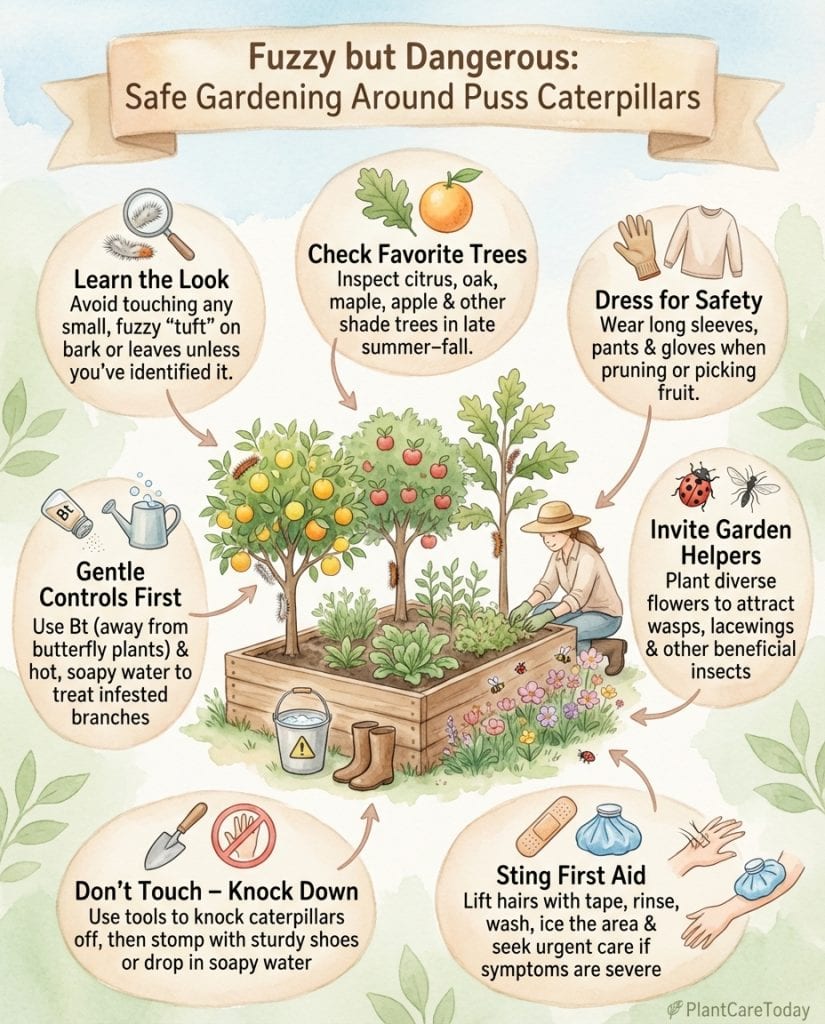
These venomous villains are masters of camouflage, preferring to blend into tree bark and foliage. They’re particularly fond of:
- Citrus trees
- Oak, maple, and elm trees
- Cherry, apple, and plum trees
- Basswood and hackberry
- Sycamore and dogwood
They’re seasonal challenges, typically peaking in late summer and early fall. Your garden’s most dangerous season might be right when you enjoy those final outdoor moments before winter!
7 Natural Ways to Banish Puss Caterpillars (Without the Chemicals!)
The difference between amateur and pro gardeners is knowing how to handle these pests safely.

Here are seven chemical-free strategies to transform your garden back into a safe zone:
- Remove Host Plants: Eliminate their favorite trees and shrubs early in the season before they can establish colonies.
- Apply Bacillus thuringiensis (Bt): This natural bacterium is caterpillar kryptonite! Dust plant leaves regularly throughout the growing season. (But avoid butterfly garden plants – Bt doesn’t discriminate between good and bad caterpillars.)
- Enlist Natural Predators: Welcome parasitic wasps, tachnid flies, stink bugs, and lacewings to your garden – they’ll feast on these fuzzy menaces.
- Knock Them Off (Carefully!): If you spot them, carefully knock them to the ground and stomp them with heavy shoes. Just don’t touch the soles afterward!
- Soapy Water Bucket: Keep a dedicated bucket with hot, soapy water nearby to drop them in. One teaspoon of dish soap in a gallon of water is sufficient. Mark this bucket clearly for hazardous use only!
- Essential Oil Attack: Carry a small squeeze bottle of concentrated orange, cedar, or rosemary oil to spray directly on caterpillars you spot.
- Shop Vac Strategy: Use a shop vac with a disposable bag to suck them up, then seal the bag in black plastic and leave it in the sun for several days before disposing.
Your puss caterpillar battle plan should focus on vigilance and prevention. These creatures don’t seek out humans.
They just want to be left alone. Most encounters happen when we accidentally brush against them.

Emergency Protocol: If You Get Stung
If disaster strikes and you feel that distinctive, intense pain, act quickly:
- Gently press adhesive tape over the area and lift to remove embedded hairs
- Apply ammonia to neutralize the venom
- Flush with cold water, then wash with lukewarm water and soap
- Apply ice to numb the pain
- Use over-the-counter sting remedies for lingering discomfort
If you experience severe pain, breathing problems, or unusual symptoms, head to the emergency room immediately! This is not the time to tough it out.
Chemical Warfare: The Last Resort
When natural methods fail, and you’re facing a full-blown infestation in high-traffic areas, you may need to bring in the big guns. These pesticides can be effective:
- Lambda-cyhalothrin
- Cypermethrin
- Permethrin
- Bifenthrin
- Insecticidal soaps or Neem oil (gentler options)
Remember, pesticides should be your final option. They’ll wipe out beneficial insects along with the troublemakers. Always follow package instructions meticulously and mark treated areas with caution tape to protect people and pets.
Your Three-Step Protection Plan
Your garden should be a sanctuary, not a danger zone. When dealing with these deceptive pests:

- Protect yourself: Wear long sleeves, pants, gloves, and eye protection when working in infested areas
- Stay vigilant: Check trees and plants regularly, especially bark crevices, where they hide
- Act quickly: Address small problems before they become full-blown infestations
The most spectacular gardens are safe ones. Don’t let these fuzzy impostors turn your outdoor paradise into a danger zone. With the right knowledge and a healthy dose of caution, you can ensure these venomous visitors aren’t uncomfortable in your yard.