That innocent-looking worm in your garden might actually be an ecological nightmare in disguise.
While ordinary earthworms benefit your soil, their evil twin, the jumping worm, is silently transforming America’s landscapes into barren wastelands, one garden at a time.
And the worst part? Most people have no idea they’re spreading them.

The Soil Terrorist You Never Knew Existed
Forget what you’ve heard about earthworms being garden heroes. Jumping worms (also called Asian jumping worms, crazy worms, or snake worms) are the villains of the soil world. These invaders don’t just live in your garden. They completely transform it.
When disturbed, these worms thrash violently like tiny garden snakes, a behavior that would make even the bravest gardener flinch.
Growing up to 8 inches long, these gray or brown invaders consume the rich topsoil faster than your teenager empties the refrigerator.
I was shocked to discover that a single jumping worm can produce offspring asexually, meaning just ONE worm can trigger a full-scale invasion. No wonder they’ve spread to over 37 states since they were first identified in Wisconsin in 2013!
How to Spot These Garden Destroyers (Before It’s Too Late)
The difference between amateur and pro plant parents is simply knowing what to look for. Here’s how to identify these destructive invaders:
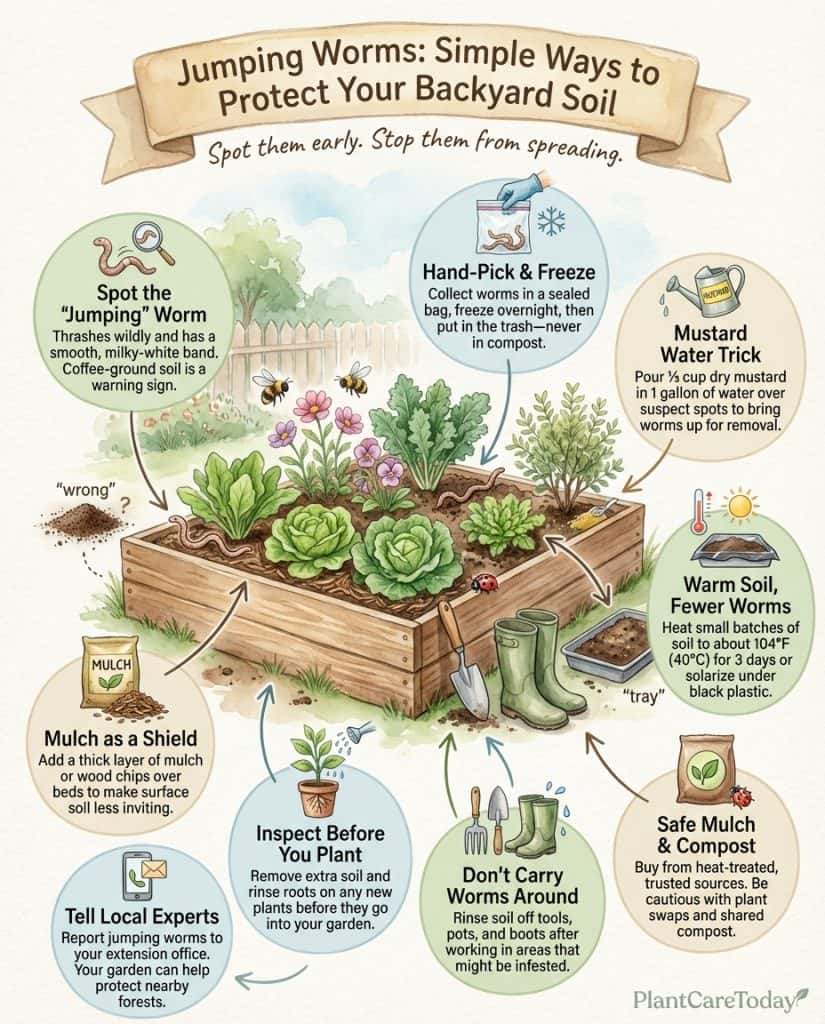
- The Snake-Like Dance: Unlike regular earthworms’ gentle wiggling, jumping worms thrash wildly when touched, sometimes even jumping an inch off the ground!
- The Revealing Collar: Look for a smooth, milky-white band (clitellum) that completely encircles their body near the head – regular earthworms have a raised, reddish band.
- The Coffee Ground Aftermath: Soil infested by jumping worms has a distinctive granular texture resembling coffee grounds – the most telltale sign your garden is under attack.
- Struggling Plants: Notice unexplained withering or yellowing of plants despite proper care? The worms might be stripping your soil of vital nutrients.

Why These Worms Are Garden Apocalypse Machines
Your garden soil is trying to tell you something important when jumping worms move in. It’s crying for help! These aren’t your ordinary, helpful earthworms that aerate soil and create nutrients.
Jumping worms are essentially soil piranhas. They devour the rich organic matter from the top 1-3 inches of soil at astonishing speeds, transforming lush, nutrient-dense earth into depleted granular waste that can’t hold water or support healthy root systems.
The game-changer for your garden isn’t what you think. It’s what’s happening beneath the surface.
Research from the University of Wisconsin shows jumping worms can consume 95% of leaf litter in a single season, effectively stealing the forest floor’s entire nutrient bank in one go.
The Rescue Plan: 5 Steps to Fight Back Against Jumping Worms
Found these destructive invaders in your garden? Don’t panic! Here’s your battle plan to rescue your precious soil:
- Confirm and Capture: Verify it’s a jumping worm by touching it (look for that crazy thrashing). Then collect all visible worms in a sealed plastic bag, freeze overnight, and trash them. (Sorry, worm lovers – composting them is a big no-no!)
- Flush Them Out: Mix ⅓ cup dry mustard powder with 1 gallon of water and pour over suspected areas. This irritates the worms, forcing them to surface for easy collection. It’s like a fire drill for worms!
- Heat Treatment: For smaller amounts of soil or compost, heat to 104°F (40°C) for three days to kill cocoons. Solarizing works wonders – just cover the soil with black plastic in direct sunlight.
- Create Barriers: Apply a thick layer of mulch or wood chips to create conditions these surface-dwelling invaders hate. Think of it as building a fortress wall around your precious plants.
- Report the Invasion: Contact your local agricultural extension office or natural resources department. Your sighting helps track their spread and contributes to broader control efforts.

Stop the Spread: Don’t Be an Accidental Worm Trafficker
Most people make this mistake with their gardens: they unknowingly become jumping worm distributors. These sneaky invaders spread primarily through human activities!
The secret most plant experts won’t tell you is that those innocent plant swaps and shared compost piles could be ground zero for a jumping worm outbreak.
Their tiny cocoons are nearly invisible in soil and can survive harsh winters, waiting to hatch when temperatures rise above 50°F.
- ALWAYS inspect new plants before adding them to your garden (remove as much soil as possible and rinse roots)
- Clean tools, boots, and equipment after working in potentially infested areas
- Buy mulch and compost from trusted sources that heat-treat their products
- Never dump unwanted fishing bait into natural areas (some jumping worms are sold as bait)!

By becoming a vigilant guardian of your garden, you’re not just protecting your plants – you’re helping stop an ecological transformation that threatens forests, farms, and native plant communities across America.
The battle against jumping worms starts in your backyard. With these identification tips and action steps, you can help turn the tide against one of the most destructive invasive species threatening American soil today. Your garden – and future generations of plants – will thank you!