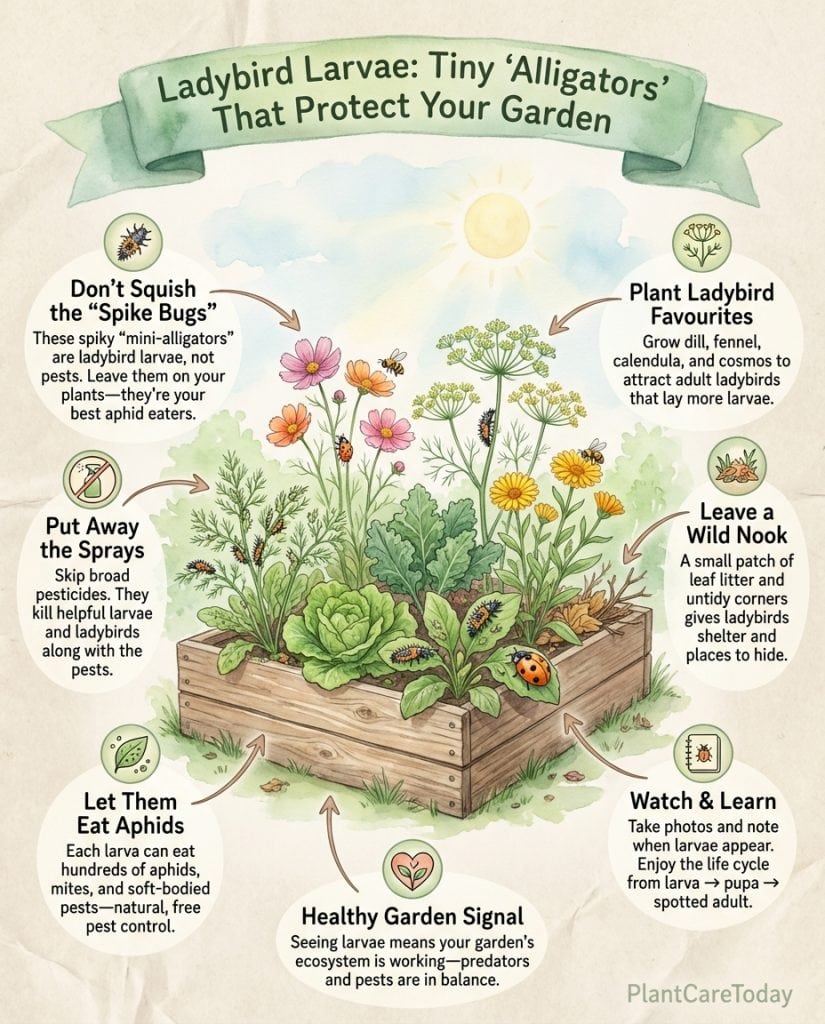
Spotted those strange, spiky little “alligators” crawling around your plants? Don’t panic! You’ve just discovered one of gardening’s best-kept secrets.
Those unusual creatures aren’t pests; they’re ladybird larvae, and they’re about to become your garden’s most valuable defenders.
I was shocked to discover that a single ladybird larva can devour up to 400 aphids during its short development period. That’s better pest control than anything you could spray!

Nature’s Tiny Predators: Identifying Your Garden’s Defenders
Forget what you’ve heard about “all bugs being bad.” These mini garden warriors might look intimidating with their spiky, elongated bodies, but they’re actually the juvenile stage of everyone’s favorite spotted garden helper, the ladybird (or ladybug).
These unusual-looking creatures typically have:
- Elongated bodies (nothing like their round adult form)
- Spiky or bumpy protrusions along their backs
- Dark coloring (usually black or gray) with vibrant orange or yellow markings
- A preference for hanging out on the undersides of leaves or wherever aphids gather
The difference between amateur and pro plant parents is simply knowing which creatures to welcome. While many gardeners mistakenly squish these “weird bugs,” seasoned gardeners celebrate their arrival like VIPs.
The Secret Pest-Fighting Superpower Most Gardeners Miss
Your garden is trying to tell you something important when ladybird larvae appear: your ecosystem is healthy and working!
These voracious predators are nature’s solution to common garden pests. Think of them as your unpaid, environmentally friendly pest control team.

What makes them garden superheroes? They devour:
- Aphids (their favorite meal. They’re absolutely obsessed!)
- Scale insects (those annoying sap-suckers)
- Mites (too tiny for you to see, but not for these hunters)
- Other soft-bodied pests that damage your precious plants
The game-changer for your garden isn’t some expensive treatment. It’s these naturally occurring predators that target problems while leaving beneficial insects alone. Nature’s precision is stunning!
5 Remarkable Benefits Ladybird Larvae Bring to Your Garden
These tiny predators deliver a spectacular range of benefits that transform your garden ecosystem. Want to know why they deserve VIP treatment?
1. Natural Pest Control That Doesn’t Cost a Penny
Most people make this mistake with their gardens: reaching for chemical solutions before letting nature work its magic. Ladybird larvae hunt aphids like tiny, hungry dinosaurs, often consuming their body weight daily.
This natural pest management saves you money while protecting pollinators that chemical sprays might harm.
2. Plant Health Miracle Workers
When aphids attack, they literally suck the life from your plants, leaving behind sticky “honeydew” that attracts mold.

Ladybird larvae rescue stressed plants by eliminating these sap-sucking vampires, allowing your garden to flourish again with vibrant growth and improved resilience.
3. Biodiversity Boosters
A garden with ladybird larvae indicates a flourishing ecosystem. Like canaries in a coal mine (but with a much happier outcome!), their presence signals your garden has the right balance to support complex food webs.
This biodiversity creates a more resilient space that can withstand environmental challenges.
4. Chemical-Free Living
With these natural predators on patrol, you can dramatically reduce or even eliminate chemical interventions.
Your garden becomes safer for children, pets, and beneficial wildlife. It’s like having an organic certification without the paperwork!
5. Educational Wonder for All Ages
Watching the ladybird life cycle unfold, from larvae to pupa to adult, provides a fascinating glimpse into nature’s transformation processes. It’s like having a free biology lesson right in your backyard!
What To Do When You Find These Garden Allies (Hint: Less is More!)
The secret most plant experts won’t tell you is that the best action is often no action at all. When you spot ladybird larvae, your garden is already working properly! Here’s your simple action plan:
- Leave them be! They know their job better than we do
- Put away the pesticides, which can harm these beneficial predators
- Document their presence through photos to identify species and track their impact
- Share your findings with local gardening communities to spread awareness
- Create a “predator log” to record which beneficial insects visit your garden and when
Remember, these larvae look nothing like adult ladybirds, so show images to family members who help in the garden. The last thing you want is someone helpfully “removing pests” that are actually your garden’s defenders!
Creating a Ladybird Larvae Paradise in Your Garden
Want to roll out the red carpet for these beneficial predators? Here’s how to transform your garden into a ladybird larvae haven:
- Plant diverse flowering species that attract adult ladybirds (they love dill, fennel, calendula, and cosmos)
- Include plants with different heights and structures to create microhabitats
- Add shallow water sources with landing spots (like stones) for drinking
- Leave some areas “wild” with fallen leaves and natural debris for shelter
- Avoid broad-spectrum pesticides that kill beneficial insects along with pests

Think of your garden as a five-star resort for beneficial insects. The more amenities you offer, the more likely these garden heroes are to check in and stay for the season!
The Dramatic Transformation: From Spiky Hunter to Spotted Friend
The life cycle of ladybirds is truly a revelation to witness. Those unusual “mini-alligators” will eventually form a pupa (similar to a butterfly’s chrysalis) and emerge as the familiar round, spotted adult ladybirds we all recognize.
By protecting the larvae now, you’re investing in future generations of garden helpers. It’s like compound interest for your garden ecosystem; a small action today yields increasing returns over time!
Your Garden’s Telling You Something Important
If you’re spotting ladybird larvae, congratulations! Your garden has reached a healthy enough state to support predator-prey relationships.
That’s a sign you’re doing something right. These tiny hunters don’t just control pests. They’re indicators of a thriving ecosystem.
So the next time you spot these spiky little creatures, don’t just tolerate them, celebrate them! They’re not just passing through; they’re telling you your garden is on the right track to becoming a self-regulating, vibrant ecosystem.