I was ready to give up on my garden. Aphids were destroying everything I’d worked so hard to grow, and those expensive chemical sprays weren’t doing a thing.
That’s when my grandpa shared his secret weapon, and I couldn’t believe how simple it was.
Here’s what most people don’t realize: you’re fighting aphids all wrong.
These tiny green vampires reproduce rapidly, with some species producing up to 12 generations per year. No wonder you feel like you’re losing the battle!

The Aphid Problem Is Worse Than You Think
Aphids aren’t just annoying. They’re plant destroyers in disguise. These microscopic menaces suck the life out of your plants, literally draining their sap like tiny vampires.
Think of them as having a straw permanently attached to your plant’s main artery.
But here’s the kicker: the damage doesn’t stop there. They excrete a sticky substance called honeydew, creating the perfect breeding ground for sooty mold. They’re not content with just weakening your plants. They want to suffocate them, too.
The average gardener spends over $200 annually on pesticides, yet aphid populations keep returning stronger than ever.
Why? Because chemicals kill everything, including the good guys who could actually solve your problem.
Grandpa’s Revolutionary Discovery
My grandpa dropped this bombshell on me: “Stop fighting nature and start working with it.” His secret? Ladybugs: nature’s most efficient aphid-eating machines.
I was skeptical until I learned this stunning fact: a single ladybug devours up to 50 aphids per day.
That’s like having a tiny, polka-dotted army working 24/7 to protect your garden. One ladybug can eliminate over 5,000 aphids in its lifetime!

The genius lies in biological pest control. Using nature’s own predator-prey relationships. It’s like hiring a specialized security team that works for free and never takes a day off.
The Science That Will Blow Your Mind
Here’s what makes this method so devastatingly effective: ladybugs don’t just eat aphids randomly. They’re heat-seeking missiles programmed to find aphid colonies.
They can detect aphid pheromones from impressive distances and zero in on the exact spots where you need help most.
The species Harmonia axyridis and Coccinella septempunctata are your garden’s best friends. They’re like having specialist doctors who only treat one condition, and they’re absolutely brilliant at it.
Unlike chemical pesticides that kill indiscriminately, ladybugs create a sustainable ecosystem. They reproduce where food is abundant, creating a natural population control system that adjusts to your garden’s needs.
Your Step-by-Step Battle Plan
Ready to transform your garden from aphid wasteland to thriving paradise? Here’s exactly what to do:
Step 1: Assess the Situation
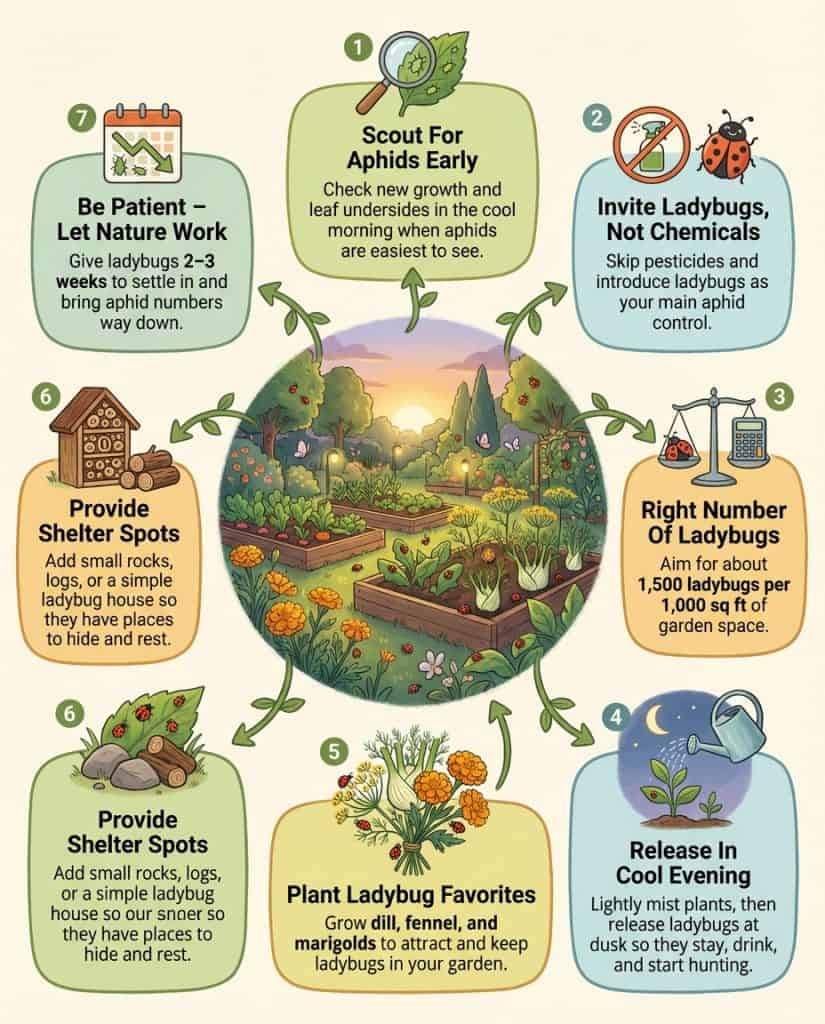
Scout your garden in the early morning when aphids are most visible. Look for clusters on new growth, under leaves, and around flower buds.
Step 2: Deploy Your Army
Purchase ladybugs from reputable garden centers or online suppliers. You’ll need about 1,500 ladybugs per 1,000 square feet of garden space.

Step 3: Perfect Timing
Release them in the early evening when temperatures are cool. Lightly mist your plants first – ladybugs need moisture and cooler temperatures.
Step 4: Create the Perfect Habitat
Plant dill, fennel, and marigolds to attract and keep ladybugs happy. Provide shelter with small rocks, logs, or specialized ladybug houses.
Why This Crushes Traditional Methods
The difference between amateur and pro gardeners is understanding this: chemicals are a temporary band-aid, while biological control is a permanent solution.
Here’s what shocked me most: after the initial ladybug investment (usually $15-30), your ongoing costs drop to nearly zero. Compare that with monthly pesticide purchases totaling hundreds annually.
Plus, you’re not poisoning beneficial insects, soil microorganisms, or your family. It’s like choosing a precision surgeon over a sledgehammer.
The Real Success Stories
A community garden in California saw a 95% aphid reduction within three weeks of introducing ladybugs. Their vegetable yields increased by 40% that season.
Sarah from Oregon told me her prize-winning roses went from aphid-infested disasters to garden show champions in just one month. “I wish I’d known about this years ago,” she said.
The secret most experienced gardeners know: nature already solved your pest problems – you just need to invite the right team to the party.
What to Watch Out For
Here’s the honest truth: ladybugs might fly away if you don’t create the right conditions. They’re not slaves; they’re partners. Treat them well, and they’ll reward you with aphid-free gardens.
Release them during hot, sunny days, and they’ll disappear faster than you can say “biological control.” Follow the evening release rule religiously.
For massive infestations, you might need patience. Ladybugs are thorough, but they’re not magicians. Give them 2-3 weeks to establish their population and deliver results.
Your Garden’s New Beginning
Grandpa’s wisdom taught me something profound: the best solutions are often the simplest ones. By working with nature rather than against it, you create a thriving ecosystem that sustains itself.

Your plants will be healthier, your wallet will be happier, and you’ll sleep better knowing you’re not spraying chemicals where your family plays and relaxes.
The transformation waiting for your garden isn’t just about eliminating aphids. It’s about discovering a sustainable way to grow that your grandchildren will thank you for.