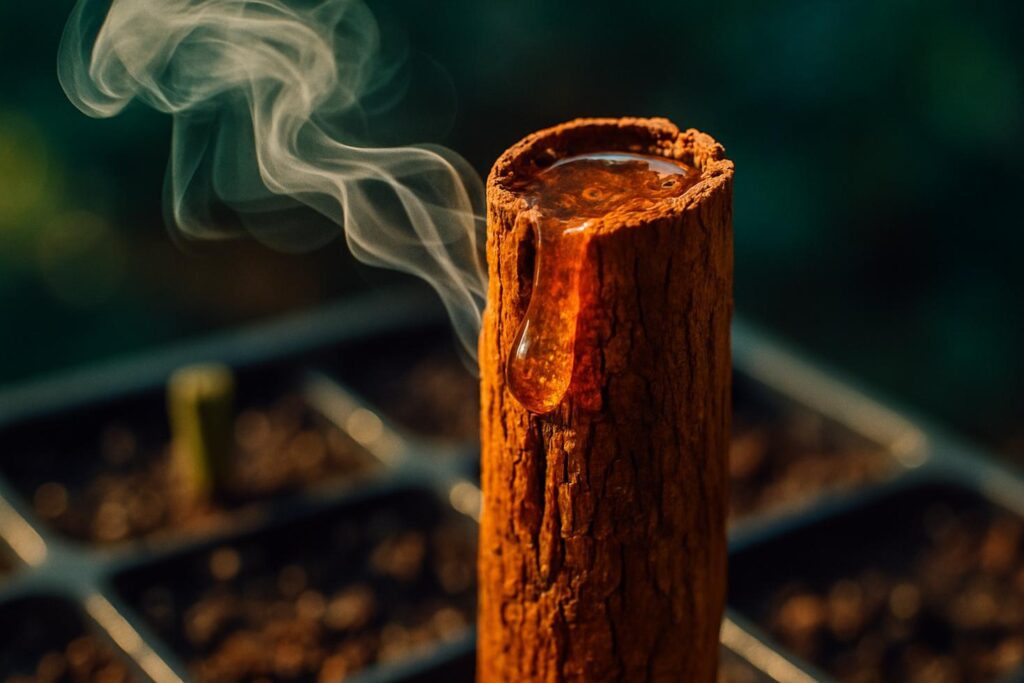
Cinnamaldehyde disrupts fungal cell membranes and blocks metabolic activity — and a single gram of garden soil holds hundreds to thousands of distinct fungal species waiting at every fresh cut.
Cinnamaldehyde, the compound behind cinnamon’s sharp scent, functions as a bio-fungicide by disrupting cell membranes and interfering with the metabolic activity of plant-pathogenic fungi. That mechanism is well-documented against pathogens including Fusarium, Botrytis, and Pythium. What makes it relevant to propagation is simpler than it sounds: every fresh cutting placed into unsterilized media lands in a community of hundreds to thousands of fungal taxa per gram of soil, and the open wound is the easiest entry point those organisms will ever find.
The race between rot and roots starts the instant a cutting hits the medium. Cinnamon doesn’t speed up rooting — that’s governed by auxin signaling, carbohydrate reserves, and species biology. What cinnamaldehyde does is reduce the infection pressure at the wound site long enough for the cutting’s own biology to proceed.
How Cinnamaldehyde Disrupts Fungal Pathogens at the Cellular Level
Cinnamon bark essential oil — rich in cinnamaldehyde and oxygenated monoterpenes — inhibits growth and metabolic activity in phytopathogenic bacteria, fungi, and oomycetes in laboratory assays. The mechanism involves membrane disruption and enzymatic interference, which damages microbial cells and limits their ability to proliferate. This is a cellular-level effect, not a physical barrier.
The same oil also activates plant defense pathways. In winter wheat, foliar application increased activity of phenylalanine ammonia-lyase, a key enzyme in the phenylpropanoid pathway that synthesizes phenolic defense compounds. That finding points to a dual role: direct antimicrobial action plus defense priming in plant tissue.
What Cinnamon Actually Does for Propagation Cuttings
Applied to a cut stem — typically as dusted ground cinnamon — cinnamaldehyde’s antifungal properties slow fungal colonization at the wound site and buy time for roots to sprout. That framing comes directly from horticultural review of the underlying research. The cinnamon is not replacing rooting hormone or compressing a weeks-long process into days; no controlled propagation trial in the available literature shows that outcome.
What it does do is lower disease pressure. Fewer colonizing fungi means more cuttings remain viable long enough for endogenous rooting biology to run its course. Concentration matters: cinnamaldehyde can be phytotoxic at high doses. Moderate concentrations in the wheat study showed no visible phytotoxic effects and mild growth stimulation in shoots, but that finding doesn’t automatically extend to root tissue or all plant species.
Frequently Asked Questions
Does cinnamon work as a rooting hormone for cuttings?
No. Cinnamon’s documented role in propagation is antifungal, not hormonal. Root development is governed by auxin signaling and species biology, not by cinnamaldehyde.
Which fungal pathogens does cinnamaldehyde actually affect?
Laboratory and greenhouse studies show activity against Fusarium, Botrytis, Pythium, and Phytophthora, among others.
Is kitchen cinnamon powder as effective as cinnamon essential oil?
Horticultural experts note that ground cinnamon in garden settings is less reliable than standardized essential oil formulations used in controlled assays.
Can cinnamon harm a cutting if too much is applied?
Yes. Cinnamaldehyde is phytotoxic at higher concentrations, so effective use requires appropriate dosing rather than heavy application.