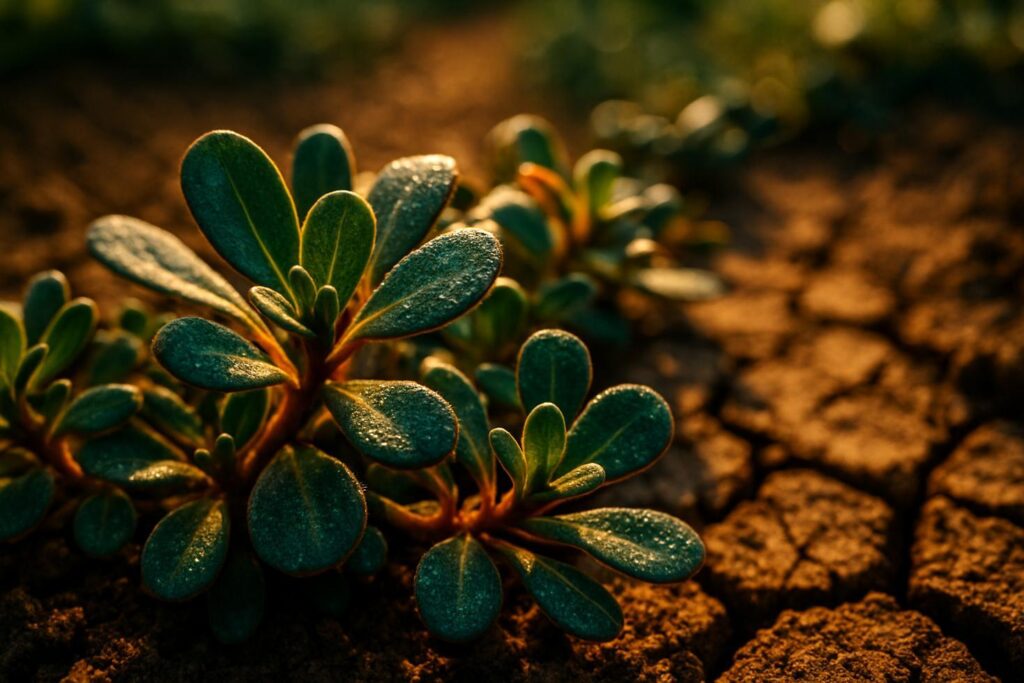
Purslane runs 300–500 mg of ALA per 100 g fresh leaves. Iceberg lettuce delivers roughly 20–30 mg. The weed most gardeners pull is doing something extraordinary.
Purslane (Portulaca oleracea) contains more alpha-linolenic acid (ALA) per 100 grams than virtually any other commonly eaten leafy vegetable. Multiple peer-reviewed nutrition studies place purslane at 300–500 mg ALA per 100 g fresh leaves and stems. Typical cultivated salad greens fall under 100 mg per 100 g by the same measures.
That gap didn’t come from a breeding program. It came from a drought.
How Purslane Builds Omega-3 Into Its Cell Membranes
Purslane doesn’t store ALA the way a seed stores oil. It incorporates the fatty acid into the membrane lipids of its own cells. Every leaf, every stem, every tissue becomes part of that system.
This matters because membrane-bound ALA resists degradation differently than reserve fat. The mechanism is tied to purslane’s identity as a heat- and drought-adapted succulent. As a C4-like plant built for hot, dry habitats, it accumulates unusual lipid profiles relative to the water-rich mesophytic greens grown in most gardens.
The stress doesn’t weaken the plant. It deepens the chemistry.
Why Cultivated Salad Greens Lost This Chemistry
Domestication optimized for different goals. Breeders selected for tender leaves, mild flavor, and high water content. Those traits are incompatible with the dense structural and stress-response compounds that wild plants invest in.
Iceberg lettuce sits around 20–30 mg ALA per 100 g fresh. That number reflects a vegetable bred away from survival chemistry over generations of selection for palatability. The plant no longer needs to harden its membranes against drought, so it doesn’t.
Purslane was never bred. It simply kept solving the same hard-summer problem.
Frequently Asked Questions
How much omega-3 does purslane actually contain?
Most peer-reviewed analyses report 300–400 mg ALA per 100 g fresh leaves and stems, with some ecotypes reaching approximately 500 mg per 100 g depending on growing conditions.
Is purslane the highest omega-3 leafy plant in existence?
Among commonly eaten leafy vegetables, purslane is near or at the top for ALA, but not all wild leafy species have been analyzed. The claim holds for the standard edible-greens category, not for all plant life.
Why does drought stress increase purslane’s omega-3 content?
Purslane incorporates ALA into membrane lipids as part of its stress-adaptation response. Heat and water deficit conditions drive greater accumulation of these fatty acids in its succulent tissues.
How does purslane compare to flax for omega-3?
Flax seeds contain 6,000–8,000 mg ALA per 100 g, far exceeding purslane. However, flax greens are rarely consumed or rigorously analyzed, so a direct leaf-to-leaf comparison cannot be made from current nutrient databases.