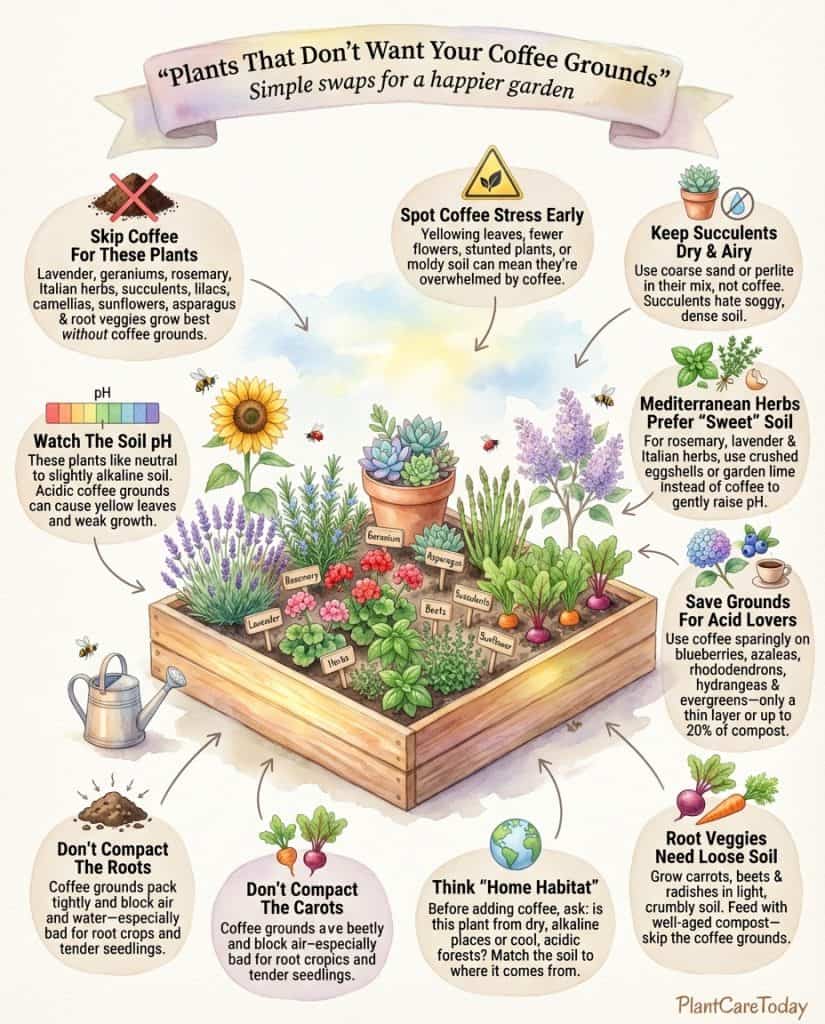
I was shocked to discover that those coffee grounds you’ve been dutifully saving might be your garden’s worst nightmare for certain plants. While that morning brew waste has earned a reputation as garden gold, the truth is far more complex.
Some plants react to coffee grounds like vampires to garlic, dramatically retreating at the first sign of them. Let’s expose this caffeine conspiracy and rescue your struggling plants before it’s too late!
The Bitter Truth: Why Some Plants Hate Coffee Grounds
Forget what you’ve heard about coffee grounds being universally beneficial. The reality?
Coffee grounds are highly acidic (with a pH of 5.5-6.8), contain caffeine (yes, even used grounds), and create dense, compacted soil that some plants absolutely detest.

When applied too heavily, these grounds form a barrier that’s about as welcome as a wool blanket on a summer day, suffocating roots and preventing water penetration.
Plants that prefer neutral or alkaline soil will be stressed in this acidic environment, gradually displaying yellowing leaves and stunted growth as they suffer in silence.
The Coffee Ground Blacklist: 10 Plants to Protect
The game-changer for your garden isn’t what you think. Its knowing which plants to keep away from your coffee addiction.
These 10 varieties are practically begging you to keep the grounds away:

- Lavender – This Mediterranean beauty prefers alkaline soil (pH 6.5-7.5) and will wither dramatically in coffee’s acidic soil. The difference between lush lavender and a failing plant is often just the soil pH.
- Geraniums – These vibrant bloomers prefer neutral soil and will express their displeasure with yellowing leaves when coffee grounds enter their territory.
- Rosemary – Another Mediterranean herb that flourishes in dry, alkaline conditions—coffee grounds create precisely the opposite environment.
- Succulents – These drought-lovers despise the moisture-retaining properties of coffee grounds almost as much as they hate overwatering. The dense texture is a death sentence for their delicate roots.
- Lilacs – These spectacular spring bloomers need sweet soil (pH 6.5-7.0) to produce their intoxicating flowers. Coffee grounds will transform your soil into something they find thoroughly unpalatable.
- Camellias: While they tolerate acidity, the caffeine in coffee grounds inhibits their growth. Nature’s most unexpected competitive strategy!
- Sunflowers – These sunny giants prefer neutral to alkaline soil. Coffee grounds are like kryptonite to these Superman plants of the garden world.
- Italian Herbs – Basil, oregano, and thyme evolved in Mediterranean climates with alkaline, well-draining soil. Coffee grounds create the exact soil conditions these herbs evolved to avoid.
- Asparagus – This perennial vegetable produces best in soil with a pH around 6.5-7.0. Acidic coffee grounds will reduce yield and stress your precious spears.
- Most Root Vegetables – Carrots, radishes, and beets struggle to develop properly in the dense, compacted environment created by coffee grounds.

Warning Signs Your Plants Are Having a Caffeine Crisis
Your plants are trying to tell you something important when they’re suffering from coffee ground overdose. Watch for these desperate cries for help:
- Yellowing leaves (chlorosis): the plant equivalent of raising a white flag
- Stunted growth and fewer flowers: they use all their energy just to survive!
- Withering despite adequate watering, those grounds are blocking water absorption
- Visible mold on soil surface: coffee grounds can develop fungus when applied too thickly
- Leaf edges turning brown: the classic sign of fertilizer burn
(The secret most plant experts won’t tell you is that coffee grounds can actually attract pests in some gardens.
Fresh grounds contain about 1.5% nitrogen and 0.3% phosphoric acid levels high enough to burn sensitive plants!)

Smart Alternatives: What These Plants Actually Crave
Instead of coffee grounds, these plants would thrive with these alternatives:
- For Mediterranean herbs and lavender: Crushed eggshells or a sprinkle of garden lime to increase alkalinity
- For root vegetables: Well-aged compost that improves soil structure without compaction
- For succulents: Coarse sand or perlite to improve drainage
- For flowering plants: Balanced, slow-release fertilizers that won’t shock their systems
Most people make this mistake with their plants by applying gardening advice universally. Remember that your garden is more like a diverse neighborhood than a one-size-fits-all dormitory!
When Coffee Grounds ARE Your Garden’s Best Friend
Don’t throw out your grounds completely! They’re still garden gold for acid-loving plants like:

- Blueberries (pH preference 4.5-5.5)
- Azaleas and rhododendrons
- Most evergreen trees
- Hydrangeas (for those coveted blue blooms)
Even with these plants, moderation is key. Mix the grounds into compost (limit to 20% of the total volume) or sprinkle lightly as a thin topdressing; never more than 1/2 inch thick.
The Bottom Line: Coffee Ground Wisdom
Understanding your plant’s native habitat is the breakthrough approach to successful gardening.
Those plants evolved over millions of years in specific conditions. Your coffee grounds might be the environmental equivalent of asking a desert cactus to thrive in a rainforest!

Before automatically sprinkling those grounds, ask yourself: “Where does this plant grow naturally, and what kind of soil does it prefer?” Your plants will reward your thoughtfulness with spectacular growth and vibrant health.