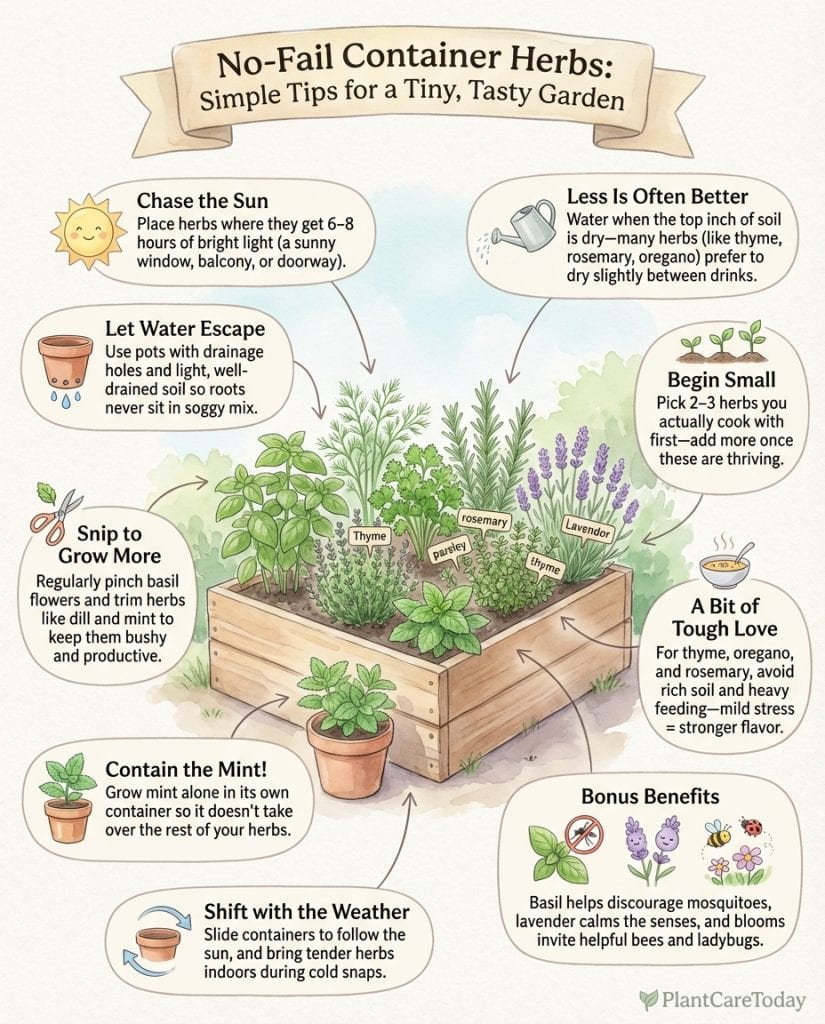
Want fresh herbs without a backyard? Container gardening works for anyone, and it’s a great way to have flavorful cooking ingredients and nice greenery in small spaces.
Growing herbs at home can save you up to 90% compared to store-bought options. Let’s turn your windowsill, balcony, or countertop into a simple, easy-to-maintain herb garden.
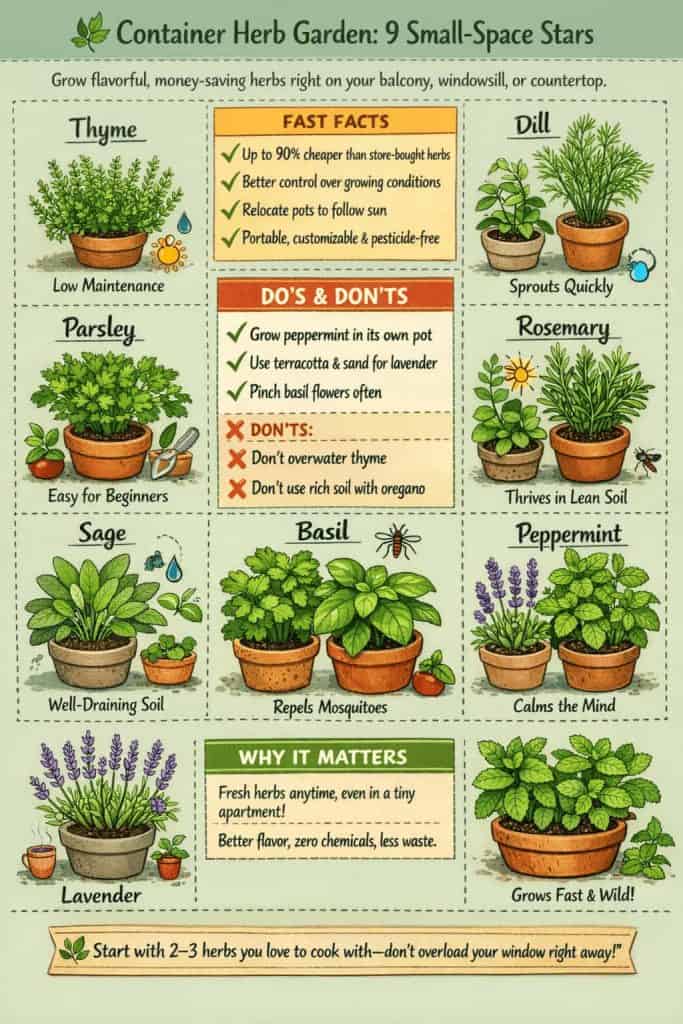
Top 9 Herbs That Flourish in Container Gardens
1. Thyme: The Low-Maintenance Superstar
If herbs were people, thyme would be that friend who does well even when you forget about them. This hardy herb loves full sun and well-drained soil.
Here’s the interesting part: overwatering or over-fertilizing actually ruins its concentrated flavor.
Think of thyme as the minimalist of the herb world. It does best with less fussing.
2. Dill: The Pickle-Perfect Wonder
Dill grows from seed to usable herb faster than almost any other variety. It’s great for gardeners who want quick results.
I’ve grown dill in clay pots on my windowsill since 2020, and it’s always ready when I need it.
For container dill that does well:
• Choose a pot at least 8 inches deep (those roots like to stretch)
• Use balanced fertilizer with nitrogen, potassium, and magnesium
• Harvest regularly to encourage bushier growth
3. Rosemary: The Apartment-Friendly Evergreen
Forget what you’ve heard about rosemary being difficult. This herb is like the cactus of the herb world – tough, compact, and barely needs care.
Its woody stems make it feel more like a tiny tree than an herb, giving your container garden year-round structure.
What matters most is that rosemary actually prefers being slightly root-bound in containers. It concentrates the essential oils for a more intense flavor.
4. Parsley: The Beginner’s Best Friend
Looking for an herb that forgives mistakes? Parsley is a good choice. This versatile herb does well in both full sun and partial shade, making it perfect for less-than-ideal apartment lighting.
Most people worry too much after overwatering their parsley. This resilient herb bounces back with surprising speed. It’s always there for you, even after your gardening mistakes.

5. Oregano: The Flavor Powerhouse
Oregano has a surprising secret: poorer soil actually creates more flavorful leaves. This Mediterranean herb develops more concentrated essential oils when slightly stressed.
For the most flavorful oregano possible, plant it in well-drained soil that’s not overly rich, and let it dry out between waterings. Your pizza toppings will taste better.
6. Sage: The Sophisticated Staple
With its soft, silver-green leaves, sage brings both cooking value and nice looks to your container garden. This herb has three important requirements:
• Well-drained, loose soil (compacted soil doesn’t work)
• 6-8 hours of daily sunshine
• Protection from extreme cold (it’s Mediterranean and hates freezing)
If your sage leaves look dull or droopy, it’s probably either overwatered or not getting enough light.
7. Basil: The Mosquito-Repelling Miracle
Basil works double-duty as both a cooking staple and a natural mosquito repellent . This herb is like having an all-natural bug spray that also makes your pasta sauce taste great.
Basil does well indoors in bright spots, making it perfect for kitchen counters or sunny windowsills.
The real trick is to pinch off flower buds. This keeps the plant focused on producing those flavorful leaves instead of going to seed.
8. Lavender: The Stress-Relieving Beauty
Container lavender brings a bit of Provence to your home. This purple herb isn’t just pretty. It’s practical too. Studies show that lavender scent can reduce anxiety by up to 60%.

The best trick for container lavender? Use a terracotta pot (which helps prevent root rot) and mix in some sand or small pebbles to improve drainage. Your lavender will reward you with a nice display that makes any space feel more relaxing.
9. Peppermint: The Vigorous Refresher
Peppermint is like the enthusiastic puppy of herbs, energetic, fast-growing, and eager to please. It was my first apartment here, and despite my beginner mistakes, it went well.
A word of caution, though: mint’s roots spread aggressively. Always give mint its own container unless you want it to take over neighboring plants. With full sun, consistent moisture, and rich soil, you’ll have endless fresh mint for teas, cocktails, and desserts.
Why Container Herbs Are Worth It
Container herbs aren’t just convenient. They’re practical. Unlike their garden-bound cousins, potted herbs can be:
• Relocated to follow seasonal sun patterns
• Brought indoors during harsh weather
• Positioned where you need pest protection (basil near doorways keeps mosquitoes away)
• Arranged for maximum looks and accessibility
The best part is that herbs often do better in containers than in open garden beds because you can perfectly control their growing conditions. Your windowsill herb garden isn’t just convenient. It might actually give you better results.
Ready to get started? Begin with just 2-3 herbs from this list, focusing on varieties you’ll actually use in cooking. Before you know it, you’ll be adding fresh flavors directly to your meals and wondering how you ever lived without your container herb garden.