Forget everything you thought you knew about fall planting. While other gardeners are fussing with mums and pumpkins, the real garden wizards are quietly tucking garlic into the ground.
I was shocked to discover that September, not spring, is actually the magic moment for planting this kitchen essential.
And trust me, once you experience the dramatic difference in harvest size, you’ll never go back to spring planting again.
5 Jaw-Dropping Reasons September Is Garlic’s Perfect Planting Window
The secret most plant experts won’t tell you is that garlic has a completely different growth cycle than almost everything else in your garden.
It’s like that friend who shows up to the party early to help set up while everyone else arrives just as things get going.
- Cold is actually its superpower: Garlic needs a period called “vernalization” (exposure to cold) to develop properly. Without this winter chill, your bulbs will be sad, stunted versions of their potential. September planting guarantees this essential cold period.
- Root development happens underground: While you’re sipping hot chocolate in December, your garlic is secretly building an impressive root system. The still-warm September soil lets cloves establish strong roots before the deep freeze hits, giving them a massive head start on spring-planted garlic.
- Bigger bulbs, earlier harvest: According to research from Cornell University, fall-planted garlic produces bulbs up to 30% larger than spring-planted varieties. Your reward? Spectacular, plump bulbs ready for harvest weeks earlier than your neighbors’.
- Weeds don’t stand a chance: September planting means your garlic gets established while weeds are winding down for winter. By spring, your garlic has a commanding lead in the garden race while weeds are just waking up.
- Natural pest resistance: Fall planting helps your garlic dodge peak pest seasons . When onion maggots and other pests emerge in late spring, your plants are already robust enough to withstand them.
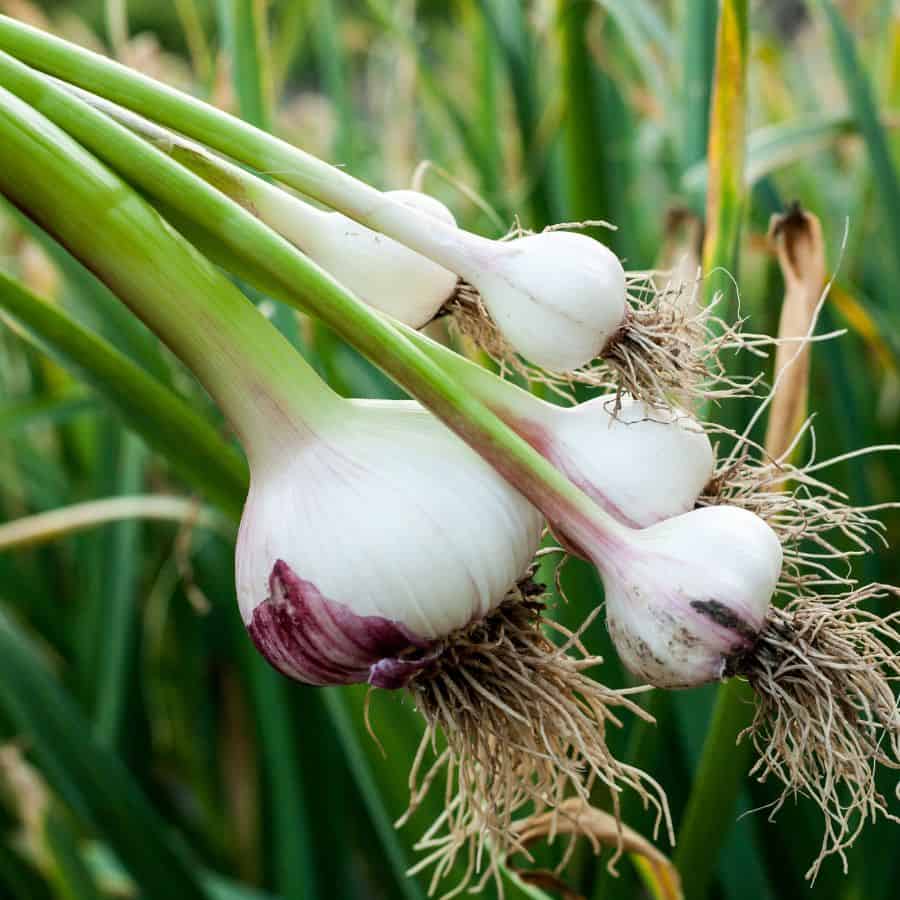
Hardneck vs. Softneck: Choosing Your Garlic Champion
Think of this like choosing between a sporty convertible and a practical sedan—both will get you there, but with different perks along the way.
- Hardneck Varieties: The bold, complex-flavored daredevil of the garlic world. Perfect for cold regions; produces edible scapes (bonus harvest!) but stores for only 4-6 months.
- Softneck Varieties: The reliable, milder-tasting workhorse. Thrives in warmer areas, produces more cloves per bulb, and can store for up to a year.
Pro tip: Not sure which works for your climate? Plant both this first year and let your garden tell you which one loves your soil more!
The September Garlic Planting Blueprint: Do This, Not That
Planting garlic isn’t rocket science, but there are a few game-changing details that transform amateur results into professional-grade harvests:
Step 1: Location, Location, Location
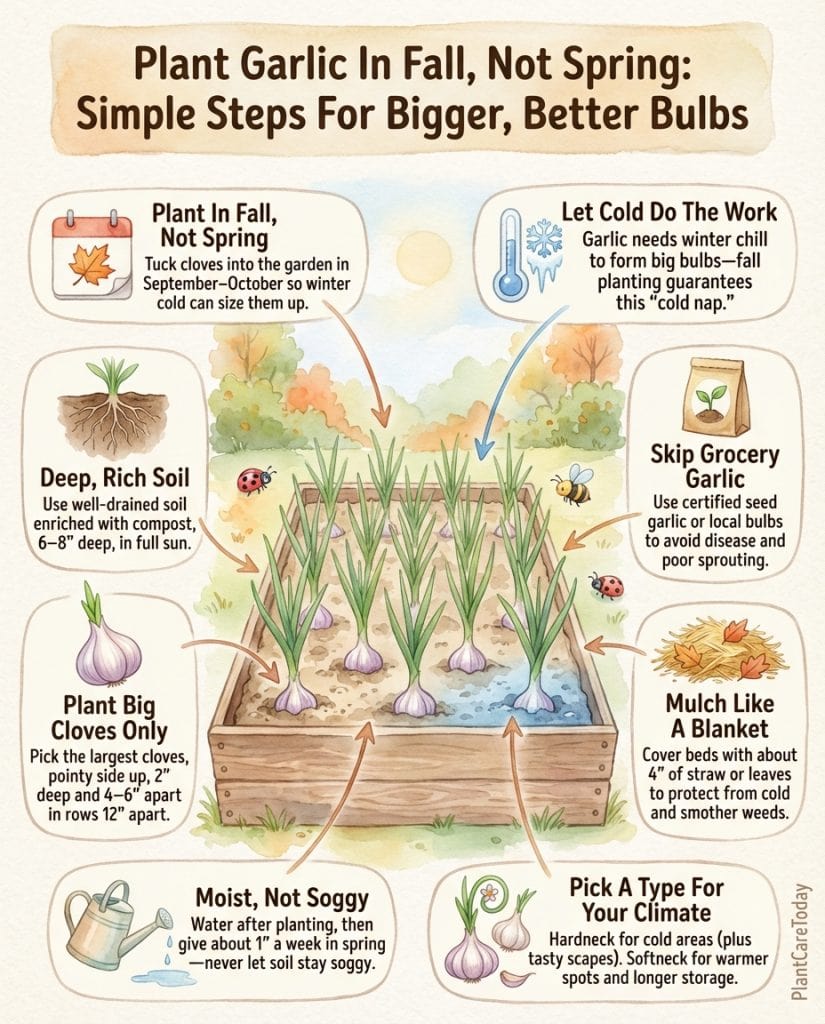
Choose a spot with full sun (6-8 hours minimum) and soil that drains like a colander. Your garlic will be living there for 9-10 months. Treat it like choosing a home, not a hotel.
Step 2: Soil Prep That Makes the Difference
Your garlic’s root system is like its foundation. Skimp here, and everything suffers. Work rich compost or aged manure 6-8 inches deep into the soil with a pH between 6.0 and 7.5. Think of it as building a 5-star hotel for your cloves to thrive in.
Step 3: Clove Selection & Planting
The difference between amateur and pro plant parents is simply selecting the right cloves . Choose only the largest, plumpest cloves from each bulb. Plant pointy-side up (about 2 inches deep), spaced 4-6 inches apart in rows 12 inches apart.
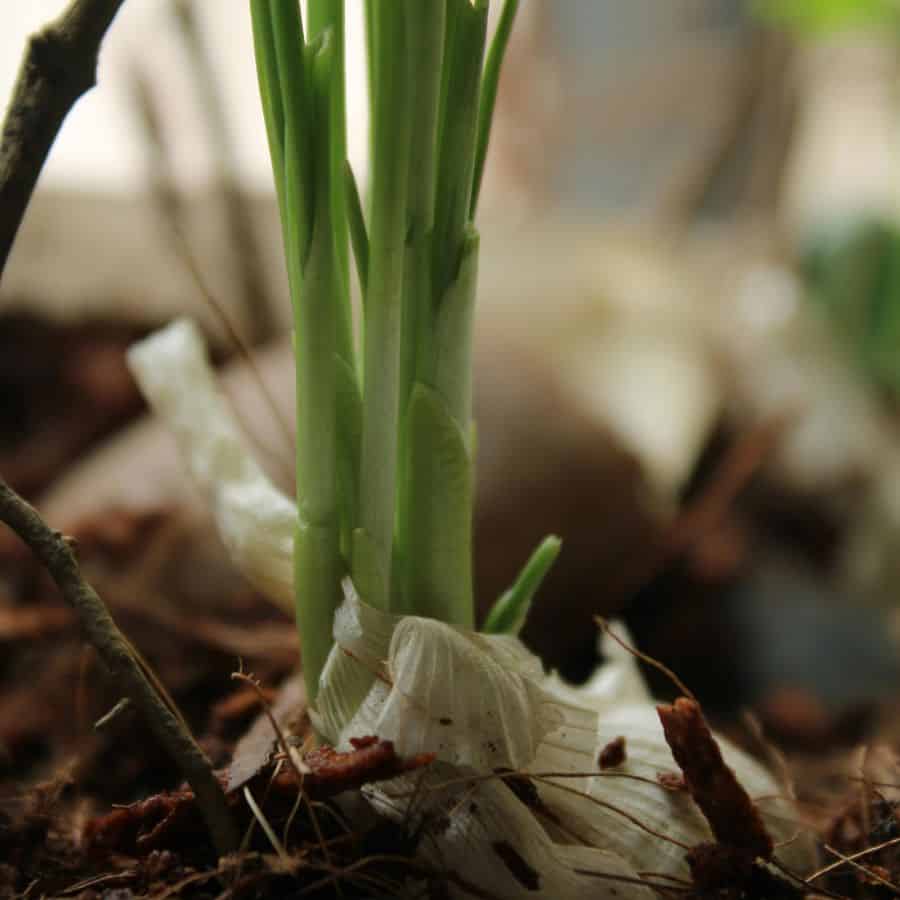
Most people make this mistake with their garlic: buying grocery-store bulbs. These are often treated to prevent sprouting, which can introduce disease. Always use certified seed garlic or bulbs from a trusted local grower.
Step 4: Mulch Like You Mean It
Apply a 4-inch layer of straw, shredded leaves, or hay immediately after planting. This isn’t just helpful. It’s essential. Think of mulch as your garlic’s winter coat, insulating against temperature swings while suppressing weeds.
The Garlic Calendar: Your Month-by-Month Roadmap to Success
Once planted, your garlic operates on its own timeline, regardless of what else is happening in your garden. Here’s how to support its journey:
- September-October: Plant, water deeply, mulch heavily. Then step back and let the magic begin.
- November-February: Garlic rests while secretly developing roots. Keep mulch intact. Your job? Mostly daydreaming about summer harvests.
- March-April: As shoots emerge, remove some mulch to warm the soil. Apply nitrogen-rich fertilizer once to fuel leaf growth.
- May: For hardneck varieties, harvest curly scapes when they appear. (Think of these as a bonus crop, like getting appetizers before your main course!)
- June: Water consistently (about 1 inch weekly) but stop fertilizing to encourage bulb development.
- July: Harvest time! When the lower 2-3 leaves turn yellow, but the upper leaves remain green, your garlic is ready. Gently dig up these underground treasures.
- August: Cure bulbs in a shaded, airy place for 2-3 weeks. Then clean, trim, and store in a cool, dry spot.

Avoid These 5 Garlic-Growing Failures
Your garlic is trying to tell you something important if it’s not thriving. Here are the most common mistakes that sabotage success:
- Shallow planting: Leads to freeze damage and puny bulbs. Always plant 2 inches deep.
- Using grocery-store garlic: Often treated with growth inhibitors and may be diseased. Use seed garlic.
- Skimping on mulch: Like sending your plants into winter without a coat. Mulch heavily!
- Overwatering: Garlic hates wet feet. Soggy soil causes bulbs to rot faster than anything else.
- Planting tiny cloves: Small parent cloves = small harvest bulbs. Only plant the biggest cloves.
The Unexpected Bonus: Garlic As Your Garden’s Bodyguard
The game-changer for your garden isn’t just the garlic harvest. It’s how garlic protects other plants all season long. This pungent wonder acts as natural pest control throughout your garden:
- Plant near tomatoes to repel spider mites and aphids
- Grow around fruit trees to deter borers and beetles
- Place near roses to reduce black spot and aphid infestations
- Intersperse with carrots and beets to keep root pests away
By planting in September, your garlic will be established and ready to provide this protective service right when spring pests emerge.

The September Garlic Promise
Every September, as I tuck those cloves into cool soil, I’m investing in next year’s kitchen staple. The ritual feels almost magical.
These humble cloves will sleep through winter’s worst, then transform into vibrant plants that yield spectacular harvests.
Fall planting isn’t just a preference. It’s the difference between mediocre and magnificent garlic. So grab your garden gloves, select your seed garlic, and join the September planting revolution. Your future self (and your taste buds) will thank you!