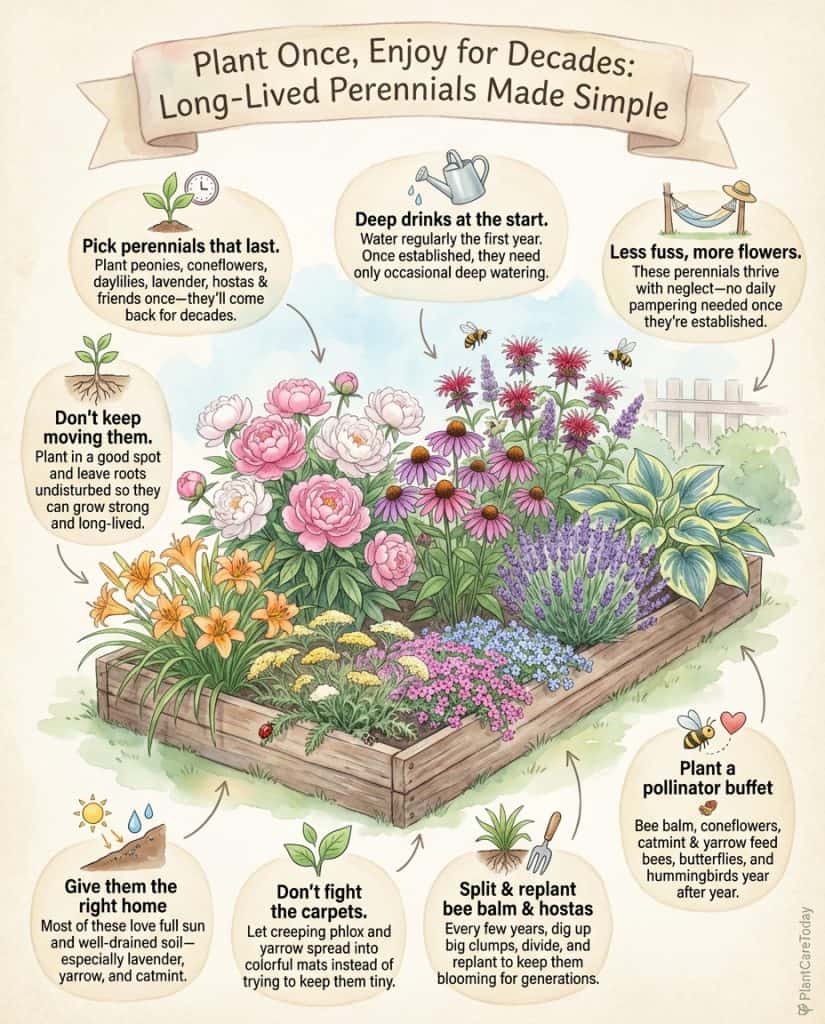
Ever dreamed of leaving something special behind? These perennial plants can bloom year after year, decade after decade.
While nothing in nature is guaranteed to last 100 years, these plants come pretty close.
Some garden peonies have been documented to have thrived for over 150 years in the same spot; that’s older than most American homes.
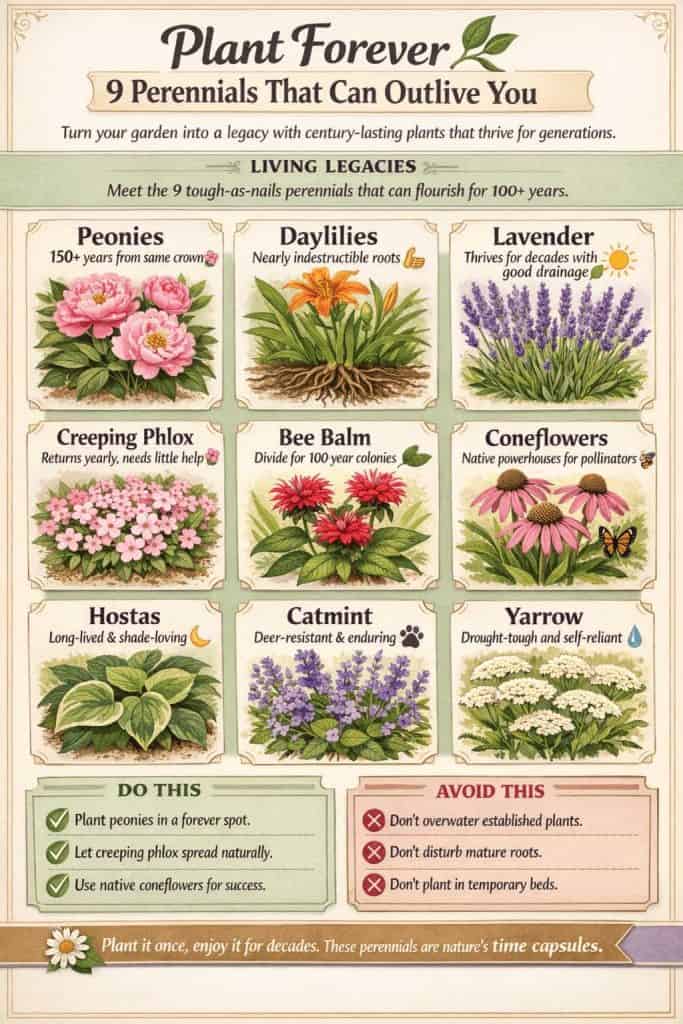
Living Heirlooms: Plants That Outlast Generations
Here’s what matters most: creating a long-lasting garden doesn’t require special skills or daily attention. These plants are like the tortoises of the plant world, slow, steady, and surprisingly tough.
They’ll be quiet witnesses to your family’s birthdays, graduations, and holiday gatherings for decades to come.
Let’s look at nine perennials that could very well outlive you.
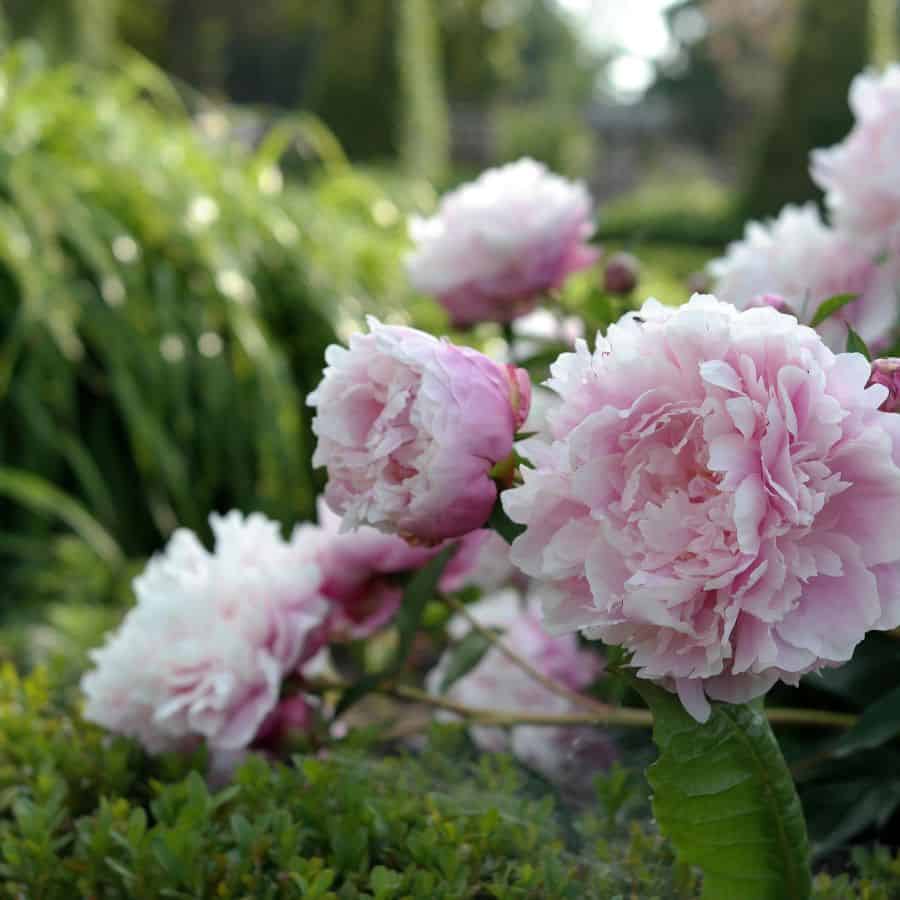
1. Peonies: The Ultimate Floral Time Capsule
Those beautiful wedding flowers are actually tough garden plants in disguise. Peonies regenerate from the same crown year after year, keeping their blooming pattern for literal centuries. Some Chinese tree peonies have been documented to live for over 200 years.
What makes them great is their low-maintenance nature. They show up looking beautiful with little effort, while being tougher than they appear.
2. Daylilies: The Bulletproof Beauties
Don’t let their delicate appearance fool you. Daylilies have an underground root system that’s practically indestructible. While each bloom lasts just a day (hence the name), the plant itself can last nearly forever under the right conditions.
The real trick with daylilies is to leave them alone. These plants barely need care once established. They’ll do well through drought, poor soil, and even occasional flooding.
3. Lavender: The Aromatic Time Traveler
Soft on the outside, tough on the inside. Lavender is the ultimate garden paradox. Kind of like my grandmother, who looked fragile but could still deadlift a wheelbarrow well into her 80s.
Forget what you’ve heard about lavender being fussy. With good drainage and plenty of sun, these plants can last for over a century, filling your garden with that calming scent for generations.
4. Creeping Phlox: The Ground Cover That Keeps Going
Need a bright solution for garden edges that will outlast your mortgage? Creeping phlox is your answer. These low-growing perennials create dense, colorful carpets that get better each year.
Most people make this mistake with their phlox. They try to contain it. Don’t. Let this beauty spread and establish itself. Your great-grandchildren will appreciate the spring display that returns year after year.
5. Bee Balm: The Pollinator’s Eternal Buffet
Want to leave a legacy that helps the planet? Plant bee balm. This nectar-rich perennial will be feeding pollinators long after your grandchildren have grandchildren of their own.
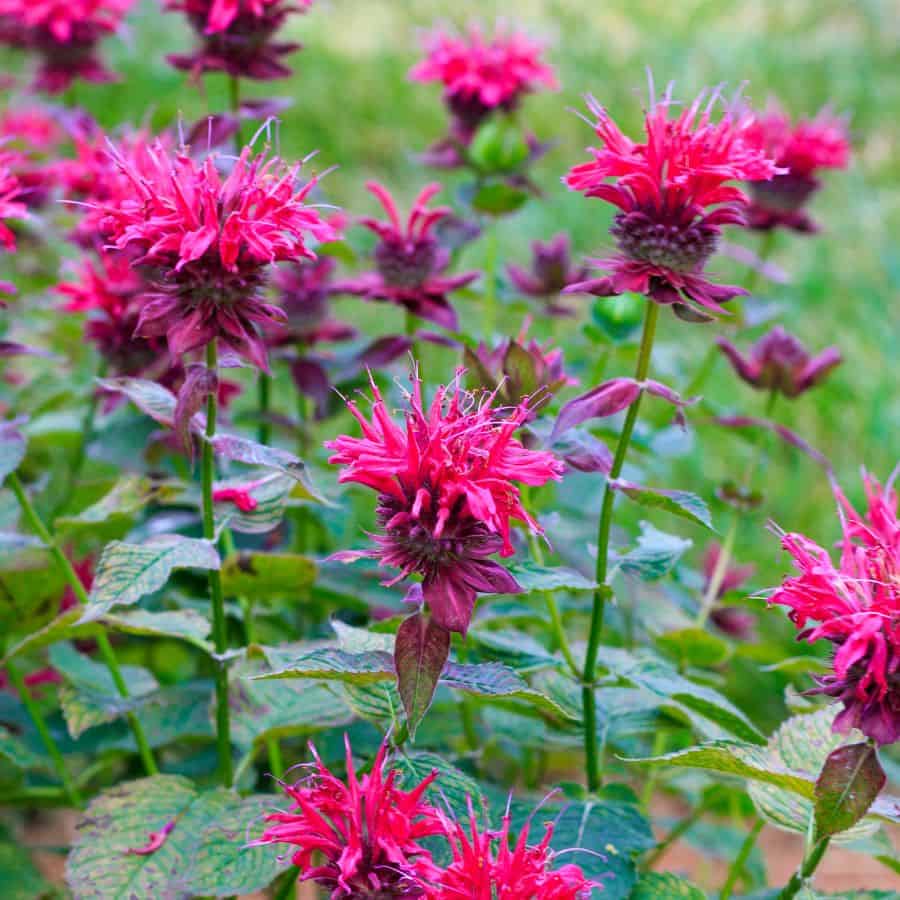
The difference between new and experienced gardeners is knowing how to divide bee balm every few years. This simple step can extend its already long lifespan to a century or more.
Plus, those bright red, pink, or purple blooms are hard to resist for both humans and hummingbirds.
6. Coneflowers: Prairie Survivors with Serious Staying Power
These native plants evolved to withstand everything from drought to blizzards, which explains their longevity. Once established, coneflowers can thrive for 100+ years with virtually no help from you.
What matters is this: leave them alone, and they’ll reward you with decades of easy blooms. Their root systems grow stronger and more resilient with age, like fine wine, but for your garden.
7. Hostas: The Shade Garden Champions
These foliage plants are the marathon runners of the plant world. While other plants fade out, hostas just keep going. Their hardy root systems handle temperature changes that would kill other plants.
What’s remarkable about hostas is their ability to look better with age. A 50-year-old hosta clump can reach impressive sizes, becoming a true garden focal point. Think of them as living sculptures that improve over decades.
8. Catmint: The Aromatic Deer-Defender
Not just for cat lovers, catmint’s lavender-blue flower spikes create a nice display that can last through generations. Its strong scent naturally repels deer and garden pests—making it both pretty and useful.
Catmint needs so little care it’s almost embarrassing. Drought? No problem. Poor soil? It does fine anyway. Neglect? It almost seems to prefer it. This perennial is self-sufficient in the best way.
9. Yarrow: The Indestructible Color Factory
Those bright clusters of yellow, white, and red flowers aren’t just pretty. They’re practically eternal. Yarrow’s resilience against nearly everything (drought, poor soil, extreme temperatures) makes it a true century plant.
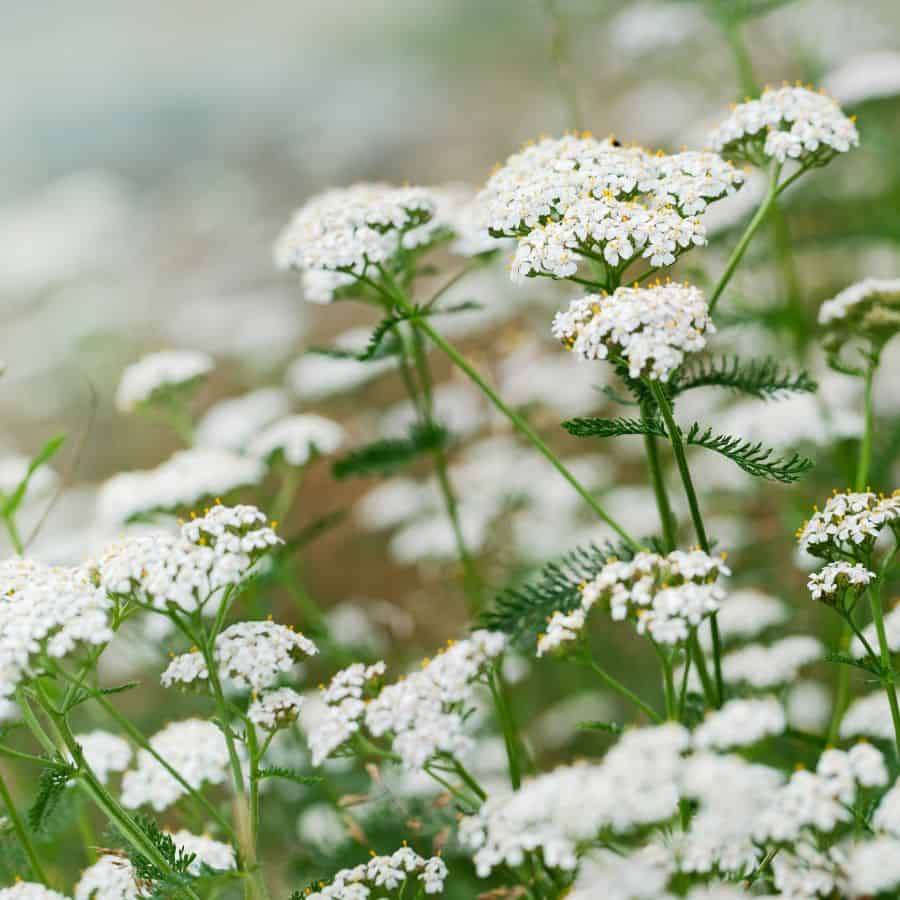
I still remember my grandmother pointing to her yarrow patch and saying, “These were here when I moved in, and they’ll be here long after I’m gone.”
Fifty years later, those same plants continue to grow, a living connection to her memory that no photo album could replace.
Your Garden’s Living Legacy Starts Today
Planting these long-lived perennials isn’t just gardening. It’s creating something that lasts. You’re making beauty that your great-great-grandchildren might enjoy.
In a world focused on the temporary, there’s something satisfying about planting something designed to outlast you.
The next time someone talks about leaving behind an inheritance, you’ll know that your living legacy will be blooming brightly, bringing joy and beauty to future generations who might pause and think of you when they see those peonies in full bloom.