I was shocked to discover that most gardeners unknowingly starve their peonies. These spectacular perennials can live for over 100 years and produce blooms the size of dinner plates, but only if you crack the code on proper feeding.
The secret most plant experts won’t tell you is this: timing is everything when it comes to peony nutrition. Get it wrong, and you’ll wonder why your neighbors have Instagram-worthy blooms while yours look like they’re gasping for air.
Your Peonies Are Crying for Help (And Here’s How to Listen)
Think of your peonies like elite athletes. They need premium fuel to perform at their peak. When they’re nutritionally starved, they’ll send you desperate signals that most gardeners completely miss.
Stunted growth is their first cry for help. If your peonies should be knee-high but they’re barely ankle-tall, they’re essentially saying “Feed me!” in plant language.

Those pathetic, thumbnail-sized blooms instead of the dramatic, lush flowers you see in magazines? That’s not genetics; that’s malnutrition.
I’ve seen century-old peony plants produce blooms smaller than a quarter simply because they were nutrient-starved.
Here’s something that will surprise you: yellowing leaves in spring aren’t always about overwatering. Often, it’s your peony desperately trying to cannibalize its own foliage to find the nutrients it needs to survive.
Why Fertilizing Could Make or Break Your Peony Paradise
Here’s a game-changer most people don’t realize: Peonies are like nutrient vacuum cleaners. Over their decades-long lifespan, they literally suck the soil dry of essential minerals.
The difference between amateur and pro plant parents is simply understanding this: your soil started rich, but after 3-5 years, it’s basically plant junk food.
Nitrogen, phosphorus, and potassium, the holy trinity of plant nutrition, get depleted faster than you’d think.
Without proper fertilization, you’re asking your peonies to run a marathon on an empty stomach. The result? Weak root systems, fewer blooms, and that generally lackluster appearance that screams “something’s wrong here.”

The Million-Dollar Timing Secret
Forget what you’ve heard about fertilizing whenever you remember to do it. Early spring timing is critical, and here’s why it’s like hitting the plant care jackpot.
Picture your peony emerging from winter hibernation like a bear waking up ravenous. Those first green shoots breaking through the soil are saying, “Give me fuel NOW so I can create magic.”
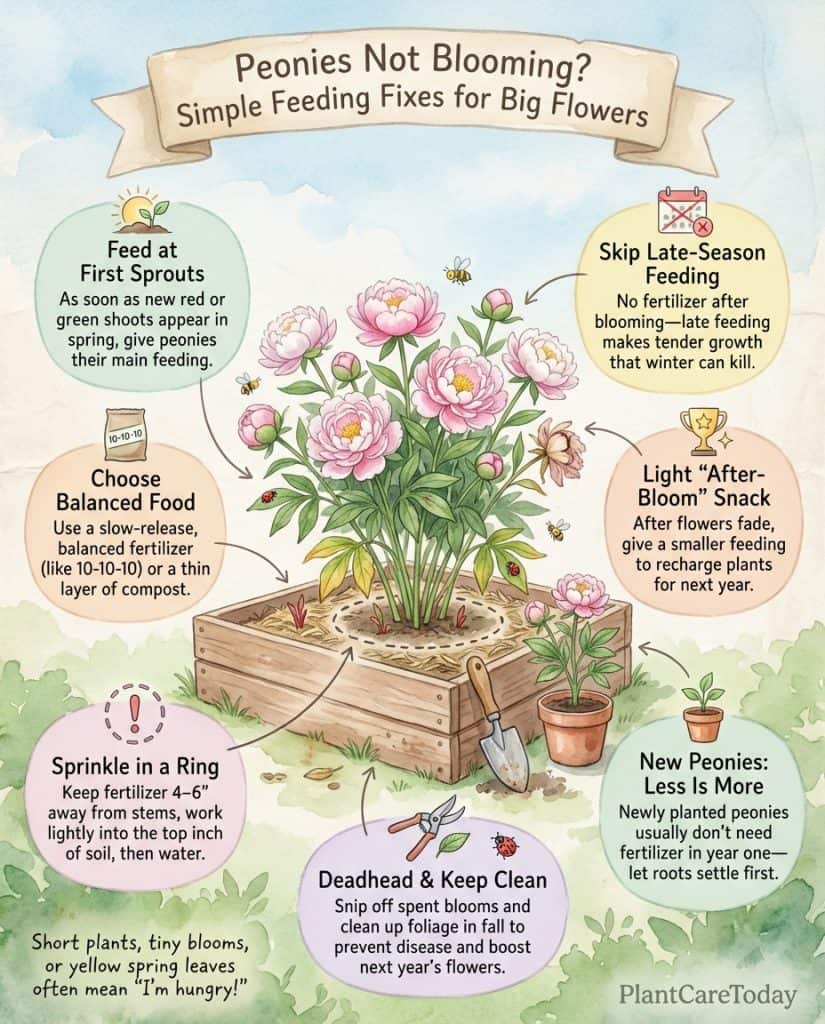
The breakthrough moment happens when you feed them just as new growth appears. This perfectly timed nutrition gets immediately absorbed and channeled directly into what you want: those spectacular, fragrant blooms.
Pro tip that changed everything for my garden: a second, lighter feeding after blooming is like giving your peonies a recovery drink after their performance. It strengthens next year’s show.
When Fertilizing Becomes Plant Sabotage
Most people make this devastating mistake with their peonies: they think more fertilizer equals more blooms. Wrong. Dead wrong.
Late-season fertilizing is like giving someone an espresso right before bed. It triggers new growth that winter will absolutely destroy. I’ve seen gardeners lose entire plants this way.
Here’s another revelation: Newly planted peonies don’t want your fertilizer love in their first year. They’re like teenagers who need to learn independence before getting extra privileges.

Over-fertilization creates what I call “all leaves, no show” syndrome. Your peony becomes a leafy green monster with zero blooms, basically the plant equivalent of all talk, no action.
The Step-by-Step Transformation Method
Ready to rescue your struggling peonies? This method has turned countless plant disasters into neighborhood showstoppers.
- Clear the area around your peony’s base like you’re preparing for surgery. Remove all debris and mulch within a 12-inch radius.
- Choose a balanced, slow-release fertilizer (a 10-10-10 formula works well); consider it a time-release plant vitamin.
- Apply fertilizer in a circle around the base, staying 4-6 inches away from stems to avoid nutrient burn.
- Work the fertilizer into the top inch of soil using gentle, massage-like motions with a hand cultivator.
- Water thoroughly until the soil is moist but not soggy. You want nutrients flowing to roots, not pooling on top.
- Replace the mulch layer to retain moisture and create an ideal growing environment.
Choosing Your Peony’s Perfect Fuel
The game-changer for your peonies isn’t some expensive specialty formula. It’s understanding what actually works.
A balanced, slow-release granular fertilizer is like administering an IV drip of nutrients. The 10-10-10 ratio provides steady, consistent feeding without the boom-and-bust cycle that shocks plants.
Organic options like compost or well-rotted manure are the premium choice. They’re like feeding your peonies a gourmet meal while improving their living conditions.
Fatal Mistakes That Kill Peony Dreams
The most heartbreaking thing I see is gardeners accidentally sabotaging their own success with these completely avoidable mistakes.

Over-fertilizing creates the “all show, no go” problem. Massive foliage that looks impressive but produces zero blooms. It’s like a bodybuilder who’s all muscle but can’t actually perform.
Applying fertilizer directly to stems is basically plant assault. You’re burning the very parts that transport nutrients. Always maintain that protective buffer zone.
Wrong timing in fertilization is like showing up to a party either too early or too late; the moment for maximum impact has passed.
Your Path to Peony Paradise
Proper fertilization is your secret weapon, but it’s just the beginning of peony mastery. Think of it as the foundation that makes everything else possible.
Combine smart feeding with adequate sunlight, consistent watering, and vigilant pest protection, and you’ll create conditions where your peonies don’t just survive. They absolutely thrive and flourish.
Remember: deadheading spent blooms redirects energy into more flowers, and fall cleanup prevents disease from ruining next year’s show. It’s all connected in the beautiful cycle of peony care.
Your peonies have the potential to become the crown jewels of your garden; spectacular, fragrant, and absolutely unforgettable. Give them the nutrition they’re craving, and prepare to be amazed by what they can do.