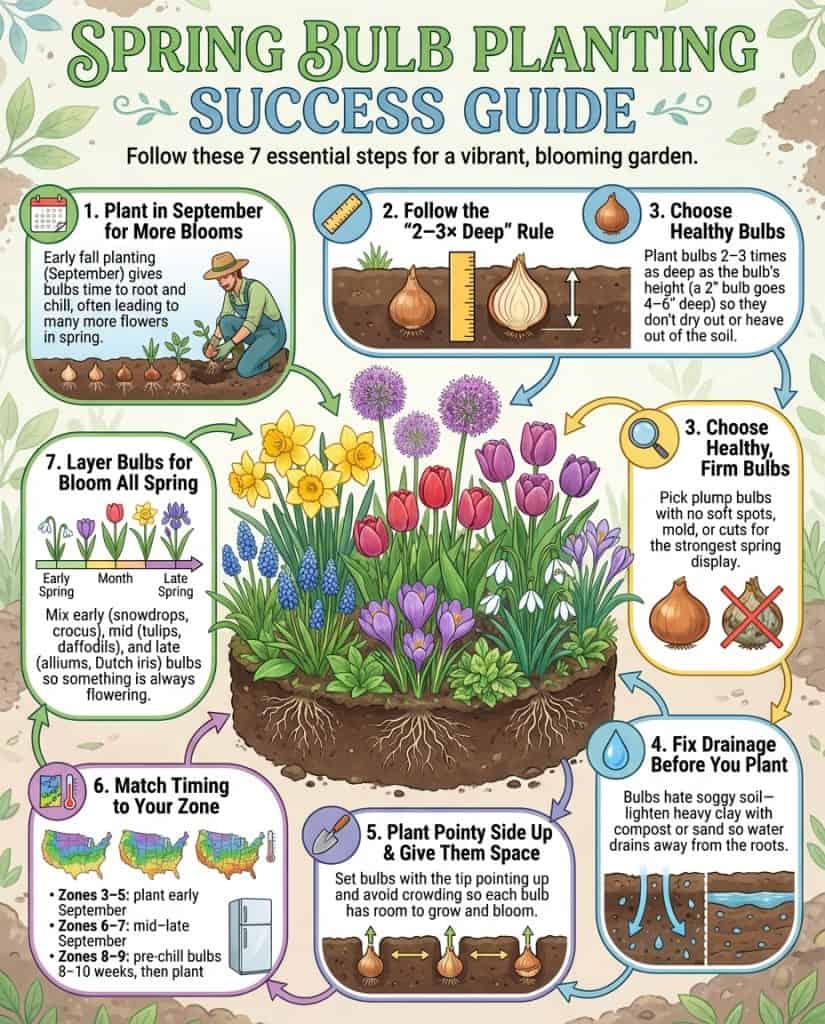
Think the gardening season is over? Think again! September isn’t the finale. It’s the opening act to next spring’s spectacular show.
While your neighbors are packing away their gardening gloves, savvy gardeners know this month holds the secret to those jaw-dropping spring displays that make passersby stop and stare.
(Did you know that fall-planted bulbs typically produce 30% more flowers than those planted later in the season? The secret’s out!)
Why September Is the Magic Month for Bulb Planting
The game-changer for your spring garden isn’t fancy tools or expensive fertilizers. It’s timing. September offers the perfect Goldilocks conditions that bulbs desperately crave.
- Perfect Soil Temperature: Not too hot, not too cold. Just right for root development
- Extended Establishment Time: Giving bulbs months to develop strong root systems
- Natural Chilling Period: Providing the cold dormancy that triggers spectacular spring blooms
- Prime Selection: First pick of the freshest, plumpest bulbs before they’re picked over
I was shocked to discover that bulbs planted in September typically produce twice as many blooms in their first year compared to those planted in November. It’s like giving your future garden a turbo boost!
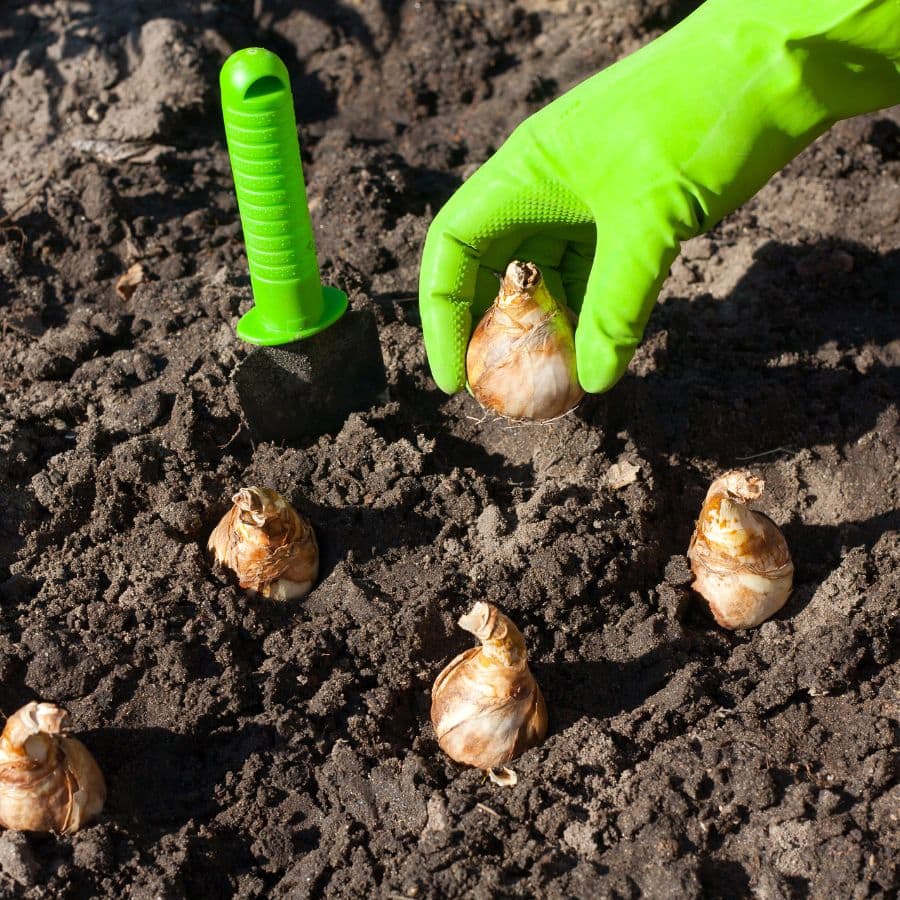
The Bulb-Planting Playbook: Doing It Right
Think of planting bulbs like tucking your garden into bed for a long winter’s nap. These sleeping beauties need the right conditions to wake up glorious in spring.
Choose Bulbs Like You Choose Produce – Firm, plump, and blemish-free. A shriveled bulb is like a deflated balloon. It simply won’t perform.
Size matters here; bigger bulbs generally mean bigger blooms. (They’re essentially flower factories with all the energy packed inside!)
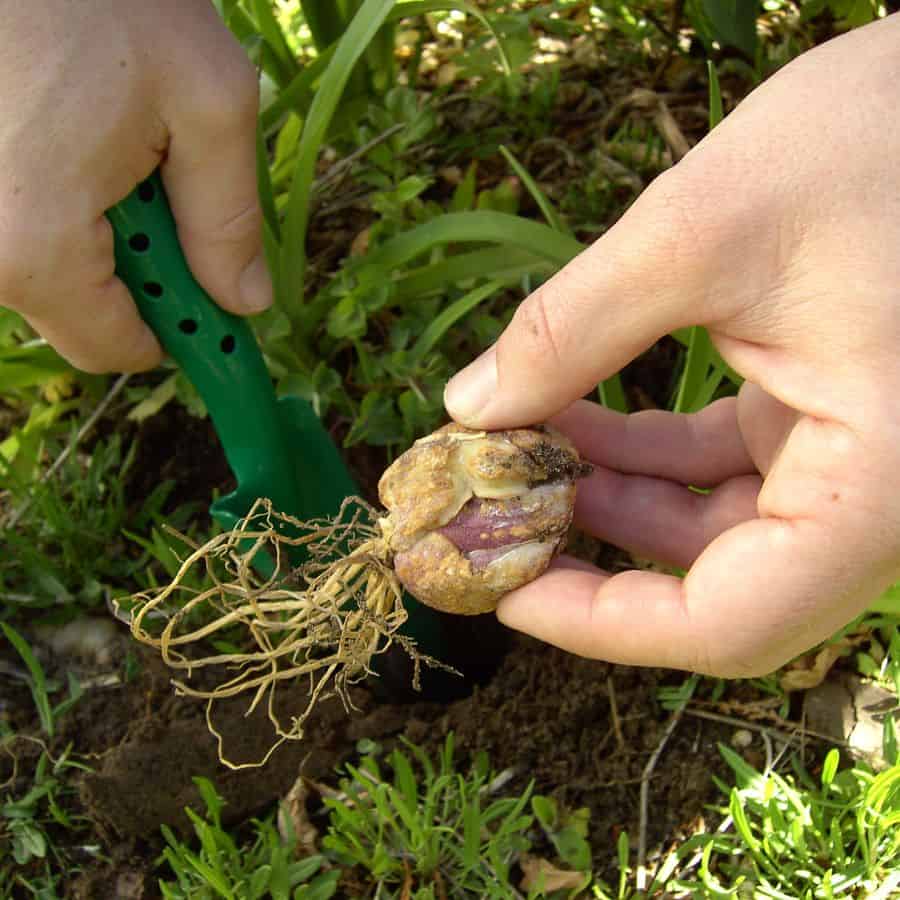
The Depth Decoder – Most bulb failures stem from improper planting depth. Here’s the foolproof formula: plant bulbs 2-3 times as deep as their height. For a 2-inch tulip bulb, that means 4-6 inches deep.
Drainage Is Non-Negotiable – Bulbs in soggy soil are like feet in wet socks, miserable and prone to rot. If your soil is heavy clay, mix in sand or compost to create a fluffy, well-draining bed.
20 Spring Superstars to Plant This Month
The difference between amateur and pro plant parents is simply knowing which varieties deliver the biggest impact . These 20 bulbs are the overachievers of the spring garden world.
Early-Season Show-Stoppers
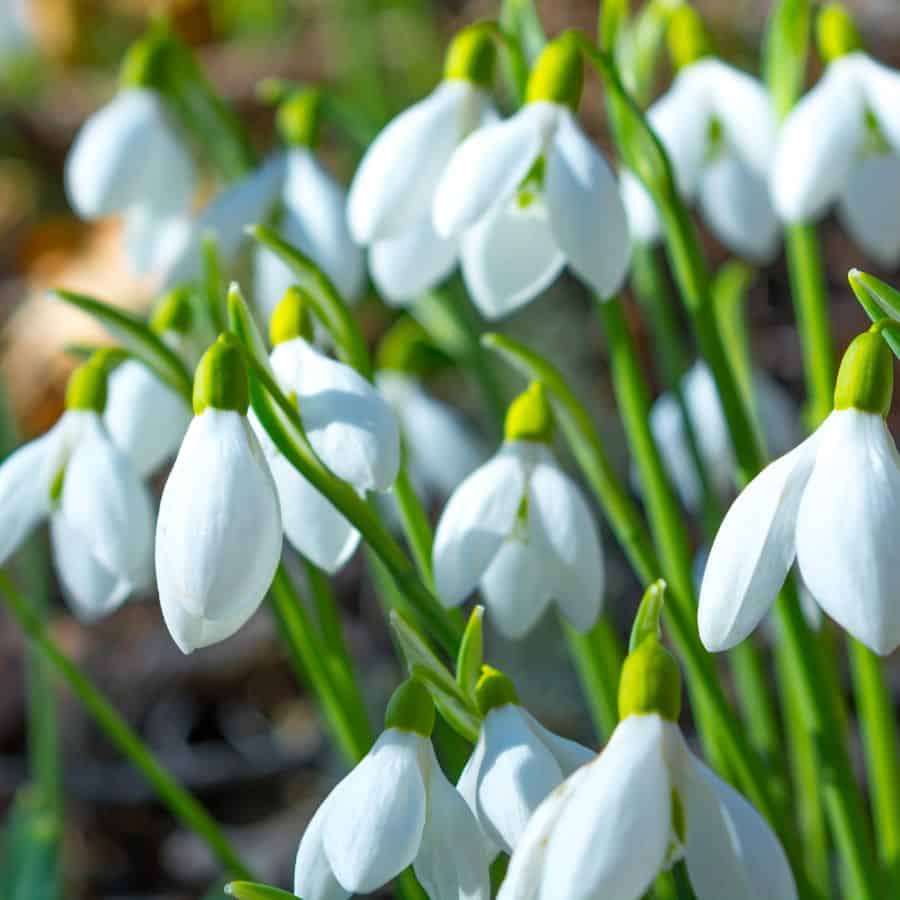
- Snowdrops: These brave little soldiers often bloom while snow still covers the ground. Plant near walkways to enjoy their delicate, nodding flowers, which grow to 4-6 inches tall.
- Crocuses: The true harbingers of spring, these 3-6 inch gems come in purple, yellow, and white. Forget what you’ve heard about complicated lawn plantings. Just toss them on the grass and plant where they land for a natural look.
- Glory-of-the-Snow (Chionodoxa): These starry blue flowers arrive just as winter retreats, creating a carpet of color at just 4-6 inches tall.
- Iris Reticulata: These dwarf irises deliver jewel-toned blooms with a heavenly scent when the garden still seems half-asleep. Perfect for pots at 4-8 inches tall.
- Pushkinia: The unsung hero of early spring with pale blue, star-shaped flowers that naturalize beautifully under trees at 4-6 inches tall.
Mid-Spring Miracle Workers
- Daffodils – The sunshine of the spring garden, these 6-20 inch stunners are deer-resistant and multiply yearly. Your daffodils could outlive you—some plantings have bloomed for over 50 years!
- Tulips – The supermodels of spring, with endless color options at 8-28 inches tall. Plant in groups of at least 10 for Instagram-worthy impact.
- Hyacinths – Nature’s perfume bottles at 6-12 inches tall. Plant these fragrance powerhouses near patios where their intoxicating scent becomes your spring aromatherapy .
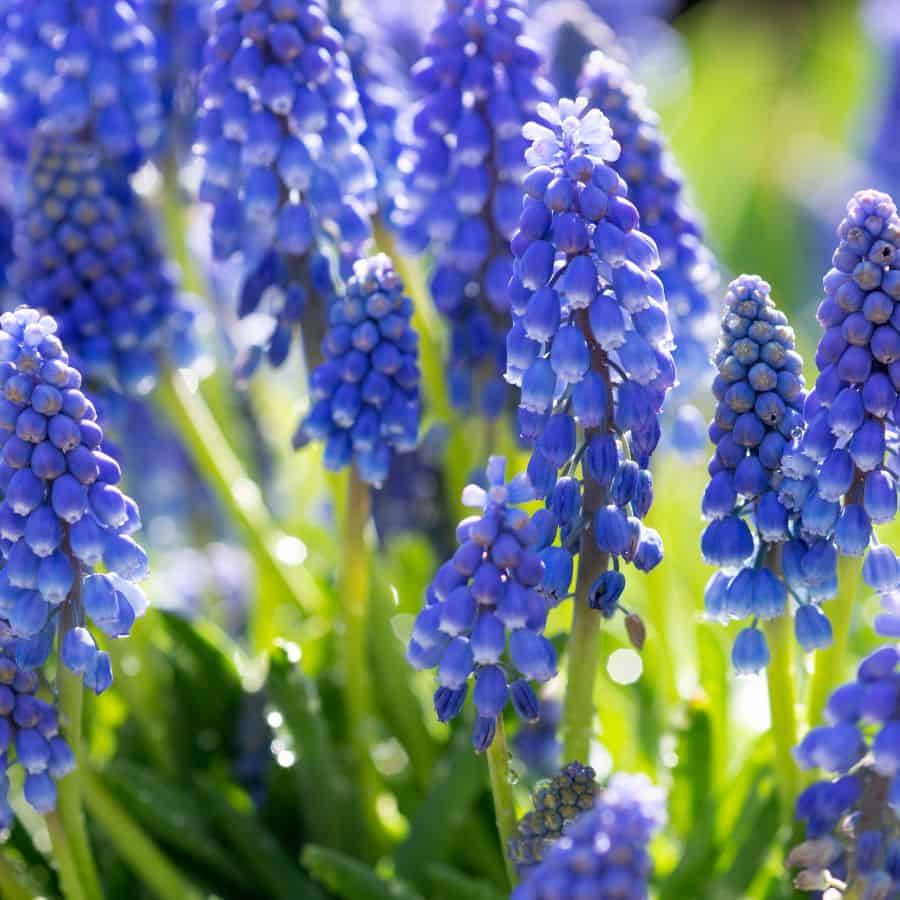
- Grape Hyacinths (Muscari) – These 4-8 inch blue clusters spread like wildfire, creating rivers of color with zero effort from you.
- Fritillaries – The conversation starters of the bulb world, with their unusual checkered patterns at 8-36 inches tall. Plant these on their sides to prevent water from collecting and rotting the bulbs.
- Scilla – These create a true blue carpet (a rare color in the garden) at just 6 inches tall and will spread into stunning drifts over time.
- Anemones – Their daisy-like blooms in jewel tones at 4-8 inches tall look like something from a fairy tale. The secret most plant experts won’t tell you is to soak these hard bulbs overnight before planting.
- Erythronium – Also called Dog’s Tooth Violet, these woodland beauties thrive in partial shade with their nodding, lily-like flowers at 6-12 inches tall.
Late-Spring Luxury
- Alliums – These 12-36-inch-tall architectural wonders look like purple planets hovering above your garden. Bonus: deer turn their noses up at them!
- Dutch Iris – Elegant cut flowers on 18-24 inch stems that look professional but are amateur-easy.
- Camassia – Native American beauties with spiky blue flowers at 18-30 inches tall. These thrive in those damp spots where other bulbs sulk.
- Spanish Bluebells – These 12-18 inch graceful bells will happily colonize woodland areas with minimal help from you.
- Leucojum – Called Summer Snowflake, despite their spring bloom time, these 12-18 inch dainty charmers love damp, shady areas.
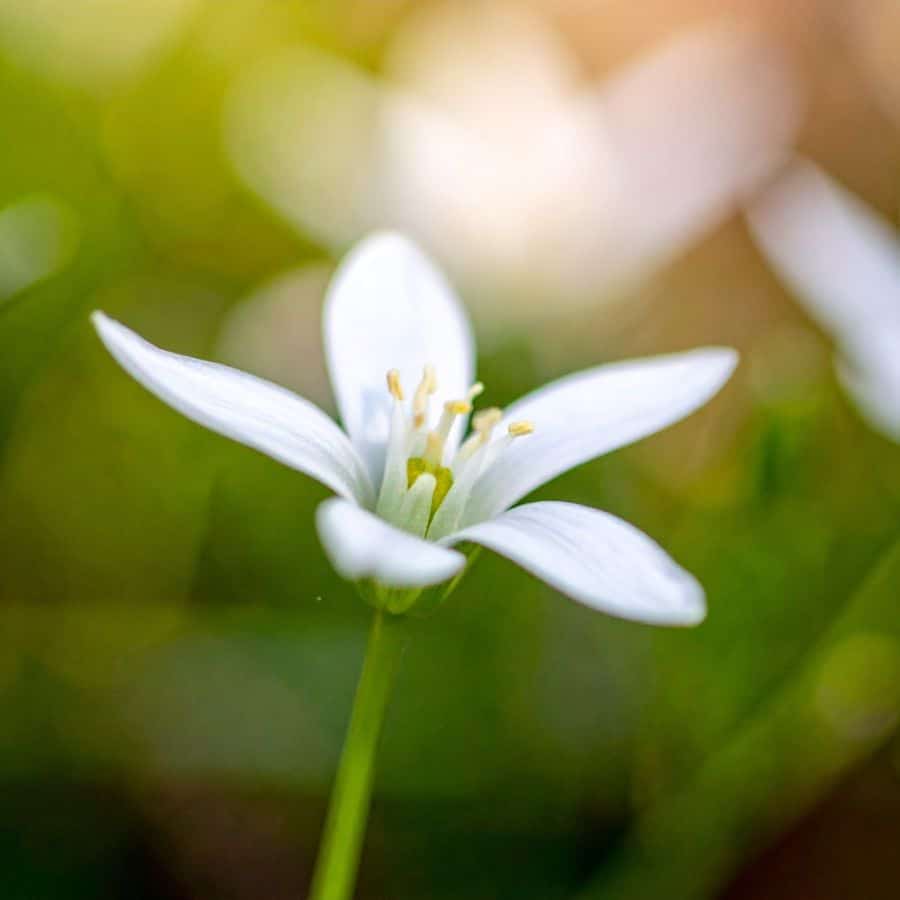
- Star of Bethlehem – Clusters of star-shaped white flowers at 6-12 inches tall. Warning: these can spread enthusiastically, so plant where their exuberance won’t cause problems.
- Ornithogalum arabicum – Striking white blooms with dramatic dark centers on 12-24 inch stems make spectacular cut flowers.
Regional Secrets for Bulb Success
Your garden’s zip code matters! Adapt your planting strategy based on where you live:
- Cold Climates (Zones 3-5): Plant in early September, before the ground freezes solid. Think of it as tucking your bulbs in with an extra blanket of time.
- Moderate Climates (Zones 6-7): Mid-to-late September is your sweet spot for planting.
- Warm Climates (Zones 8-9): Your bulbs need a spa treatment—chill them in the refrigerator (away from fruit!) for 8-10 weeks before planting. They need that artificial winter to perform their spring magic.
Rookie Mistakes That Kill Your Bulb Dreams
Most people make these mistakes with their bulbs, but you won’t fall into these common traps:
- Shallow Planting – Like trying to sleep with your feet sticking out from under the blanket. Too shallow, and those bulbs will be miserable.
- Poor Drainage – Bulbs aren’t fish! They’ll rot in waterlogged soil faster than you can say “spring garden.”
- Upside-Down Planting – Always point the pointy end up. It’s like trying to do a handstand—possible but much harder to grow that way.
- Bulb Crowding – They need personal space like subway passengers. Too close and they’ll produce fewer, smaller blooms.
Your 30-Day Action Plan for Spectacular Spring Blooms
September is slipping away. Here’s your quick-start plan:
- This weekend: Buy your bulbs while selection is prime (garden centers or online specialists)
- Prep your soil: Add compost and ensure good drainage
- Plant in drifts: Natural-looking groups beat straight lines every time
- Water once: Then let nature handle the rest
- Mark spots: Flag where you’ve planted to avoid accidental digging later
September planting is like sending a love letter to your future self. When those first colorful blooms push through the late-winter gloom, you’ll thank yourself for taking action now.
The most vibrant spring gardens aren’t created in March. They’re created right now, in September, with a handful of bulbs and a bit of faith in the seasons to come.
Your garden is trying to tell you something important: don’t miss this critical planting window!
While others wait until October or November (or worse, miss bulb season entirely), you’ll be securing your front-row ticket to spring’s greatest show. Grab your trowel. Your future self will be absolutely thrilled you did.