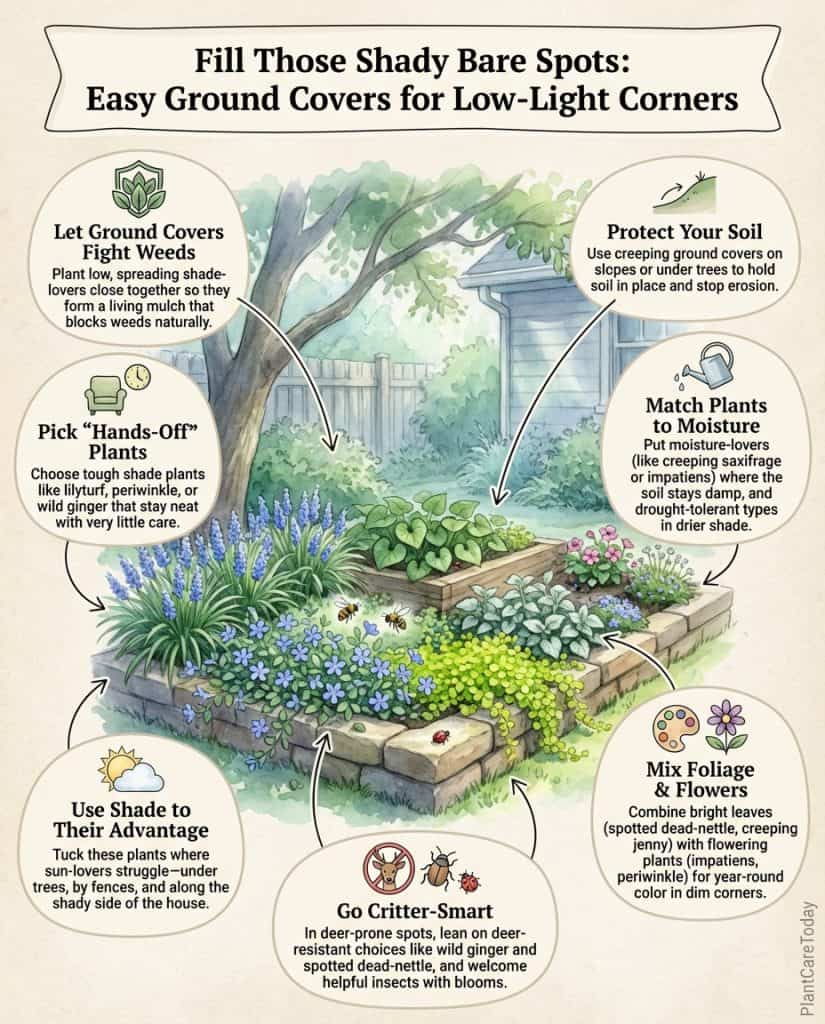
Is that sad, empty patch under your trees making you cringe every time you look outside? You’re not alone. About 78% of gardeners struggle with shaded areas in their yards.
But here’s the good news: those dim, forgotten corners can become some of the best parts of your landscape if you know which plants to choose.
Why Ground Covers Are Your Shade Garden’s Secret Weapon
Forget what you’ve heard about shade gardens being “challenging.” The difference between new and experienced gardeners is simply knowing which plants actually do well in low light .
Ground covers aren’t just fillers. They’re quietly working away while you relax on the porch.
Think of shade-loving ground covers as the introverts of the plant world. They’re quietly impressive once you get to know them.

And like that friend who brings snacks to every gathering, they come with multiple benefits:
• Natural weed control that blocks unwanted plants better than any chemical
• Soil protection that prevents erosion on slopes and tricky areas
• Low-maintenance plants that don’t need constant attention
• Visual interest that adds texture and color to otherwise bare spaces
The real trick most gardeners learn over time is that these shade specialists often need less care than their sun-loving cousins. Who doesn’t want plants that actually prefer a hands-off approach?
20 Shade-Loving Ground Covers That Will Transform Your Garden
I was surprised to learn that many of these plants don’t just “tolerate” shade. They actually do better in it. Let’s look at some of the best options:
1. Blue Lily Turf (Liriope Muscari)
This evergreen forms grass-like clumps with purple flower spikes in summer. At 12 inches tall, it works great for borders and walkways. It’s drought-resistant and pretty much indestructible.
2. Spotted Dead-Nettle (Lamium Maculatum)
The silvery-green leaves really stand out in dark spots. This 6-12 inch spreader creates a dense mat topped with pink, purple, or white flowers. It grows in poor soil, and deer don’t like it.

3. Common Periwinkle (Vinca Minor)
This 6-inch plant has glossy evergreen leaves and violet-blue flowers in spring. It’s excellent at blocking weeds. Think of it as a living mulch that also flowers. It’s drought-resistant and tough once it gets going.
4. Creeping Saxifrage (Saxifraga Stolonifera)
Round green leaves with red-tinged undersides create a nice carpet topped with delicate white flowers in late spring. At 6 inches tall, it prefers moist soil and does well in rocky gardens and flower beds.
5. Wild Ginger (Asarum Canadense)
This 2-4 inch native creates a thick mat of heart-shaped leaves that deer won’t touch. The brown flowers hide beneath the foliage, but the deep shade of the greenery makes it perfect for woodland gardens.
6. Impatiens (Impatiens Walleriana)
Want color in the shade? These 12-18-inch plants deliver bright blooms in almost every color you can think of. They flower constantly. Just keep them watered and watch them brighten up dim areas.
7. Variegated Ground Ivy (Glechoma Hederacea)
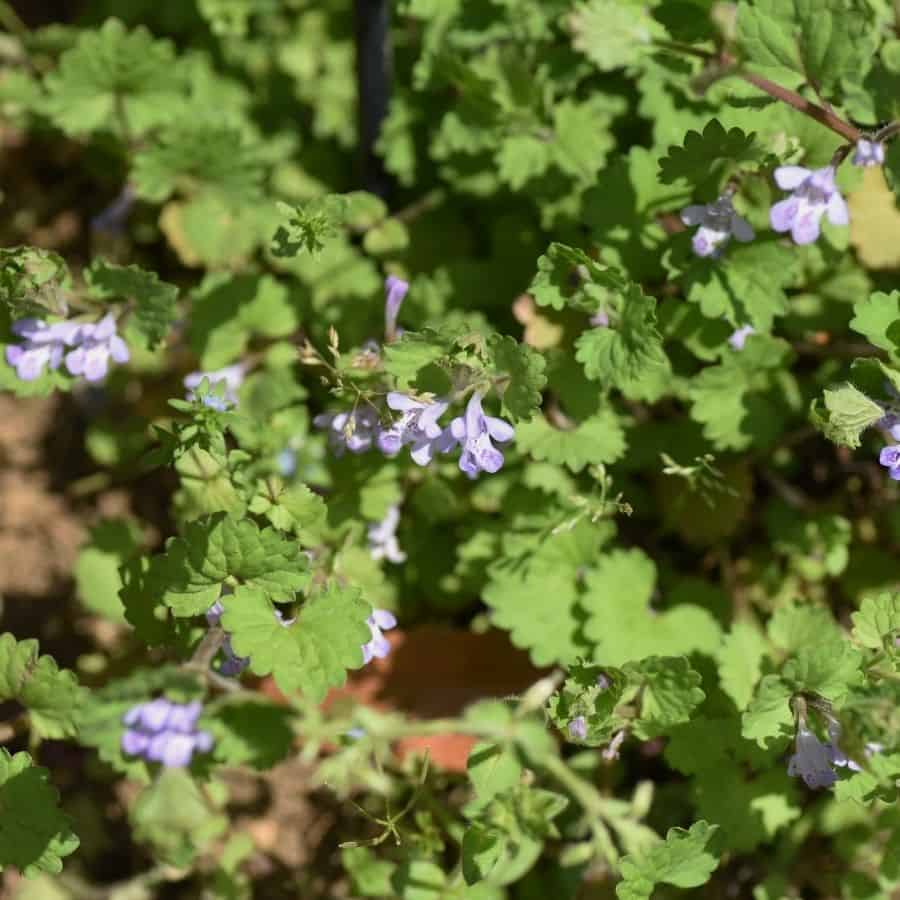
Rounded leaves with creamy white edges create a nice contrast at just 4-8 inches tall. The tiny purple spring flowers are a nice touch. It works well in rock gardens and slopes, and handles drought easily.
8. Creeping Jenny (Lysimachia Nummularia)
This 2-4 inch spreader has bright lime-green leaves that really pop against darker backgrounds. Yellow spring flowers add extra color, and it’s great for pathways and hanging baskets . Just give it consistent moisture and keep it from spreading too far.
9. Blue Star Creeper (Isotoma Fluviatilis)
Don’t let its delicate texture and small blue star flowers fool you. This 2-6-inch plant is tough enough to grow between stepping stones and to handle light foot traffic. It blooms from spring through fall and needs very little care.
10. Hosta (Hosta spp.)
These are the classics of shade gardens. At 12-36 inches, they offer large, dramatic leaves in shades of blue, gold, and variegated white. Many produce lavender or white flower spikes that attract hummingbirds.
What matters most is matching the right plant to your conditions. Here are ten more solid choices for shady spots:
11-20: More Great Options for Shade
• Bunchberry (Cornus canadensis): 9 inches tall with white flowers and bright red berries in summer
• Carpet Boxwood (Pachysandra terminalis): Evergreen with glossy dark green leaves that deer avoid
• Yellow Archangel (Lamium galeobdolon): Silvery variegated leaves with yellow flowers, 12 inches tall
• Christmas Fern (Polystichum acrostichoides): Evergreen fronds 18-24 inches that stay green all winter
• Mint (Mentha spp.): Fragrant 6-12 inch spreader (keep this one contained since it spreads fast)
• Wandering Jew (Tradescantia zebrina): Purple and silver-striped leaves, 6-12 inches, brighten dark spots
• Barrenwort (Epimedium spp): Tough 8-12 inch plant with heart-shaped leaves that handles dry shade well
• Bugleweed (Ajuga reptans): Bronze or green foliage 4-6 inches tall with blue-purple flower spikes
• Golden Star Grass (Chrysogonum virginianum): 6 inches tall with star-shaped yellow flowers that bloom for months
• Purple Heart (Tradescantia pallida): Bold 12-inch spreader with deep purple foliage that creates nice contrast

Transform Your Shade From Problem to Asset
Remember that sad, bare spot we talked about? It doesn’t have to stay that way. The best gardens work with both sun and shade, using the right plants for each condition.
The best part about shade-loving ground covers is that they turn your garden’s biggest challenge into one of its strengths. These plants don’t just survive in shade. They were made for it.
Ready to fix those dim corners? Start with just one or two varieties that match your conditions. Before you know it, you’ll wonder why you ever thought shade was a problem.