Some plants need a little tough love to grow their best. I was surprised to learn that, with certain crops, cutting them back is actually the secret to getting a bigger harvest.
It sounds strange, but it works, and it can change the way you garden.
The Pruning Myth That Hurts Your Harvest
Forget what you’ve heard about pruning. Many people think pruning is only for fruit trees or pretty shrubs. That’s a common misconception. Pruning isn’t some advanced skill that only long-time gardeners know how to do.
It’s simply trimming with a purpose. It helps your plant focus its energy where it matters, like directing it toward fruit rather than extra leaves.
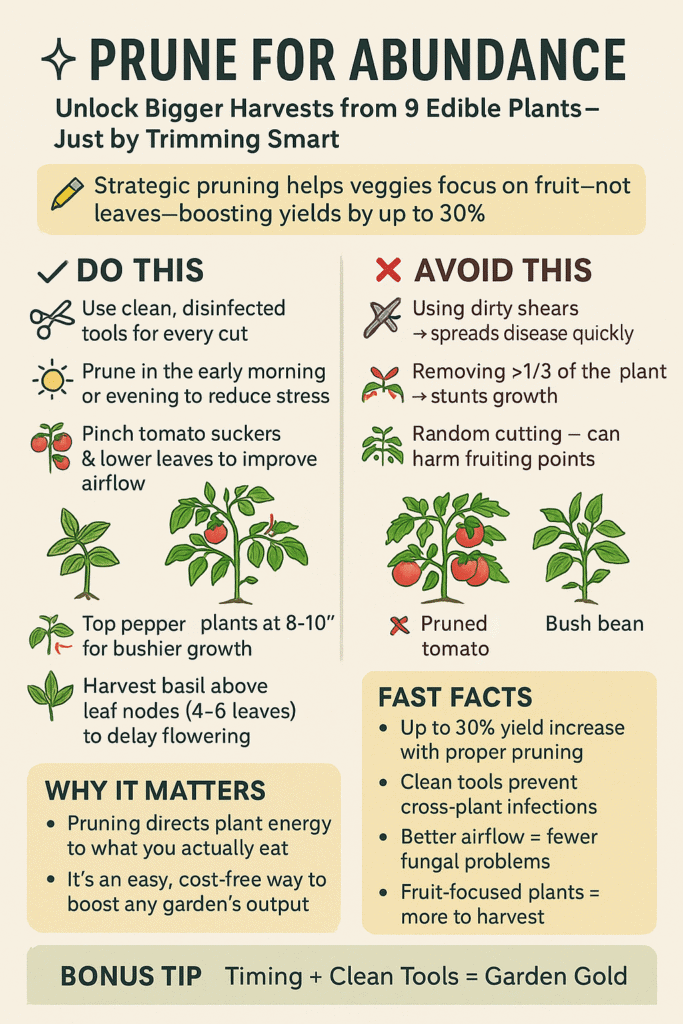
Studies even show that properly pruned plants can yield up to 30% more. That’s not a small boost. That’s more food on your table.

9 Crops That Actually Want You to Trim Them
1. Indeterminate Tomatoes
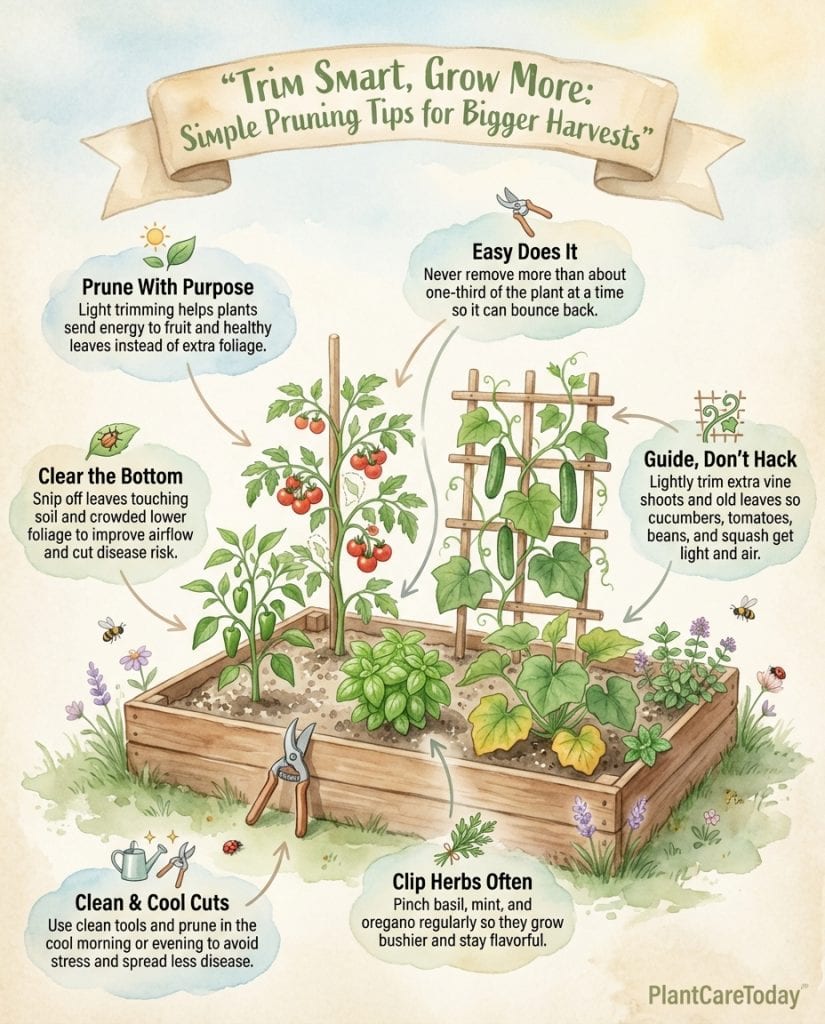
These tomatoes will grow endlessly if you let them. The real way to improve your harvest isn’t more fertilizer, it’s trimming. Remove suckers (the shoots between the main stem and branches) and lower leaves to improve airflow.
Don’t remove too much. Leave enough leaves to prevent sunburn. Think of it as giving your plant a neat haircut, not shaving it all off.
2. Peppers
When pepper plants reach about 8–10 inches tall, pinch the tops. It looks harsh, but it helps them grow more branches, more flowers, and more peppers.
Always remove the lower leaves that touch the soil. But once fruits appear, stop trimming. At that point, the plant needs its energy to focus on fruit.

3. Basil
Basil actually grows more when you harvest often. Once it has 4–6 true leaves, cut just above a leaf pair. This helps it branch and slows flowering, which keeps leaves from turning bitter.
Don’t cut it bare. The key is knowing when to trim, not removing everything.
4. Zucchini
Those large lower leaves can trap humidity and invite disease. Remove them to help air move through the plant and make pests easier to spot.
A light trim is enough. You still need leaves for energy. It’s like opening a window in a stuffy room.
5. Vining Cucumbers
Cucumbers will spread everywhere if you don’t guide them. Trim side shoots that aren’t producing and remove yellowing leaves that drain energy.
Clean cuts help the plant send its energy toward healthy, productive growth. This leads to better, more even cucumbers.
6. Pole Beans
Pole beans can become a tangled mess. Light pruning keeps the vines manageable and encourages more flowers.
But don’t prune bush beans. They don’t benefit from trimming and may produce less.
7. Squash
Both summer and winter squash can get overcrowded. Without trimming, they create damp spaces that encourage powdery mildew.
A light trim helps airflow, but leave stems that are holding fruit. You’re just making space for air, not stripping the plant.
8. Mint & Oregano
These herbs grow fast and can take over. Cutting them back keeps them controlled and encourages thicker, more flavorful growth.
They handle trimming better than most plants. The more you cut, the stronger they get.
9. Eggplant
Eggplants put so much energy into fruit that the plant can struggle under the weight. Remove side shoots and lower leaves so the plant can focus on making fewer but bigger fruits.

Because the fruits are heavy, support the plant after trimming. It’s like helping a cook make one amazing dish instead of many average ones.
How to Prune Well
Your plants are only as healthy as your tools. Dirty shears spread disease. Clean your tools every time.
- Trim early morning or late evening to reduce stress
- Don’t remove more than one-third of the plant at a time
- Make clean cuts to avoid disease
- Look before you cut. Random snips can cause problems
Help Your Plants Grow Through Smart Trimming
Healthy gardens aren’t just watered and fed. They’re trimmed with intention. After pruning, you may worry you removed too much, but trust the process.
Pruning is teamwork. Not forcing the plant, but helping it focus energy where it counts. One small trim at a time can turn a struggling garden into a thriving one.
Grab your pruners, take a breath, and make that first trim. Your garden is ready to reward you.