Tired of babying tomato plants only to harvest a disappointing handful of fruit? You’re not alone.
The thing most gardeners eventually figure out is that growing great tomatoes isn’t about luck. It’s about strategy.
I’ve packed this guide with 12 practical tips that can really improve your tomato harvest . Let’s dig in.
Build a Foundation for Tomato Greatness (Tips 1-3)
Growing tomatoes is like building a house. It all starts with a solid foundation. Get these basics right, and you’re already halfway there.
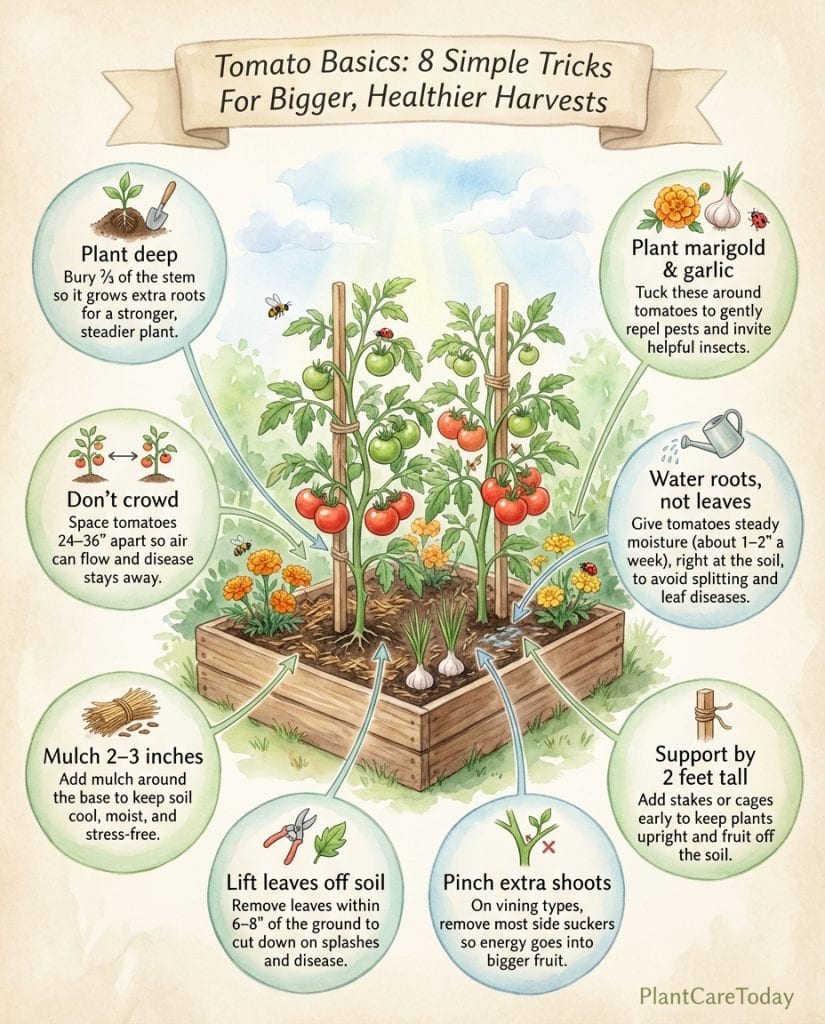
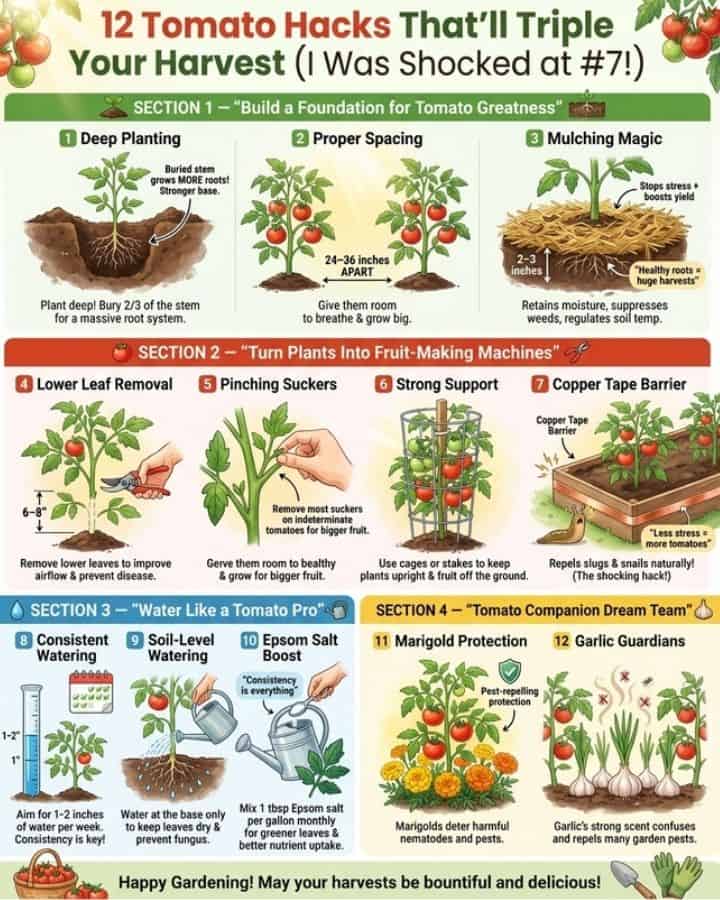
Did you know tomato plants can grow roots directly from their stems? This means burying them deeper creates a much stronger root system.
When transplanting, strip the lower leaves and bury up to 2/3 of the stem. Your plants will develop a root network that’s twice as robust as surface-planted tomatoes.
Space matters more than you think. Cramming tomato plants together is like putting too many people in an elevator; nobody does well, and disease spreads fast.
Give each plant at least 24-36 inches of breathing room. Those few extra inches make the difference between struggling plants and healthy ones.
The best thing for your tomato patch isn’t fancy fertilizer. It’s mulch. A 2-3 inch layer around your plants acts like a temperature-regulating blanket that also locks in moisture.
Studies show mulched tomato plants can produce up to 35% more fruit simply because they experience less stress. That’s a five-minute task with serious payoff.
Transform Good Plants into Fruit-Making Machines (Tips 4-7)
Now that your plants have a strong foundation, it’s time to optimize them for maximum production. These next tips might seem odd (less plant equals more tomatoes?), but they work.
Forget what you’ve heard about leaving plants “natural.” Removing the lower leaves of your tomato plants improves air circulation and prevents disease.
Strip all leaves that would be within 6-8 inches of the soil, especially once plants reach 2 feet tall.
Most people make this mistake with their tomatoes: letting those side shoots (suckers) run wild. These shoots steal nutrients that could be going to fruit production.
For indeterminate varieties, pinch off most suckers that grow between the main stem and branches.
Your plant will redirect that energy into developing larger, more flavorful tomatoes rather than into excess foliage.

• Indeterminate varieties: Remove most suckers for bigger fruit
• Determinate varieties: Be more selective with pruning
Your tomato plants need proper support to stand tall and produce well. Stake or cage your plants before they reach 2 feet tall. This keeps fruit off the ground (where pests and rot lurk) and makes harvesting easier.
I was surprised to learn that simple copper strips make effective pest barriers. When slugs and snails touch copper, they receive a tiny electrical shock, harmless but unpleasant for them.
It’s like surrounding your tomato patch with an invisible fence that keeps the pests away.
Master Moisture: The Watering Secrets That Change Everything (Tips 8-10)
Water is essential for tomatoes, but get it wrong, and you’re inviting problems. These three watering tips matter most.
Tomatoes need consistent moisture, about 1-2 inches of water weekly, adjusted for rain and temperature. Inconsistent watering leads to problems like blossom end rot and fruit splitting.
Think of watering like feeding a pet, regular, reliable, and appropriate to conditions.
Where you water matters as much as when you water. Always water at the base of the plant, never from above.
Wet leaves invite fungal diseases that can destroy your crop within days. A simple soaker hose works great here.
The boost your tomatoes might be missing? Epsom salt. This ordinary bathroom product delivers magnesium that can revive yellowing leaves and boost fruit production.
Studies show that tomato plants given magnesium supplements can produce up to 20% more fruit with better color and flavor.
Mix 1 tablespoon per gallon of water and apply monthly. Your plants will respond with healthier growth.

Create a Tomato Dream Team with Companion Plants (Tips 11-12)
Strategic plant partnerships can reduce pest problems without chemicals.
Marigolds aren’t just pretty. They’re tomato bodyguards. These bright flowers produce compounds that repel nematodes, aphids, and other tomato-loving pests.
Plant them 12-24 inches from your tomatoes to create a protective perimeter that works around the clock. It’s like having a security system for your garden that also looks nice.
Garlic might make your breath stink, but pests find it repulsive. Planting garlic between tomato plants creates an aromatic barrier that confuses and repels insects looking for a tomato meal.
Plus, both plants have similar growing requirements, making them good garden companions.
Growing great tomatoes takes some effort, but these 12 strategies work together to create a system that really pays off.
Try even half of these tips, and your tomato harvest will improve significantly. What used to be frustrating can become one of your garden’s best crops.
Remember: tomatoes might test your patience occasionally, but they’ll reward your attention with harvests that no store-bought tomato can match. Now go grow some tomatoes.