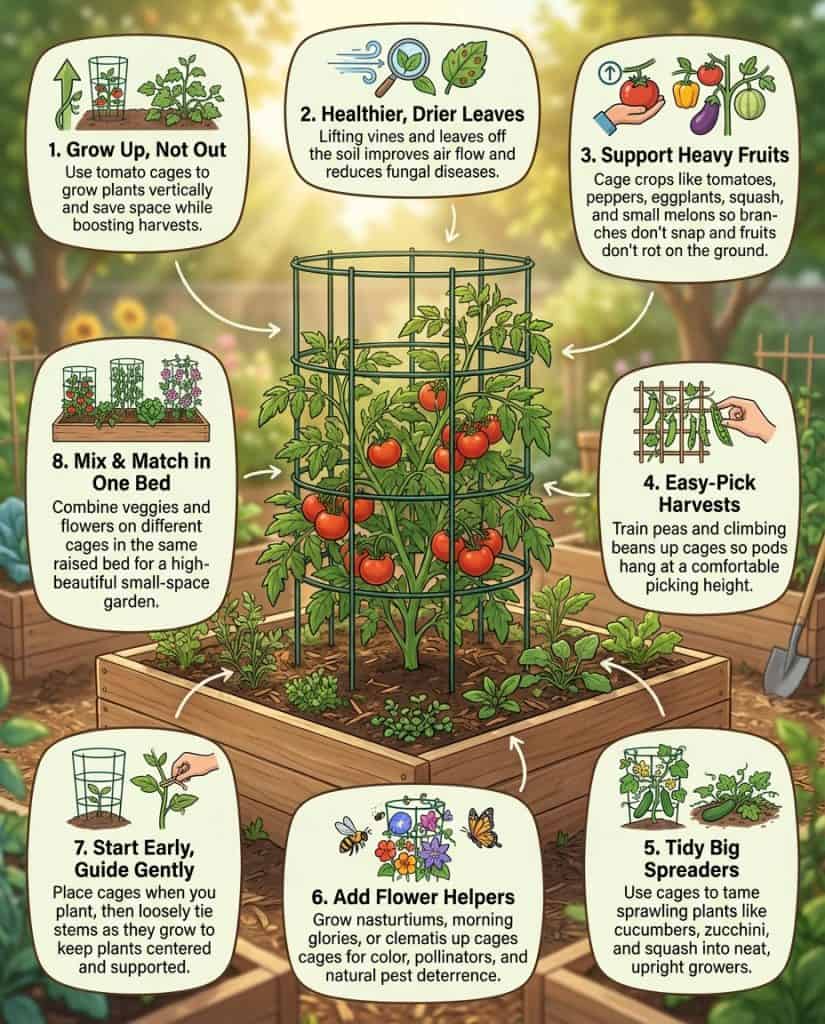
Here’s a game-changing revelation that most gardeners miss: those humble tomato cages sitting in your shed are about to become your garden’s secret weapon.
I was shocked to discover that these simple wire structures can transform nearly any plant into a thriving, space-saving powerhouse.
The secret most plant experts won’t tell you is that vertical growing can increase your garden’s productivity by up to 300% while slashing disease problems in half.
Think of tomato cages as personal trainers for your plants. They provide structure, support, and discipline that turn sprawling chaos into organized success.
Ready to see your garden reach new heights? Let’s dive into the 12 plants that’ll make you wonder why you ever grew anything flat again.

1. Tomatoes: The Champion That Started It All
Let’s be honest. Tomatoes are the undisputed champions of cage growing. These plants are like eager students who desperately want to succeed but need just a little guidance to reach their potential.
When you cage your tomatoes, you’re essentially giving them a personal support system that prevents the heartbreak of broken branches loaded with gorgeous fruit.
The magic happens with improved air circulation. It’s like giving your plants room to breathe, which dramatically reduces devastating fungal diseases that can wipe out entire crops overnight.

2. Peas: The Space-Saving Superstars
Peas are natural-born climbers with an incredible secret: they can produce triple the harvest when grown vertically compared to ground-sprawling methods.
These little green gems treat tomato cages like jungle gyms, eagerly wrapping their tendrils around every available support.
The game-changer for your pea harvest isn’t what you think. It’s not the variety or the soil; it’s simply getting them off the ground. Vertical peas stay cleaner, ripen more evenly, and practically harvest themselves into your hands.
3. Nasturtiums: The Beautiful Pest-Fighting Warriors
Here’s where things get interesting. Nasturtiums aren’t just pretty faces. They’re your garden’s undercover security team.
These vibrant flowers act like bouncers at an exclusive club, keeping aphids, cucumber beetles, and other troublemakers away from your precious vegetables.
Growing nasturtiums in cages creates a stunning vertical display that’s like having a living bouquet while simultaneously protecting your entire garden. Talk about multitasking!
4. Cucumbers: The Clean Freaks Who Love Heights
Cucumbers are the clean freaks of the vegetable world. They absolutely despise lying in dirt and getting muddy. When you give them a cage to climb, they respond with enthusiasm that’ll shock you.
Vertical cucumbers produce straighter fruit, resist disease better, and make harvesting so easy you’ll wonder why you ever grew them any other way. Plus, they’ll reward your efforts with yields that can be 40% higher than ground-grown varieties.
5. Beans: The Ambitious Climbers
Beans are like ambitious employees who just need the right opportunity to shine. Give them a tomato cage, and they’ll climb with determination that puts mountaineers to shame.

The breakthrough discovery about vertical bean growing is that it virtually eliminates the back-breaking harvest work.
No more crawling around on hands and knees searching for hidden pods; everything hangs at perfect picking height.
6. Peppers: The Heavy Lifters Who Need Support
Most people make this mistake with their peppers: they assume these plants are sturdy enough to support themselves. Wrong! Pepper plants are like bodybuilders who can lift heavy weights but need a spotter to prevent disaster.
When pepper plants get loaded with fruit, they become surprisingly top-heavy and prone to dramatic collapses that can snap branches and ruin weeks of growth. A simple cage prevents this heartbreak entirely.
7. Morning Glories: The Living Privacy Screens
Morning glories are the overachievers of the flower world, turning humble tomato cages into spectacular vertical masterpieces. These climbing beauties create living art that changes throughout the day as their blooms open and close.
Think of caged morning glories as nature’s wallpaper. They’ll transform any boring fence or corner into a vibrant focal point that neighbors will actually stop to admire.
8. Zucchini: The Space Hogs Gone Vertical
Here’s a shocking revelation: zucchini don’t have to take over your entire garden like aggressive real estate developers. With proper cage training, these sprawling monsters become well-behaved vertical citizens.
Caged zucchini plants produce the same abundant harvest but in a fraction of the space. Plus, you’ll never again lose a baseball-bat-sized zucchini hiding under massive leaves!
9. Eggplants: The Heavy Fruit Champions
Eggplants are like proud parents carrying precious cargo. They need support to show off their beautiful, heavy fruit properly. Without cages, these plants struggle under their own success, often breaking branches just when harvest time arrives.

The primary difference between amateur and professional eggplant growers is the provision of adequate support. Caged eggplants produce larger, cleaner fruit with virtually no ground rot issues.
10. Squash: The Reformed Space Invaders
Squash plants are notorious garden bullies, spreading their massive leaves and claiming territory like conquering armies. But here’s the secret: they can be reformed with the right training!
Cage-grown squash becomes surprisingly civilized, growing upward instead of outward. This method works especially well for smaller varieties and can triple your growing capacity in limited space.
11. Melons: The Sweet Climbers
I was shocked to discover that melons, yes, heavy melons, can actually be grown vertically with proper support. The key is choosing smaller varieties and providing additional slings for developing fruit.
Vertical melon growing prevents ground rot, which destroys so many crops, and actually produces sweeter fruit due to improved air circulation and sun exposure.
12. Clematis: The Stunning Finale
Clematis transforms ordinary tomato cages into breathtaking floral displays that resemble those found in a high-end garden magazine. These climbing beauties produce cascades of flowers that create dramatic vertical interest.

Your clematis is trying to tell you something important: it wants to climb! Give it a cage, and it’ll reward you with blooms that last from spring through fall, creating a living sculpture in your garden.
The magic of tomato cages isn’t just about support. It’s about unlocking each plant’s full potential. When you give plants the structure they crave, they respond with healthier growth, higher yields, and easier maintenance. Ready to go vertical? Your garden will never be the same!