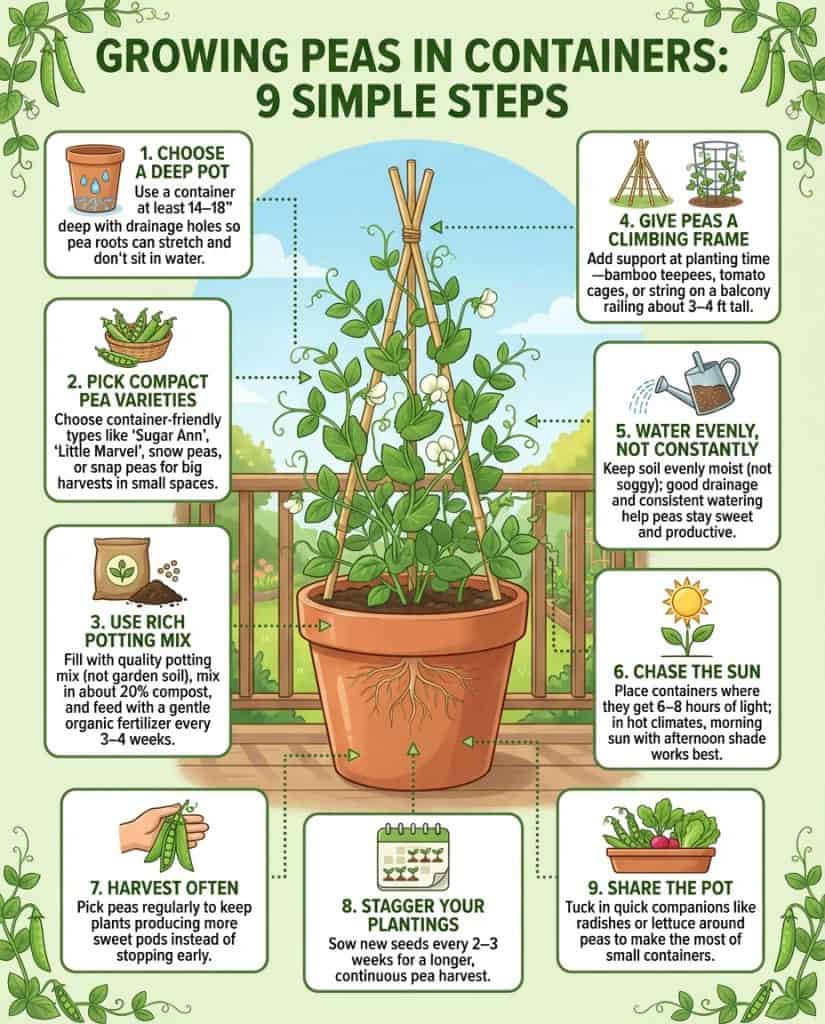
Craving garden-fresh peas but only have a small balcony? I was surprised to learn that my tiny balcony could produce sweeter peas than many backyard gardens.
After turning my concrete slab into a mini pea garden, I’ve figured out what actually works for growing peas in containers. Here’s what you need to know.
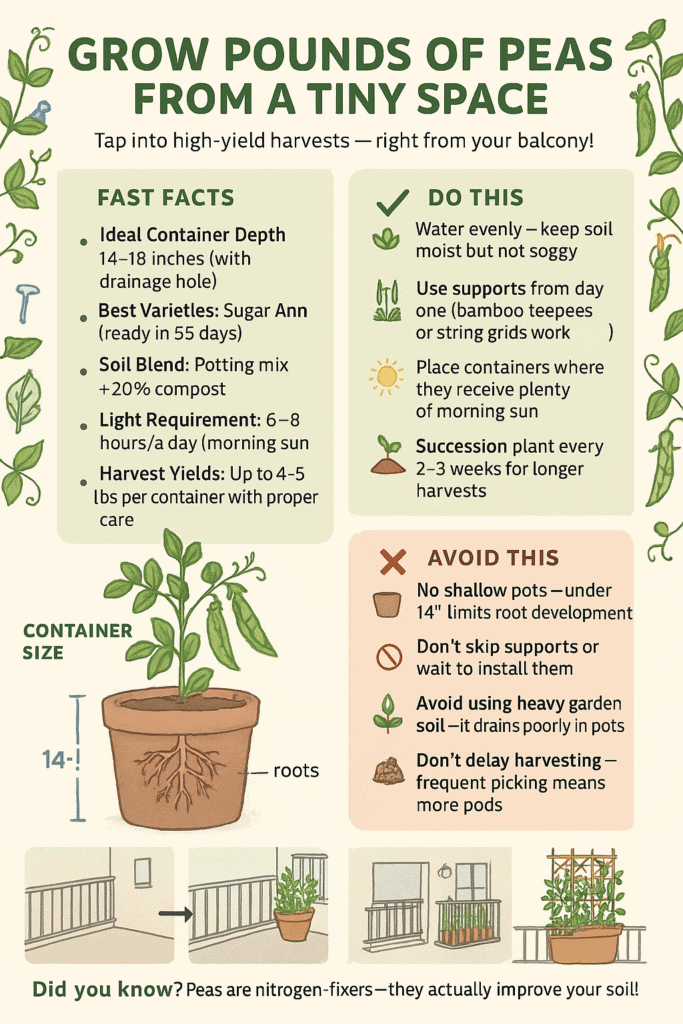
The Container (Your First Big Decision)
Most people grab whatever pot is handy and then wonder why their plants struggle. Your container choice really matters for peas.
The real trick is that peas need room to stretch their roots. Your container should be at least 14 to 18 inches deep. Anything less and your plants will struggle.
- Drainage holes are essential; without them, your peas will drown
- Fabric pots work well because they let roots breathe and prevent water buildup
- Width matters less than depth, but wider containers let you plant more
A single properly sized container can yield 4-5 pounds of peas in a single season. That’s enough for several meals.
Not All Peas Are Created Equal (Choose Your Variety)
The variety you pick can really affect how well your peas do in containers.
For containers, these varieties work best:
- Sugar Ann: Sweet, compact, and ready to harvest in just 55 days
- Little Marvel: A dwarf variety that produces more than you’d expect
- Snow Peas: Flat, crisp pods that are great for stir-fries
- Snap Peas; The entire pod is edible and sweet
I’m partial to Sugar Ann. They produce well despite staying small, which is perfect for containers.

The Soil That Makes a Difference
Your peas are only as good as the soil they’re planted in. Basic potting soil works, but you can do better.
What matters most isn’t fancy equipment or rare seeds. It’s good soil and consistent feeding.
- Start with high-quality potting mix (not garden soil)
- Mix in 20% compost for extra nutrients
- Apply balanced organic fertilizer every 3-4 weeks during the growing season
- Sprinkle a handful of worm castings on the surface monthly for a natural boost
Here’s something interesting: peas can actually improve your soil. They’re nitrogen-fixers, meaning they pull nitrogen from the air and store it in their roots.
Support Systems: The Backbone of Pea Success
Even compact peas need something to climb. Without support, your peas will sprawl and take up more space than necessary.
Install your support system when you plant, not later. That way, you won’t disturb developing roots. Your climbing structure doesn’t need to be fancy. It just needs to work.
- Simple bamboo tepees create a natural climbing structure
- Tomato cages work well for container peas
- String grids attached to balcony railings maximize vertical space
- Make sure supports are at least 3-4 feet tall for most varieties
Small-Space Tips: Getting the Most from Your Container
The difference between new and experienced gardeners often comes down to attention to detail. When you’re working with limited space, every factor counts.

Think of your container garden as a tiny ecosystem. These techniques will help your peas do well:
- Water consistently, but don’t overdo it. Peas prefer even moisture
- Position containers to get 6-8 hours of sunlight (morning sun is best in hot climates)
- Harvest frequently to keep the plants producing
- Plant every 2-3 weeks for continuous harvests
- Consider companion planting with radishes or lettuce to maximize space
That moment when you pluck and taste your first homegrown pea is pretty special. The snap, the burst of sweetness that store-bought can never match. There’s really nothing like it.
Your Pea-Growing Journey Starts Now
That first harvest from my balcony garden had me grinning. There’s something satisfying about growing food in a space most people would say is too small for gardening.
With these container tips, you’re not just growing peas. You’re proving that any space can produce food. Your tiny container garden starts with a single seed.