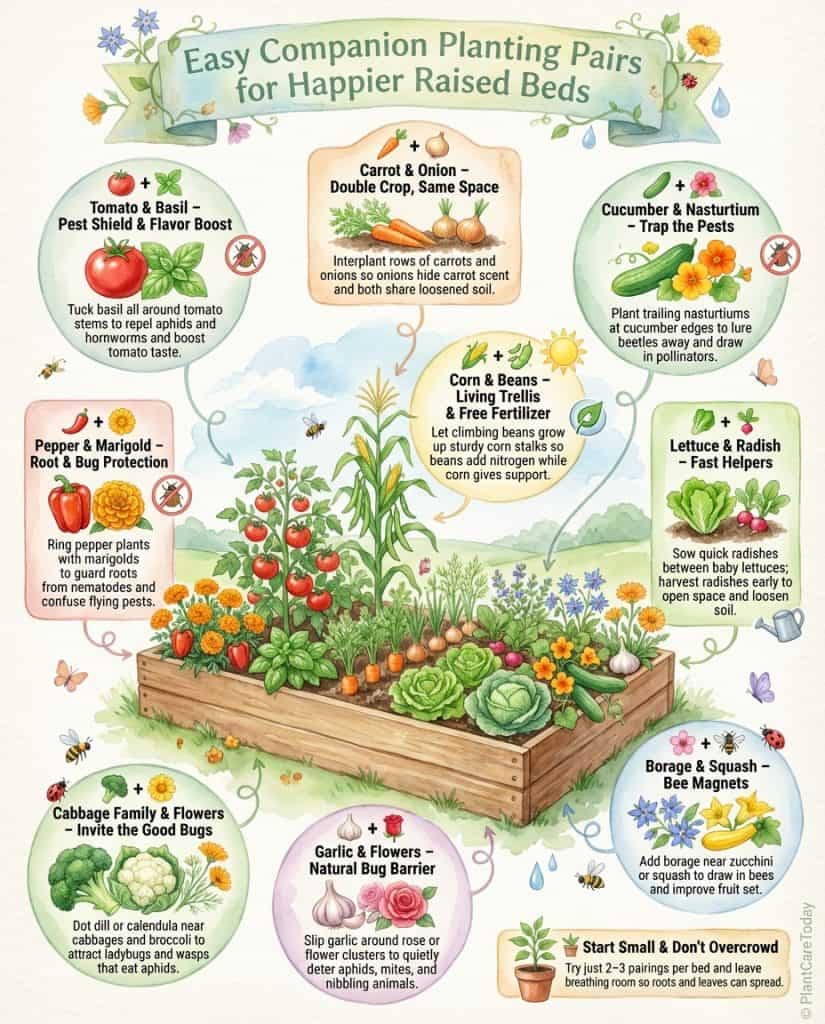
Forget everything you think you know about planting vegetables in neat, separate rows. The secret most gardening experts swear by is thousands of years old, and it’s about to transform your raised beds into thriving ecosystems that practically tend themselves.
Here’s a shocking statistic: Gardens using companion planting techniques can increase yields by up to 40% while reducing pest damage by 75%.
That’s like having a personal garden assistant working 24/7, except this assistant is free and comes with gorgeous flowers.
Think of companion planting like creating the perfect roommate situation for your plants. Some plants are natural protectors, others are givers, and some are the life of the party that attracts all the beneficial insects. When you pair them strategically, magic happens.

1. Tomatoes and Basil: The Power Couple
This isn’t just a marriage made in pasta heaven. It’s a pest-fighting powerhouse. Basil acts like a bouncer at your tomato club, kicking out aphids, whiteflies, and those devastating tomato hornworms that can strip a plant overnight.
The aromatic oils in basil not only repel pests; they also make your tomatoes taste sweeter. It’s like having a flavor enhancer growing right in your garden. Plant basil around the base of your tomato plants for maximum impact.
2. Carrots and Onions: Underground Allies
This root vegetable duo is like having a natural security system below ground. Onions release a pungent compound that sends carrot flies running, while carrots loosen the soil for their shallow-rooted partners.
The best part? You can interplant them so closely that you’re essentially getting two crops in the space of one. Your raised bed real estate just became twice as valuable.

3. Cucumbers and Nasturtiums: The Trap and Protect System
Nasturtiums are the ultimate sacrifice plant in the garden world. These stunning flowers act as living decoys, attracting cucumber beetles and aphids away from your precious cucumbers like a magnet.
But here’s the brilliant part: while they’re busy being pest magnets, nasturtiums are also throwing a pollinator party with their bright blooms. Your cucumbers receive protection and improved pollination. Talk about a win-win situation.
4. Peppers and Marigolds: Beauty Meets Beast Mode
Marigolds might look innocent, but they’re actually underground assassins that release chemicals toxic to nematodes. Those microscopic worms that love to munch on pepper roots.
The vibrant orange and yellow blooms also deter aphids and whiteflies. Meanwhile, your pepper plants provide just enough shade to keep marigolds happy during scorching summer days. It’s like they were designed for each other.
5. Beans and Corn: Ancient Wisdom That Still Works
Native Americans called this combination the “Three Sisters,” and for good reason. Corn becomes a living trellis for climbing beans, while beans work overtime fixing nitrogen in the soil. Basically, fertilizing the corn for free.
This vertical partnership is perfect for raised beds where space is premium. You’re literally growing up instead of out, and both plants are happier for it.
6. Lettuce and Radishes: The Speed Demons
This combination is for gardeners who want instant gratification. Radishes are ready to harvest in just 30 days, clearing space just as your lettuce needs room to spread out.
But radishes aren’t just fast. They’re also soil engineers, breaking up compacted earth and improving drainage for your lettuce. It’s like having a tiny construction crew preparing the perfect foundation.
7. Spinach and Strawberries: The Shade Game
Spinach thrives in the cool, dappled shade created by strawberry plants, which also act as living mulch, suppressing weeds and retaining moisture. Think of spinach as the ultimate ground cover that you can eat.
This partnership extends your growing season, too. You can harvest spinach in spring and fall when it’s too hot for most greens, thanks to that natural strawberry canopy.

8. Cabbage and Dill: The Butterfly Whisperer
Dill is like a secret agent in your garden, attracting beneficial insects while simultaneously confusing cabbage moths with its strong aroma. Those white butterflies that seem so innocent? They’re scouting for places to lay eggs that turn into cabbage-destroying caterpillars.
The ladybugs and parasitic wasps that dill attracts are your garden’s special forces, taking out pests before they become problems.
9. Zucchini and Borage: The Pollinator Magnet
Borage produces stunning blue flowers that bees find absolutely irresistible. More bees mean better pollination for your zucchini, which translates to dramatically higher yields .
I was shocked to discover that gardens with borage can achieve up to 60% better fruit set on squash-family plants. Additionally, borage repels tomato hornworms and cabbage moths as an additional defense.
10. Garlic and Roses: Fragrant Fortress
Garlic isn’t just for vampires. It’s also garden armor for roses. The sulfur compounds in garlic repel aphids, spider mites, and even larger pests like deer and rabbits.
Roses provide afternoon shade that helps garlic bulbs develop properly in hot climates. It’s a fragrant partnership that makes your raised bed smell amazing while keeping pests at bay.
11. Beets and Swiss Chard: Rainbow Warriors
These colorful cousins are actually from the same plant family, so they have identical growing needs. Beets work below ground, aerating soil for Swiss chard’s shallow roots, while both plants paint your garden in brilliant reds, yellows, and greens.
The visual impact alone makes this combination worth trying, but the space efficiency makes it a genius choice for raised beds.
12. Broccoli and Calendula: The Pest Prevention Squad
Calendula’s bright orange and yellow flowers are like neon signs advertising “Beneficial Insects Welcome Here!” The ladybugs and hoverflies that come for the party stay to feast on broccoli-destroying aphids.

Calendula also deters cabbage moths with its scent, creating a protective bubble around your broccoli plants. Plus, the flowers are edible and add a peppery kick to salads.
Avoid These Companion Planting Disasters
The biggest mistake I see gardeners make is treating their raised bed like a plant nightclub and cramming everyone together. Overcrowding kills more companion plantings than any pest ever could.
Another disaster? Pairing plants that hate each other. Black walnut trees near tomatoes, fennel near most vegetables, or putting heavy feeders together without extra nutrition. Do your homework before you play matchmaker.
Many people also overlook crop rotation, which leads to soil depletion and pest buildup. Even the best companion plants need fresh real estate every few seasons.
Your Garden Revolution Starts Now
These 12 companion-planting combinations are your ticket to a thriving raised-bed ecosystem that works smarter, not harder. You’re not just growing plants. You’re orchestrating a symphony where every player has a role.

Start with just 2-3 combinations that excite you most. Watch how your garden transforms from a collection of individual plants into a connected, self-supporting community. Your neighbors will wonder what secret you’ve discovered, and your harvest basket will give you the answer.