I was shocked to discover that plants, like people, have BFFs and sworn enemies! After years of mediocre harvests, I stumbled upon the game-changing secret of companion planting from a fellow gardener online.
This simple strategy completely transformed my garden from struggling to spectacular! Did you know that many common garden pests can be deterred naturally with the right plant pairings?
Forget expensive sprays or complicated routines; nature already has the perfect solution built in.

Plant Love Stories: Perfect Pairs That Thrive Together
Just like that couple who bring out the best in each other, some plants are simply meant to be together. These power couples support each other’s growth, repel pests, and create garden magic!
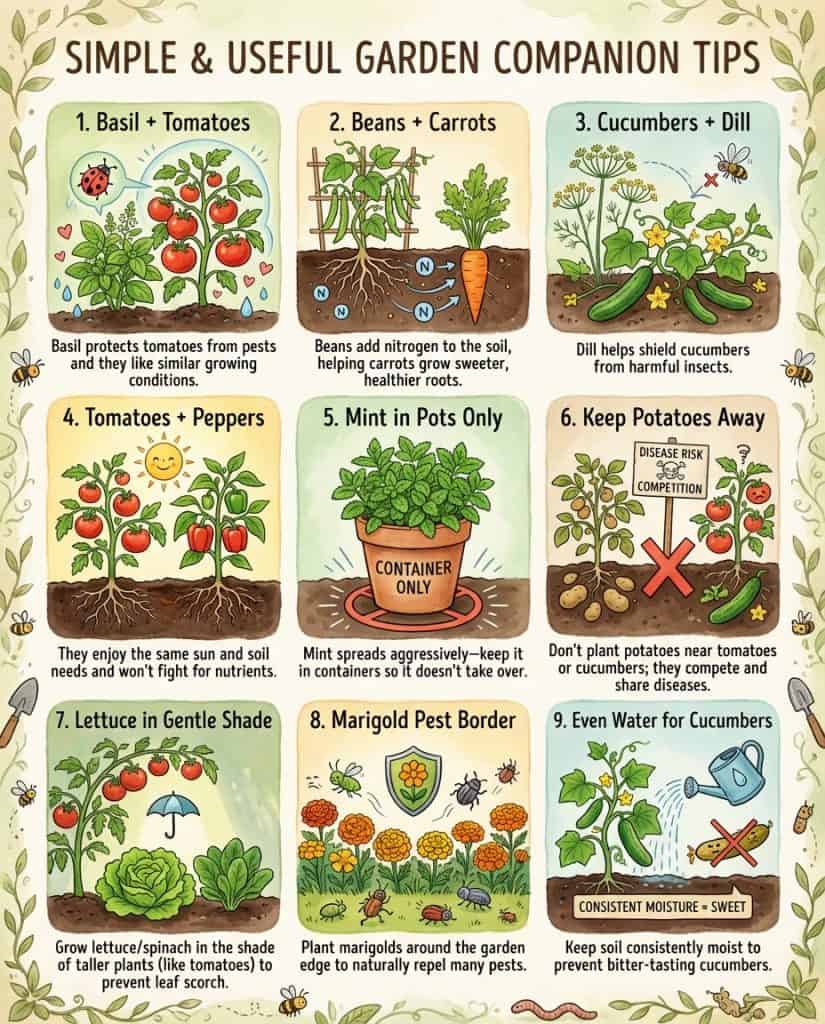
- Basil ❤️ Tomatoes – This iconic duo is the garden equivalent of peanut butter and jelly! Basil’s intense aroma acts as a natural bodyguard, driving away the insects that would otherwise feast on your precious tomatoes. Plus, they taste amazing together in your kitchen, too!
- Beans ❤️ Carrots – Beans are the generous neighbors of the garden world. They actually fix nitrogen in the soil (nature’s free fertilizer!), creating nutrient-rich conditions that help carrots develop their sweet, vibrant roots.
- Cucumbers ❤️ Dill – Not only do they make perfect pickles together, but dill naturally repels predatory insects that would otherwise stress your cucumber plants. It’s like dill provides a protective force field around your cukes!
- Tomatoes ❤️ Peppers – These nightshade cousins share similar growing preferences and don’t compete for nutrients. They’re like the roommates who actually get along and respect each other’s space.
- Basil ❤️ Oregano – This herbal power couple thrives in similar light conditions while tag-teaming to create a pest-repelling perimeter. Plant them strategically and they’ll help protect your entire garden!
Garden Drama: Plant Combinations to Avoid at All Costs
The secret most plant experts won’t tell you is that some plants are downright toxic to each other! These problematic pairings compete for resources, spread disease, or simply make each other miserable.
- Tomatoes 🚫 Potatoes – Despite being relatives, these two are more like feuding siblings! They compete fiercely for water and nutrients. Worse, they’re vulnerable to the same diseases, creating a potential garden epidemic if planted together.
- Cucumbers 🚫 Potatoes – This odd couple simply doesn’t work. They compete heavily in the soil, leaving both plants struggling instead of flourishing. Keep these two far apart!
- Mint 🚫 Almost Everything – Mint is the garden equivalent of that friend who takes over every conversation! It spreads aggressively and will quickly dominate any space. Keep mint in pots or designated areas to prevent it from taking over your garden.
Genius Garden Hacks: Strategic Planting Tricks
Your garden is trying to tell you something important: it wants to be designed with intention! These strategic planting arrangements can dramatically improve your harvest.
- Create Natural Shade – Lettuce and spinach actually thrive in the shade of taller plants, such as tomatoes. This strategic pairing prevents scorched leaves and creates the perfect microclimate for tender greens.
- Build Pest Borders – Plant marigolds around the perimeter of your garden. Their vibrant colors aren’t just pretty – their scent is absolutely repulsive to many common garden pests! It’s nature’s version of a security system.
- Water Consistently for Flavor – The game-changer for your cucumbers isn’t what you think! That bitter taste in homegrown cucumbers? It’s often caused by inconsistent watering. Keep them consistently moist to enjoy sweet, crisp cukes instead of bitter disappointments.
The difference between amateur and pro plant parents is simply understanding these plant relationships. When you work with nature’s own preferences, your garden will reward you with lush, vibrant growth and dramatically increased yields.
And the best part? You’ll reduce the need for chemical interventions while creating a naturally balanced ecosystem.
Ready to play garden matchmaker? Start with just one or two companion pairs this season and watch the spectacular transformation begin!