Imagine lounging in your backyard without the constant swatting and itching from mosquito bites.
The secret weapon isn’t another chemical spray or citronella candle. It’s a stunning aerial predator that can devour mosquitoes by the hundreds.
Dragonflies are nature’s mosquito assassins, and I’m about to show you exactly how to recruit these beautiful hunters to your yard.
Nature’s Most Effective Mosquito Killers (You Won’t Believe How Many)
I was shocked to discover that a single dragonfly can consume between 50 and 100 mosquitoes in a day, and sometimes even more!
These iridescent insects are literally flying pest-control machines, with nearly 95% hunting success. That’s better than almost any predator on Earth.
Unlike chemical solutions that harm beneficial insects and potentially your family’s health, dragonflies are completely natural pest controllers that actually enhance your garden’s ecosystem.
They’re like the special forces of the insect world, silent, efficient, and incredibly effective.
Why Your Garden Desperately Needs Dragonflies
- Natural Pest Elimination: They feast on mosquitoes, gnats, flies, and other annoying insects
- Chemical-Free Solution: No more toxic sprays or expensive treatments
- Ecosystem Balance: They contribute to a healthier, more diverse garden
- Visual Spectacle: Their jewel-toned bodies and aerial acrobatics are stunning to watch
The Game-Changing Plants That Attract Dragonflies
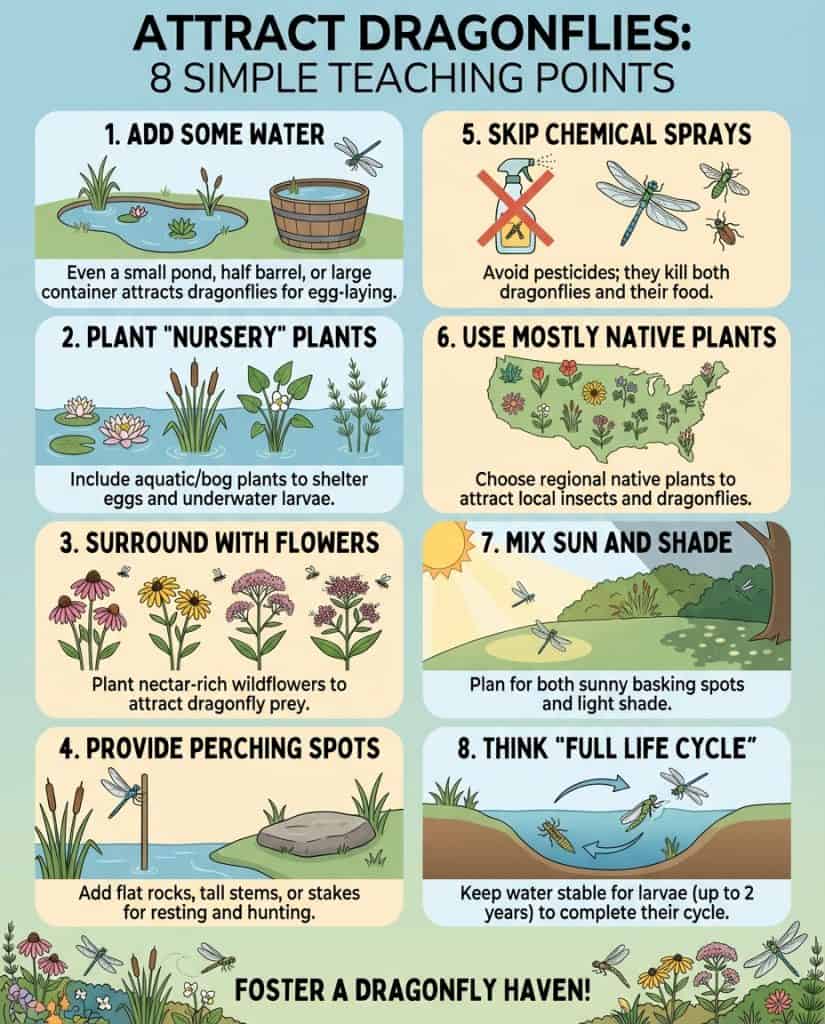
Forget what you’ve heard about complicated garden designs, attracting dragonflies is all about creating the right environment, starting with these key plants:
Water-Based Plants (The Foundation)
- Water Lilies: Provide essential cover for dragonfly larvae and create cool, shaded water that dragonflies love for laying eggs
- Cattails: Create perfect perching and breeding habitats along pond edges
- Arrowhead Plants: Offer ideal egg-laying surfaces in shallow water
- Pickerelweed: Attracts smaller insects that serve as dragonfly snacks
- Horsetail: Creates vertical structure in wet areas where dragonflies thrive
Quick tip: No space for a pond? Even a large container of water with a few floating plants can attract dragonflies to your space!
Land-Based Plants (The Attractors)

- Wildflowers: Especially coneflowers, black-eyed Susans, and daisies act like insect magnets, drawing in dragonfly prey
- Joe-Pye Weed: These tall beauties attract pollinators that dragonflies love to hunt
- Yarrow: Provides perfect flat-topped landing pads for dragonflies to perch while hunting
- Swamp Milkweed: Thrives in wet areas and draws in both dragonflies and their prey
- Meadow Sage: Creates excellent perching spots with the bonus of gorgeous purple blooms
Transform Your Yard Into a Dragonfly Paradise
The difference between amateur and pro plant parents is simply knowing how these elements work together. Here’s your blueprint for dragonfly attraction:
- Create a Water Feature: Even a small pond, fountain, or container garden with standing water will do. This is absolutely essential as dragonflies lay eggs in water.
- Add Strategic Perching Spots: Flat rocks, tall plant stems, or small garden stakes give dragonflies places to rest and hunt.
- Ditch the Chemicals: Pesticides will kill the insects dragonflies feed on (and potentially the dragonflies themselves).
- Embrace Native Vegetation: Local plants attract local insects, which attract local dragonflies.
- Design with Sun and Shade: Dragonflies need both sunny spots for warming up and shaded areas to cool down.
Your dragonflies are trying to tell you something important: they need a full lifecycle habitat. Most people make this mistake with their dragonfly gardens by focusing only on adult dragonflies.

Remember that dragonflies spend the majority of their lives as underwater larvae. Sometimes up to two years!
The Dragonfly Life Cycle: Why Understanding It Changes Everything
Creating a truly dragonfly-friendly garden means supporting their entire lifecycle:
- Egg Stage: Females deposit eggs in water or on aquatic plants
- Larval Stage: Underwater nymphs hunt small aquatic creatures (including mosquito larvae!)
- Adult Stage: Aerial predators emerge to hunt flying insects and reproduce
The secret most plant experts won’t tell you is that those underwater larvae are actually fierce predators themselves, consuming mosquito larvae long before they can grow up to bite you! It’s like having double protection, underwater and in the air.
Your Mosquito-Free Summer Starts Now
Imagine stepping outside on a warm summer evening without reaching for bug spray.
Picture yourself enjoying a peaceful outdoor dinner without constantly swatting away mosquitoes. This isn’t fantasy. It’s what happens when you create a dragonfly-friendly yard .
By incorporating these plants and features, you’re not just creating a beautiful garden. You’re establishing a natural ecosystem where dragonflies can thrive and hunt.
These spectacular aerial hunters will transform your outdoor experience, turning your yard from a mosquito haven into a balanced sanctuary.
Start with just one water feature and a few key plants this weekend. Your skin and your family will thank you, and the environment will flourish without harsh chemicals.
Let nature’s most efficient predators do what they do best. Hunt mosquitoes while you relax and enjoy.