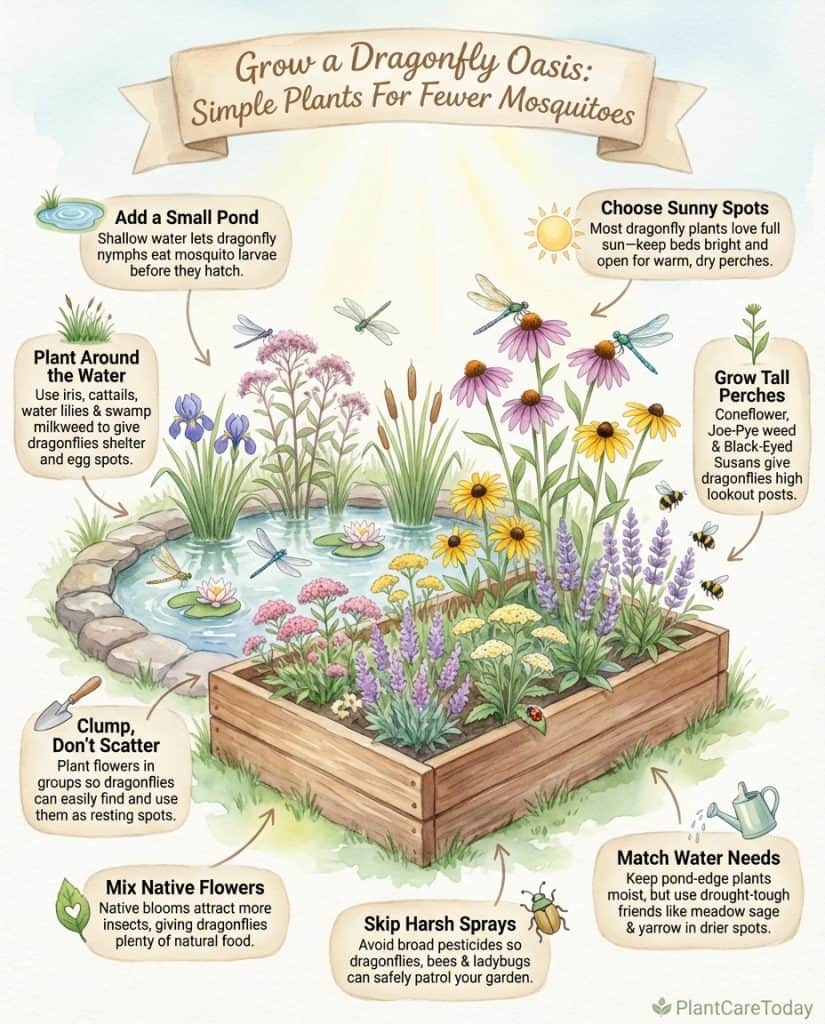
Imagine your garden as a serene oasis, abuzz with life and free from pesky mosquitoes. Sounds like a dream, right?
Here’s a secret: The key lies in choosing the right plants. If you haven’t tapped into the magic of attracting dragonflies to your garden, you’re in for a treat.
These master predators feast on mosquitoes and other pests, giving you a natural way to enjoy your green retreat without annoying intruders.
Stick around, we’re sharing a treasure trove of easy-to-grow plants that do wonders for your garden’s ambiance and help control the mosquito population.
Ready to unearth the natural charm of your backyard? Let’s get started!
Coneflower: A Dragonfly’s Perching Paradise
Coneflowers, with their sun-loving disposition and tall stalks, transform any garden into a vibrant, dragonfly-friendly habitat.
Picture this: a multitude of coneflowers waving gently in the breeze, each one offering a perfect perching spot for dragonflies.
Beyond their practical perks, these perennials burst with radiant colors, ranging from purples to pinks, bringing a lively visual spectacle to your garden.
They’re low-maintenance, so even if you’re not a seasoned gardener, coneflowers will thrive with minimal fuss. Get ready for a colorful, buzzing garden full of life!
Black-Eyed Susan: Bright Blooms for Buzzing Visitors
With their daisy-like yellow blooms, Black-Eyed Susans are more than just eye-catching. These plants become beacon-like perches for dragonflies, drawing them to your garden while adding a splash of sunshine.

Known for their resilience, these flowers bloom throughout summer and fall, naturally attracting insects to your green space.
Not only do they contribute to mosquito control, but they also invite other beneficial pollinators, making your garden a thriving ecosystem. Say hello to a buzzing garden life!
Swamp Milkweed: A Magnet for Winged Beauties
Enter the enchanting world of Swamp Milkweed, and watch your garden transform into a lively sanctuary. These moisture-loving perennials boast showy pink clusters that attract pollinators galore.
While dragonflies perch above, butterflies flutter below, a mesmerizing dance of colors and life!
Beyond their aesthetic appeal, Swamp Milkweeds have a natural affinity for wet areas, making them ideal for gardens near water features.
Ready to turn your garden into a hub for nature’s winged beauties? Swamp Milkweed is your go-to plant!
Joe-Pye Weed: Tall Blooms for Sky-High Perches
Reaching for the sky with their tall, fragrant stems, Joe-Pye Weed creates an irresistible perch for dragonflies and a buffet for their prey.
These pink-purple blooms don’t just add height to your garden. They invite a host of pollinators.
If your green haven could use some height and visual interest, Joe-Pye Weed is the choice. Their resilience to pests and diseases is the cherry on top, ensuring they remain a focal point throughout the growing season. Bring on the colors and critters!
Meadow Sage: Inviting Drought-Resistant Beauty
Meadow Sage stands as a reliable, drought-tolerant friend to gardeners and dragonflies alike. Its vibrant purple flowers attract pollinators, providing sustenance and beauty with minimal water.

For gardens in dry conditions or under water restrictions, Meadow Sage helps keep your outdoor space alive and productive.
Its understated elegance complements your garden’s ensemble, and its resilience shouts less work and more time to enjoy. Embrace the drought-resistant blooms!
Yarrow: Sun-Lovers in Full Bloom
Yarrow is the sun-kissed perennial that brings both beauty and practicality. With flat-topped clusters that attract insects galore, these plants become a feasting ground for dragonflies.
Positioned in sunny spots, Yarrows perform well with minimal disease interference, resulting in more robust growth and less gardening stress.
They stand as a beacon for beneficial insects, enhancing your garden’s ecosystem while keeping mosquitoes at bay. Let Yarrow bring its graceful charm and insect attraction to your outdoor setting!
Blue Flag Iris: Striking Beauty Along Water’s Edge
The Blue Flag Iris, with its stunning blue petals, naturally gravitates toward water, making it a centerpiece near ponds or streams.
This plant not only enhances the landscape aesthetically but also attracts dragonflies, providing perches and hunting grounds.
Its love for moist environments means it can thrive around water features, highlighting its beauty while supporting your garden’s dragonfly population.
Dive into the calming blues and lively buzz of dragonflies with Blue Flag Iris.
Cattail: Durable Shelter for Dragonflies
Dotted across wetlands, Cattails are familiar yet vital to dragonflies. These hardy plants provide essential shelter and egg-laying sites, supporting the lifecycle of dragonflies.
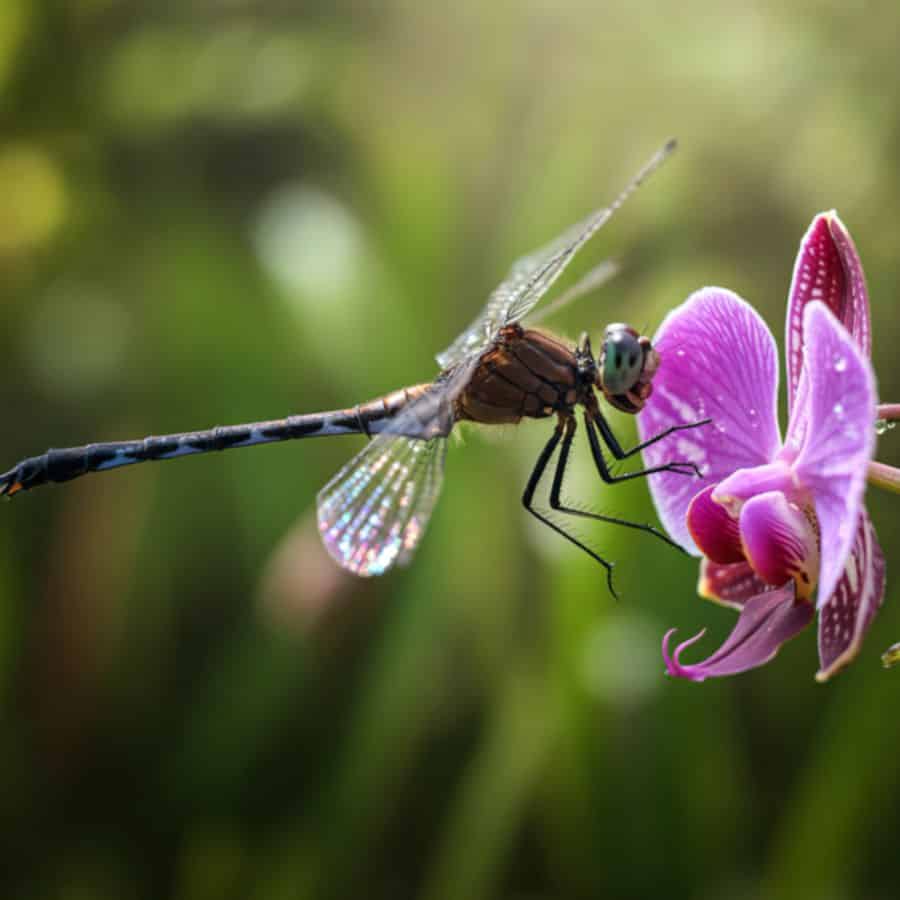
As an integral part of aquatic ecosystems, Cattails sustain life above and below the water surface.
Adding them to your garden enhances your water features and provides a habitat for dragonflies. For a balanced, supportive wetland edge, Cattails are nature’s choice.
Water Lily: Floating Beauty with Purpose
The classical elegance of Water Lilies extends beyond their visual appeal. These floating wonders provide crucial egg-laying and larval habitats for dragonflies, nestled among their leaf-covered surfaces.
Often synonymous with tranquility, Water Lilies transform ponds into peaceful retreats while engaging you within a world teeming with life.
Their presence attracts dragonfly larvae and helps maintain a balanced aquatic environment. Let Water Lily’s serenity and function be at the heart of your pond garden!
Arrowhead: Embrace The Aquatic Adventure
Arrowhead plants make a charming addition to any water feature. Beyond their ornamental appeal, with striking arrow-shaped leaves, they provide essential egg-laying sites and protection for dragonfly nymphs.
As you invite Arrowhead into your garden, you’re enriching the aquatic tapestry that supports dragonfly life cycles.
Their versatility in shallow waters adds depth and character to ponds or marshy areas. Dive into Arrowhead’s aquatic delight and witness the nymph metamorphosis!
Water Horsetail: Vital Support for Metamorphosis
Presiding over watery realms, the emergent Water Horsetail offers critical pathways for dragonfly larvae on their transformative journey.
As these young dragonflies climb the sturdy stems, they prepare for their final metamorphosis into winged beauties.
Incorporating Water Horsetail into your garden provides both structural diversity and essential habitat for dragonflies in your pond ecosystem.
It’s time to watch and marvel as life unfolds on Water Horsetail’s tower-like structures.
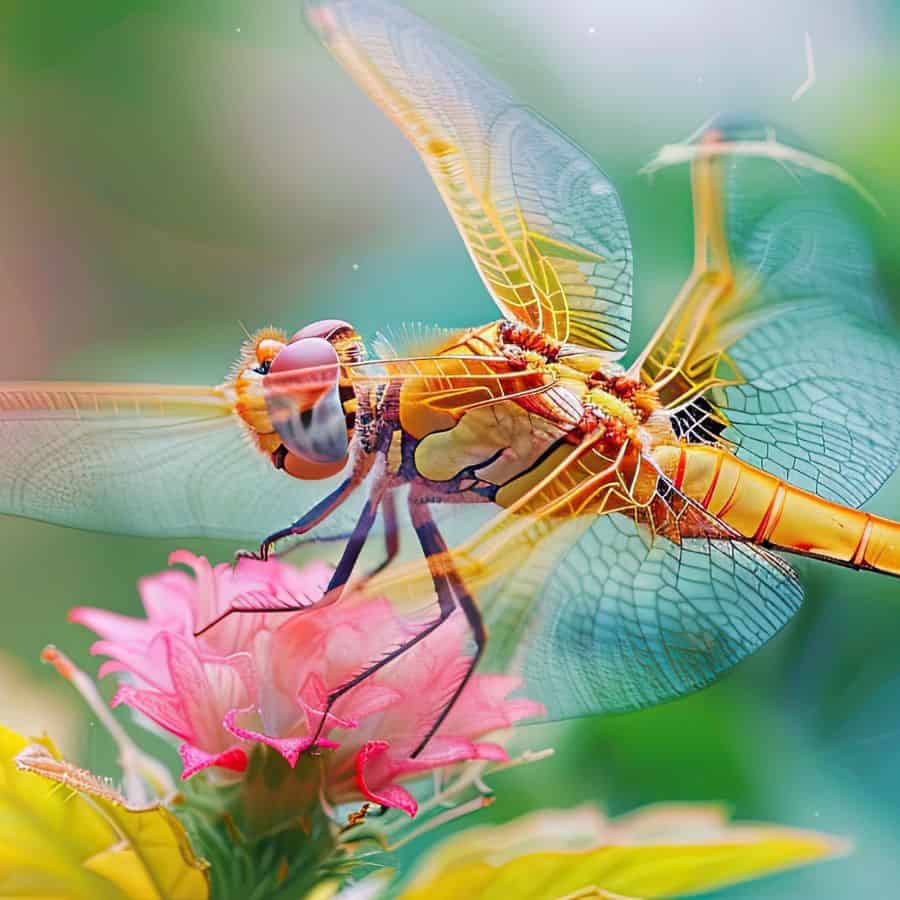
Wild Celery: Underwater Wonder for Larvae
Wild Celery, a submerged aquatic hero, plays an unsung yet critical role in supporting dragonfly larvae.
Beneath its leafy tendrils, larvae find shelter and nutrients to thrive before emerging as adults.
This plant’s ecological contributions expand to water clarity, promoting healthy aquatic systems.
Including Wild Celery in your garden enhances underwater habitats, encouraging biodiversity and dragonfly development. Unveil the underwater wonders that Wild Celery sets into motion!
Buttonbush: Breathe Life at Pond Edges
Buttonbush transforms pond edges into lively gathering spots with its round, snowball-like flower clusters.
Favored for its moisture tolerance, this shrub beckons dragonflies while establishing diverse ecosystems.
As pollinators and beneficial insects mingle among its blooms, Buttonbush offers an explosion of life right at the water’s edge.
Add dimension, fragrance, and buzzing life to your aquatic space with Buttonbush as your companion plant!
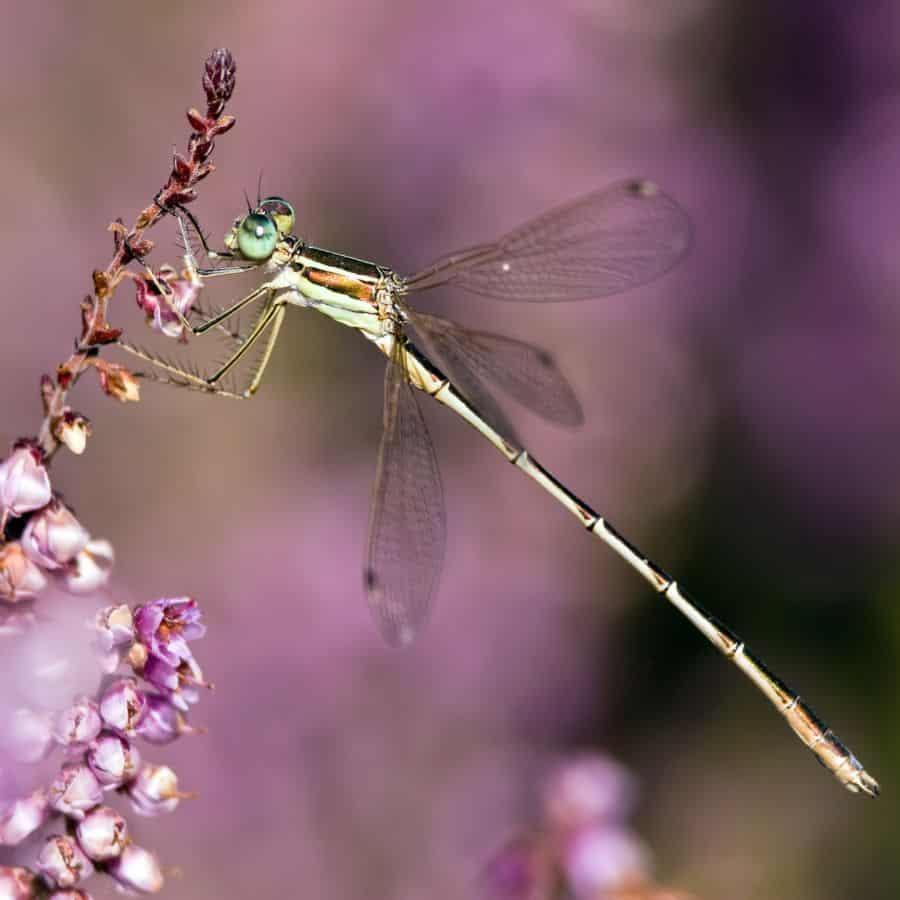
The Tall Trio: Grasses, Reeds, and Rushes
To bring balance to your landscape, consider the versatile trio of tall native grasses, reeds, and rushes.
These plant powerhouses range from sedges to spikes, offering perching, hunting, and cover for dragonflies.
Choose from a variety of heights and textures to add architectural interest to your garden.
Their adaptability to diverse climbing environments enables dragonflies to thrive, creating a healthy habitat. Root your garden deeper with these essential towering comrades.