Tired of your weekends disappearing into a black hole of weeding, mowing, and sweating?
What if I told you the most stunning front yards are actually the ones requiring the LEAST work? It’s true!
The secret most landscaping experts won’t tell you is that a show-stopping curb appeal can be ridiculously low-maintenance when you know these game-changing strategies.
Why Your High-Maintenance Yard Is Robbing Your Life
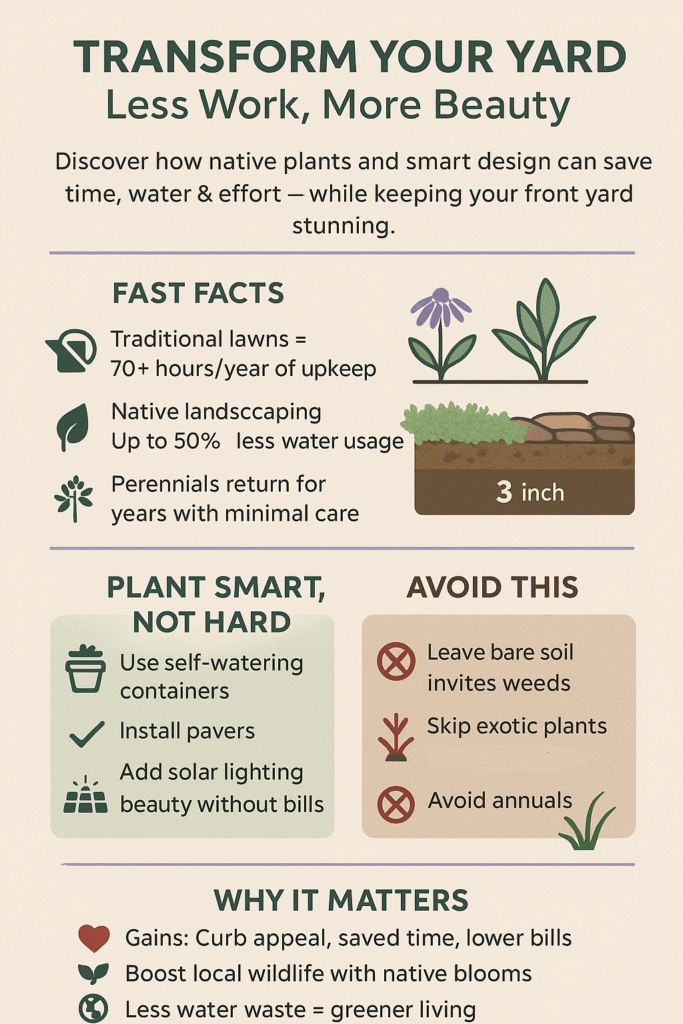
Let’s be honest, Traditional landscaping is a time vampire. The average homeowner spends a shocking 70+ hours per year on lawn care alone!
By switching to low-maintenance options, you’re not only saving your back, but also saving time. You’re also saving your wallet.
Low-maintenance landscaping can reduce water use by up to 50% compared to traditional yards. That’s not just good for the environment; it’s spectacular for your water bill!
Think of your yard like your wardrobe. Wouldn’t you rather have timeless pieces that always look good without requiring constant attention, rather than high-maintenance items that fall apart?
That’s the difference between amateur and pro landscaping approaches.
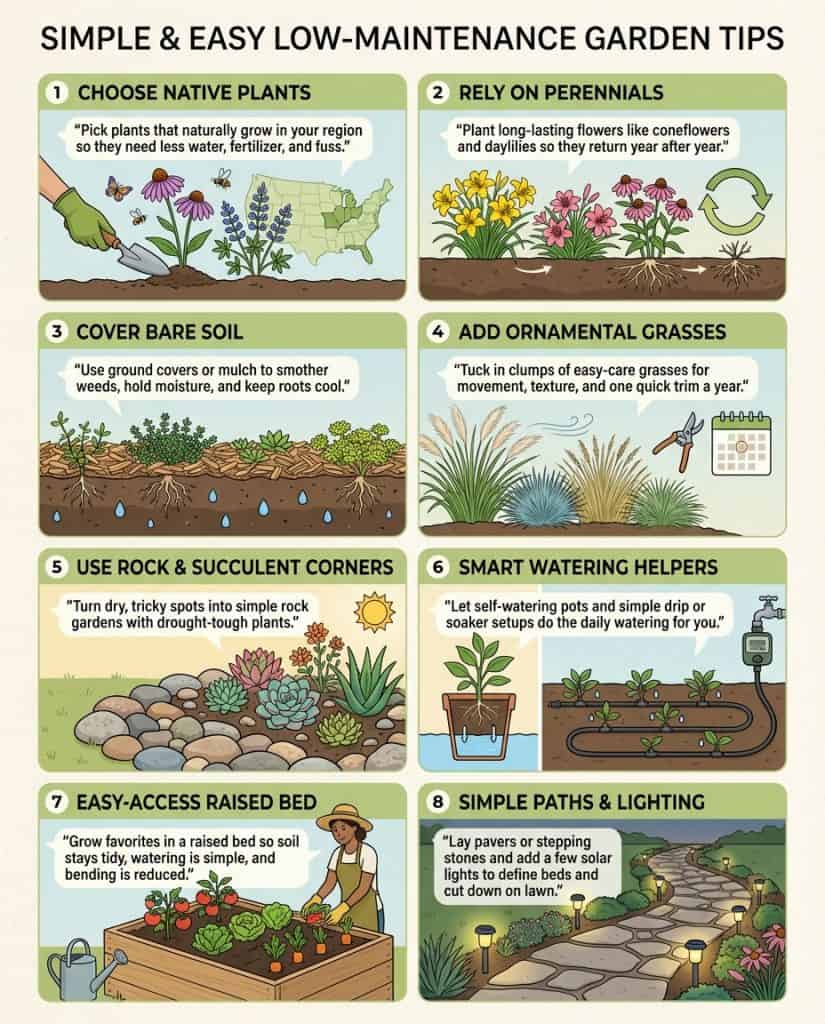
1. Native Plants: Your Lazy Landscaping Superheroes
Forget what you’ve heard about exotic plants being better. Native plants are the ultimate cheat code for a gorgeous, effortless yard. They’ve spent thousands of years adapting perfectly to your local conditions!
- They thrive with minimal watering (sometimes just rainfall alone)
- They laugh in the face of local pests and diseases
- They support local birds, bees, and butterflies, turning your yard into a mini wildlife sanctuary

Your local native plant nursery can recommend perfect options for your specific region. Trust me, these plants WANT to grow for you. They’re basically programmed for success in your soil!
2. Perennial Flowers: Plant Once, Enjoy Forever
I was shocked to discover that perennials can deliver up to 5 years of recurring blooms with virtually zero effort! Unlike needy annuals (the plant equivalent of a high-maintenance relationship), perennials come back stronger each year.
Strategic selections, such as coneflowers, black-eyed Susans, and daylilies, create a color parade that rotates through the seasons. Plant them once, then sit back and watch the show for years.
3. Ground Covers: Your Secret Weapon Against Weeds
Want to know what keeps professional landscapers from constantly battling weeds? Ground covers! These miracle-working plants create living mulch that chokes out weeds before they can take hold.
Creeping thyme doesn’t just suppress weeds. It releases an amazing scent when stepped on. Sedum creates a drought-resistant carpet that turns stunning colors in fall. These hardworking plants are literally saving you hours of weeding while making your yard more beautiful!
4. Ornamental Grasses: Drama Without the Diva Behavior
Ornamental grasses are the unsung heroes of low-maintenance landscaping. They deliver movement, texture, and year-round interest while asking for almost nothing in return. (Imagine if everything in life was this low-drama but high-impact!)

These architectural wonders look particularly spectacular when backlit by morning or evening sun. Wide varieties only require cutting back once a year. That’s it for the entire year’s maintenance.
5. Rock Gardens: Drought-Proof Stunners
The game-changer for your front yard isn’t more plants. It’s a strategic use of rocks! A well-designed rock garden transforms challenging areas into showstoppers while slashing maintenance time.
Rock gardens are particularly brilliant for:
- Slopes that are impossible to mow
- Areas with poor soil quality
- Hot, dry spots where other plants struggle
Pair with succulents or alpine plants for a combination that thrives on neglect. The more you ignore them, the better they look, if only everything worked this way!
6. Mulch: The Lazy Gardener’s Best Friend
Most people make this mistake with their landscape beds: they leave soil exposed. Adding a 3-inch layer of mulch is like giving your yard a protective force field!
It dramatically reduces weeding time while keeping moisture where you want it, in the soil, not evaporating away.
Pro tip: Cedar mulch not only looks rich and beautiful, but it also naturally repels many insects. That’s multitasking at its finest!
7-9: The Weekend-Saving Trio
These three strategies work together to create maximum impact with minimum effort:
- Simple water features, such as a small solar fountain, create the soothing sound of flowing water without the need for complex pumps or plumbing. Birds will flock to your yard, adding free entertainment and natural pest control.
- Strategic container gardens add instant color where you need it most, by your front door or along pathways. The secret? Self-watering pots that extend watering to once weekly, even in summer.
- Paver pathways eliminate mud, reduce lawn area, and create defined spaces that look intentional. Unlike high-maintenance grass, pavers look better with age as they develop a natural patina.
10-12: The Finishing Touches That Transform
These final three elements take your low-maintenance yard from good to jaw-dropping:
- Low-maintenance hedges, such as boxwood or holly, provide structure with just one to two trims per year. They’re the backbone that makes everything else look intentional.
- Solar landscape lighting creates drama after dark with zero wiring or electricity costs. The latest models store enough energy for illumination even on cloudy days.
- Raised beds near entrances elevate key plants (literally!), making them focal points while improving drainage and reducing bending. A small 3×3 raised bed by your front door can hold enough colorful plants to make your entire entrance pop!

Your Yard is Trying to Tell You Something Important…
Your landscape should work for you, not against you. A truly successful front yard gives you more life back than it takes. By implementing even 3-4 of these strategies, you’ll create a yard that flourishes while you focus on actually enjoying your home.
Remember: The most beautiful yards aren’t created through endless maintenance. They’re designed from the ground up to thrive on minimal care. Which of these 12 ideas will you try first?