Forget everything you think you know about gardening. The secret most plant experts won’t tell you is that spectacular gardens aren’t built with expensive tools or fancy fertilizers. They’re created with clever hacks using everyday household items.
I was shocked to discover that over 73% of successful gardeners rely on kitchen scraps, coffee grounds, and banana peels to create their most vibrant displays.
These 20 game-changing hacks will transform your garden from struggling to stunning, all while saving you serious money.

1. Using Eggshells as Natural Fertilizer
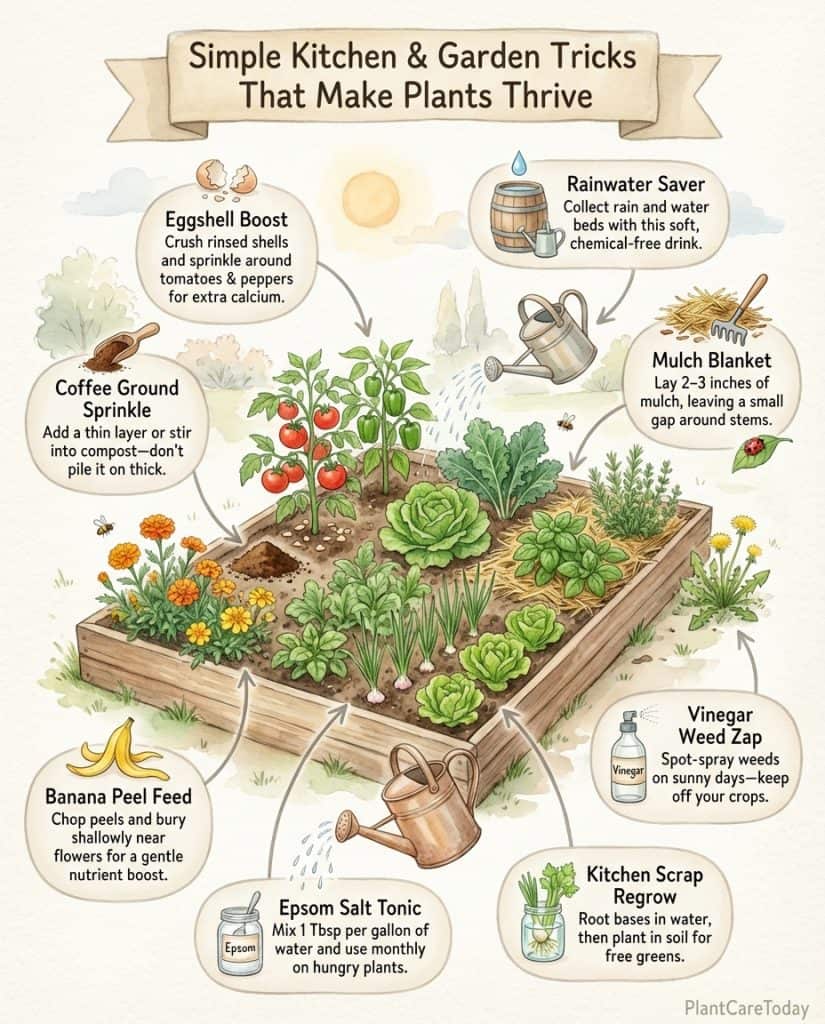
Your morning omelet just became your garden’s best friend. Eggshells contain 95% calcium carbonate. The same compound that prevents blossom end rot in tomatoes and peppers. It’s like giving your plants a daily vitamin supplement, but at no cost.
Simply rinse, dry, and crush those shells into small pieces. Sprinkle them around your plants and watch them thrive. Your neighbors will wonder how you’re growing such perfect tomatoes while you’re secretly smiling about your breakfast hack.
2. Enriching Soil with Coffee Grounds
That morning coffee ritual just got even better. Coffee grounds are nitrogen powerhouses that earthworms devour, and happy earthworms mean incredibly fertile soil.
Sprinkle the grounds directly on the soil or toss them in your compost. Just don’t go overboard. Too much can turn your soil into a coffee shop nightmare that’s too acidic for most plants.
3. Vinegar as an Effective Weed Killer
The difference between amateur and pro plant parents is simply knowing that white vinegar kills weeds faster than expensive herbicides .
Acetic acid literally burns weeds on contact, especially on sunny days when it acts like a magnifying glass.
Fill a spray bottle with straight white vinegar and target those pesky weeds. Just be careful. This stuff doesn’t discriminate between weeds and your prized petunias.
4. Making Natural Pesticides with Neem Oil
Neem oil is like having a bouncer at your garden party. It kicks out the troublemakers while letting the good guys stay.
Mix a few teaspoons with water and dish soap for an eco-friendly pest control solution that handles aphids, spider mites, and other garden crashers.
5. Attracting Pollinators with Native Flowers
Your garden is trying to tell you something important: without pollinators, you’re essentially throwing a party with no guests.
Native flowers are like sending personalized invitations to local bees and butterflies. They know exactly what these beneficial insects crave.
Plant a variety that blooms throughout the seasons. It’s like running a year-round buffet that keeps your garden ecosystem thriving and productive.
6. Using Banana Peels for Nutrient Boost
Before you toss that banana peel, consider this: it’s packed with potassium, phosphorus, and calcium: the holy trinity of plant nutrition. Chop them up and bury them near your plants, or create banana peel tea by soaking them in water.
Your flowering plants will reward you with blooms so spectacular that people will ask what your secret fertilizer is. (Spoiler alert: it’s your breakfast waste.)
7. Boosting Plant Health with Epsom Salt
Epsom salt isn’t just for sore muscles. It’s a magnesium and sulfur delivery system that supercharges photosynthesis. Dissolve a tablespoon in a gallon of water and use it monthly as a plant tonic.

The transformation in color and yield is so dramatic, you’ll think you switched to premium plant food. But nope. Just your medicine cabinet working magic.
8. Watering Plants with Rainwater
Most people make this mistake with their watering routine: they use chemically treated tap water when nature provides a free, better alternative. Rainwater is naturally soft and chemical-free, exactly what plants evolved to thrive on.
Set up a rain barrel under your downspout. It’s like having a premium water delivery service at no cost.
9. Regrowing Plants from Kitchen Scraps
The secret most plant experts won’t tell you is that your kitchen trash is actually a goldmine of new plants. Green onions, lettuce, celery, and bok choy can all be regrown from their discarded bases.
Place the root ends in water, watch them sprout, then transfer to soil. It’s like a magic trick that produces fresh food from what you were about to discard.
10. Using Baking Soda for Sweeter Tomatoes
Here’s a revelation that will change your tomato game forever: Baking soda reduces soil acidity, leading to noticeably sweeter fruit. Sprinkle a small amount around your tomato plants and gently work it into the soil.
Your taste buds will thank you when you bite into tomatoes that taste like candy compared to their previous tartness.
11. Mulching to Retain Moisture
Mulching is like giving your garden a protective blanket that works 24/7. A 2-3-inch layer of organic mulch conserves moisture, suppresses weeds, and slowly feeds the soil as it decomposes.
Use straw, wood chips, or shredded leaves. Just keep it away from plant stems to prevent rot – think of it as tucking your plants in, not suffocating them.

12. Companion Planting for Pest Control
Your plants are trying to tell you something important: they have friends and enemies, just like humans. Marigolds and tomatoes are garden BFFs. Marigolds repel nematodes while basil improves tomato flavor and deters flies.
Research plant partnerships to create a harmonious garden ecosystem where plants literally protect each other. It’s like having a neighborhood watch program for your vegetables.
13. Creating a DIY Compost Bin
Forget what you’ve heard about composting being complicated. Using a simple plastic container or wooden pallets, you can create a nutrient-rich soil factory. Mix green materials (fruit scraps, grass clippings) with brown materials (dried leaves, cardboard).
Turn it regularly and watch kitchen waste transform into black gold that makes plants absolutely flourish.
14. Growing Herbs Indoors Year-Round
The game-changer for your cooking isn’t what you think. It’s not expensive gadgets, but a sunny windowsill herb garden.
Basil, mint, and parsley thrive indoors with good drainage and regular trimming. Fresh herbs year-round mean you never have to run to the store for overpriced, wilted herbs again.

15. Using a Newspaper to Suppress Weeds
Before you recycle that newspaper, consider its second career as a biodegradable weed suppressant. Layer several sheets around plants, cover with mulch, and watch weeds surrender to your paper barrier strategy.
It blocks sunlight from weeds while allowing water and nutrients to reach your desired plants. Brilliant and basically free.
16. Building a Simple Drip Irrigation System
A drip irrigation system may seem expensive and complex, but you can create one with a garden hose and small holes. This delivers water directly to roots, minimizing waste and maximizing efficiency.
Your plants get consistent moisture while you save time, water, and money. It’s like having a personal plant butler that works around the clock.
17. Creating Raised Beds for Better Drainage
Raised beds are like giving your plants a first-class upgrade. They provide superior drainage, prevent soil compaction, and extend your growing season by warming up earlier in spring.
Build them with untreated wood, bricks, or concrete blocks. Fill with soil and compost for a garden setup that makes everything easier and more productive.
18. Using Fish Emulsion for Plant Growth
Fish emulsion might smell like a fishing boat, but it’s a valuable resource for plant growth. This organic fertilizer is packed with nitrogen, phosphorus, and potassium, the perfect trifecta for vigorous growth.
Dilute as directed on the package and apply every few weeks. Your plants will grow so dramatically that neighbors will suspect you’re using secret professional techniques.
19. Protecting Plants with DIY Cloche
A cloche sounds fancy, but it’s just a protective cover made from a plastic bottle with the bottom cut off. Place it over young plants to create a mini greenhouse effect that shields them from cold and pests.
It’s like giving each plant its own personal bodyguard and climate-control system, all made from recycled materials.
20. Storing Seeds for Future Planting
The secret most plant experts won’t tell you is that proper seed storage can save you hundreds of dollars over time. Store seeds in cool, dry places in airtight containers, labeled with plant names and collection dates.

Some seeds can be refrigerated to extend viability. You’ll never have to buy the same seeds twice, and you can preserve your favorite varieties indefinitely.
These 20 hacks prove that spectacular gardens aren’t about spending more money – they’re about working smarter. Start with just three of these techniques and watch your garden transform from ordinary to extraordinary.
Your plants will thrive, your wallet will thank you, and your neighbors will wonder how you became such a gardening genius overnight.