Ever walked through a lush forest and wondered why those trees grow so spectacularly without anyone watering or fertilizing them?
(Spoiler: Mother Nature’s been hiding the ultimate gardening hack from us!) That’s essentially what Hügelkultur mimics, and I was shocked to discover it’s been right under our noses for centuries while we’ve been breaking our backs with conventional gardening.

What The Heck Is Hügelkultur? (And Why Your Garden Is Begging For It)
Hügelkultur (pronounced HOO-gul-culture) translates to “mound culture” in German, and it’s essentially gardening’s best-kept secret. Imagine creating a garden bed that waters itself, fertilizes itself, and actually gets more fertile year after year.
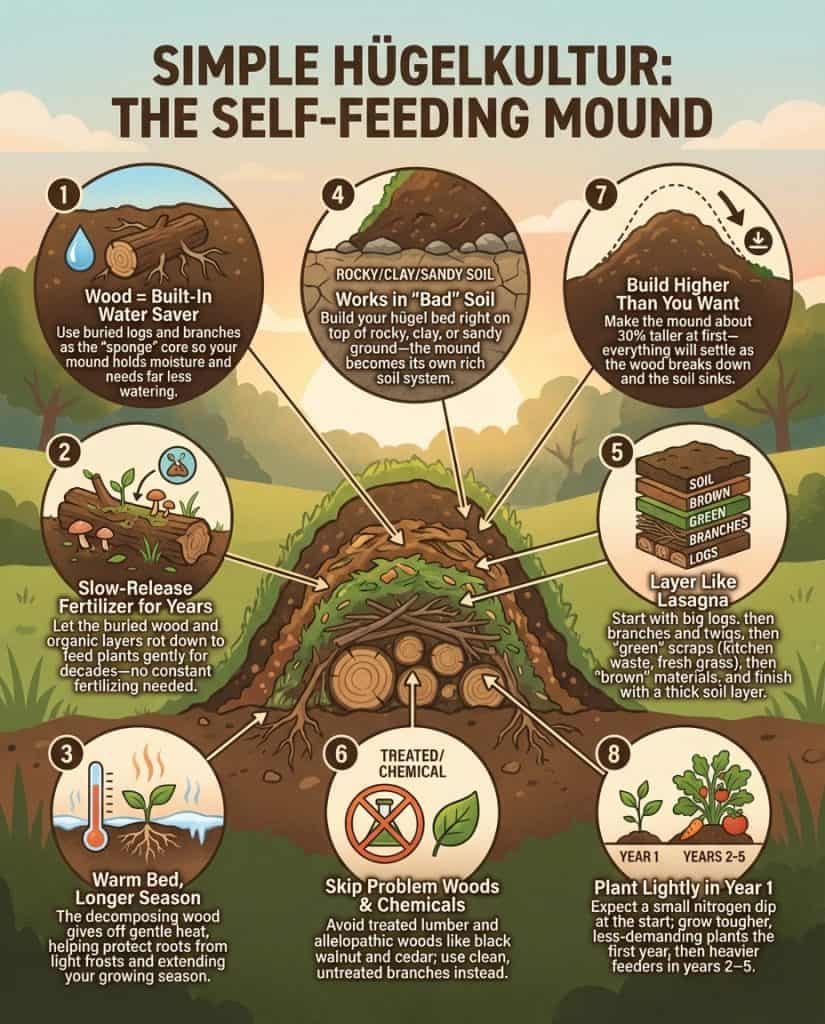
The concept is brilliantly simple: you stack woody materials (logs, branches, sticks) into a mound, layer it with organic matter, and top it with soil. Like a gardening lasagna that transforms into a plant paradise!
Forget what you’ve heard about perfect garden beds requiring expensive soil amendments. The game-changer for your garden isn’t what you think. It’s literally the dead branches you’ve been hauling to the curb.
5 Mind-Blowing Benefits That Will Make You A Hügelkultur Convert
- Built-in irrigation system: The wood acts like a massive sponge, holding up to 30% more water than traditional beds and reducing watering needs by as much as 75% in established beds
- Free, long-term fertilizer: As wood breaks down, it releases nutrients slowly, creating a natural time-release fertilizer that can last 20+ years
- Extended growing season: The decomposition process generates heat from below, protecting plants from frost and giving you weeks of extra growing time
- Less work (seriously!): No tilling, less watering, and minimal fertilizing means more relaxation time
- Transforms terrible soil: Rocky, clay, or sandy soil? Doesn’t matter. You’re building above it all!

The secret most plant experts won’t tell you is that decomposing wood creates the perfect microbiome for plant growth.
While you’re paying big bucks for fancy soil amendments, that fallen tree branch contains everything your plants are desperately craving.
Building Your First Hügelkultur Bed: Easier Than Assembling IKEA Furniture
Ready to build your own self-sustaining garden paradise? Here’s how to get started:
What You’ll Need (Mostly Free!)
- Logs, branches, and twigs (the more rotten, the better!)
- Leaves, grass clippings, kitchen scraps, or other compostables
- Garden soil or compost for the top layer
- Optional: cardboard/newspaper for the base, rocks for the border
Pro tip: Using partially rotted wood jumpstarts the process! Fresh wood will initially steal nitrogen from your soil as it decomposes, so compensate by adding extra nitrogen-rich materials.
The 8-Step Miracle Mound Method
- Pick your spot: Choose a sunny location with access to water
- Lay down cardboard: Smother existing grass/weeds (optional but helpful)
- Build your wood core: Start with the largest logs at the bottom, and stack smaller branches on top in a mound formation
- Fill the gaps: Stuff spaces with smaller twigs, wood chips, or bark
- Add the “green layer”: Cover with nitrogen-rich materials like fresh grass clippings, kitchen scraps, or manure
- Add the “brown layer”: Top with carbon-rich materials like leaves, straw, or shredded paper
- Crown with soil: Add 2-4 inches of soil/compost on top
- Water thoroughly: Soak it like you’re putting out a campfire

Your Hügelkultur bed is like a giant, slow-cooking compost casserole. The wood at the core acts like a biological time-release capsule, slowly breaking down and feeding your plants for years. It’s literally gardening on autopilot!
Avoiding Rookie Mistakes: What Nobody Tells Beginners
Your Hügelkultur bed is trying to tell you something important: it needs the right materials to thrive. Here are crucial pitfalls to avoid:
- NEVER use treated lumber: Those chemicals will leach into your food (yikes!)
- Avoid certain woods: Black walnut, cedar, and black locust contain compounds that can inhibit plant growth
- Don’t build too tall, too fast: Start with 3-4 feet high, as it will settle dramatically
- Plant strategically: The first year, focus on nitrogen-loving plants on top and drought-resistant plants on the sides
I learned this the hard way: my first Hügelkultur bed looked like a sad, collapsed soufflé after two months because I didn’t account for settling. Now I build them 30% higher than my target height!
Your Year-By-Year Transformation Timeline
The difference between amateur and pro plant parents is simply patience. Here’s what to expect as your Hügelkultur bed matures:
- Year 1: The “nitrogen dip” – if using fresh wood, you’ll need extra nitrogen fertilizer or heavy nitrogen-fixing plants like beans and peas
- Years 2-5: The “sweet spot” – perfect balance of decomposition and nutrient release
- Years 5-10: The “fertility factory” – minimal maintenance needed as the bed hits peak performance
- Years 10+: The “legacy garden” – wood has largely converted to rich humus, may need occasional topping up
Most conventional raised beds are fertility vampires, constantly demanding more inputs. Meanwhile, your Hügelkultur bed is like a fine wine – actually improving with age!
Ready to Transform Your Garden Into a Flourishing Forest-Inspired Oasis?
Hügelkultur isn’t just a gardening technique. It’s a complete mindset shift. Instead of fighting nature, you’re partnering with it. Instead of depleting resources, you’re creating them.

Start small with a test bed this season. Your plants will reward you with dramatic growth, your water bill will shrink, and you’ll be turning “yard waste” into garden gold. Mother Nature’s been perfecting this system for millennia—it’s about time we took notes!