Did you know that without bees, your morning coffee, avocado toast, and favorite fruits might disappear? These tiny creatures pollinate 70% of the crops that feed 90% of the world’s population, yet they’re vanishing at an alarming rate.
The good news? Your garden (even just a few pots on a balcony) can become a lifeline for these essential pollinators.
Here’s how to transform your outdoor space into a bee sanctuary that helps save our food supply and looks great doing it.
Why Your Garden Matters More Than You Think
Your garden can be just as important as a wildlife reserve in supporting local pollinators. Bees are nature’s most efficient pollinators, transferring pollen between flowers as they collect nectar.
Think of bees as a delivery service. Instead of bringing you packages, they’re ensuring that plants can reproduce, creating the fruits and vegetables we rely on daily. Without them, we’d face serious food shortages and ecosystem collapse.

The problem? Bee populations are dropping due to several threats:
• Pesticides (especially neonicotinoids) that poison bees directly
• Habitat loss that leaves bees homeless and hungry
• Climate change is disrupting flower blooming patterns
• Parasites and diseases are spreading through weakened populations
And here’s where you come in.
7 Steps to Create Your Bee Paradise
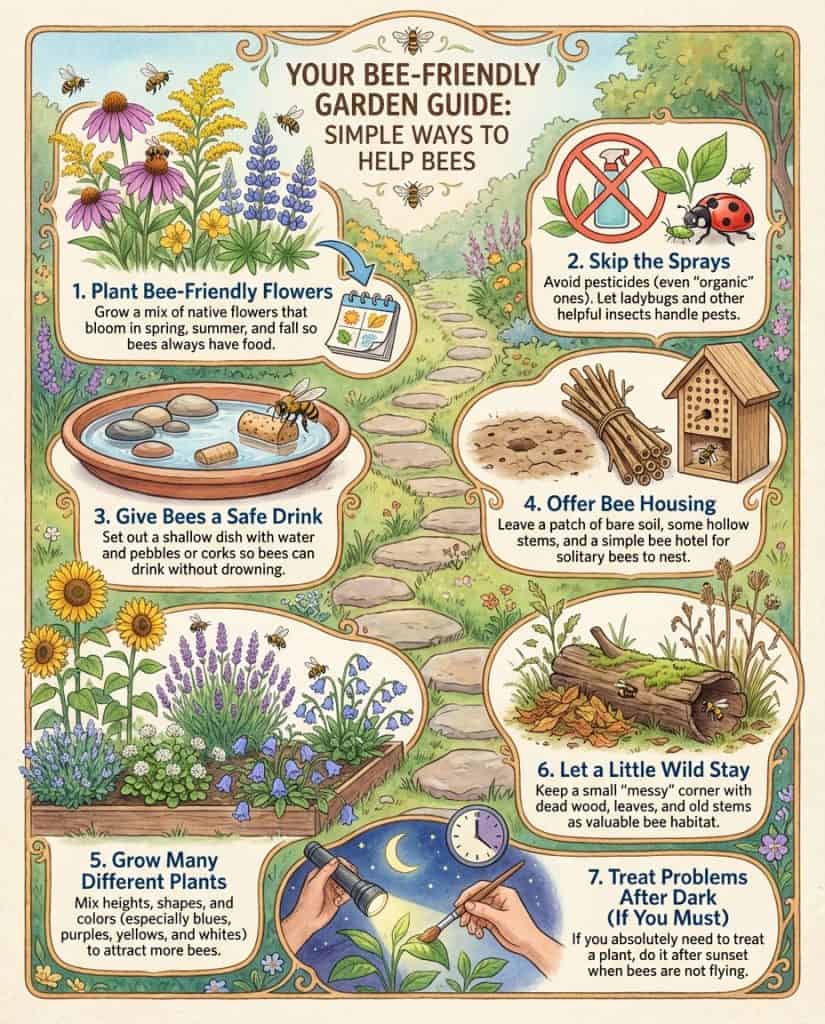
1. Plant a Buffet of Bee-Magnet Flowers
Not all flowers are created equal in bee-world. Some are like fast food, while others are packed with nutrition.
Aim for a three-season bloom calendar so bees never go hungry. Native plants are the best choice here – they’re the perfect match for your local bee species.
Top bee-friendly bloomers include:
• Spring: Crocus, willow, maple, fruit trees
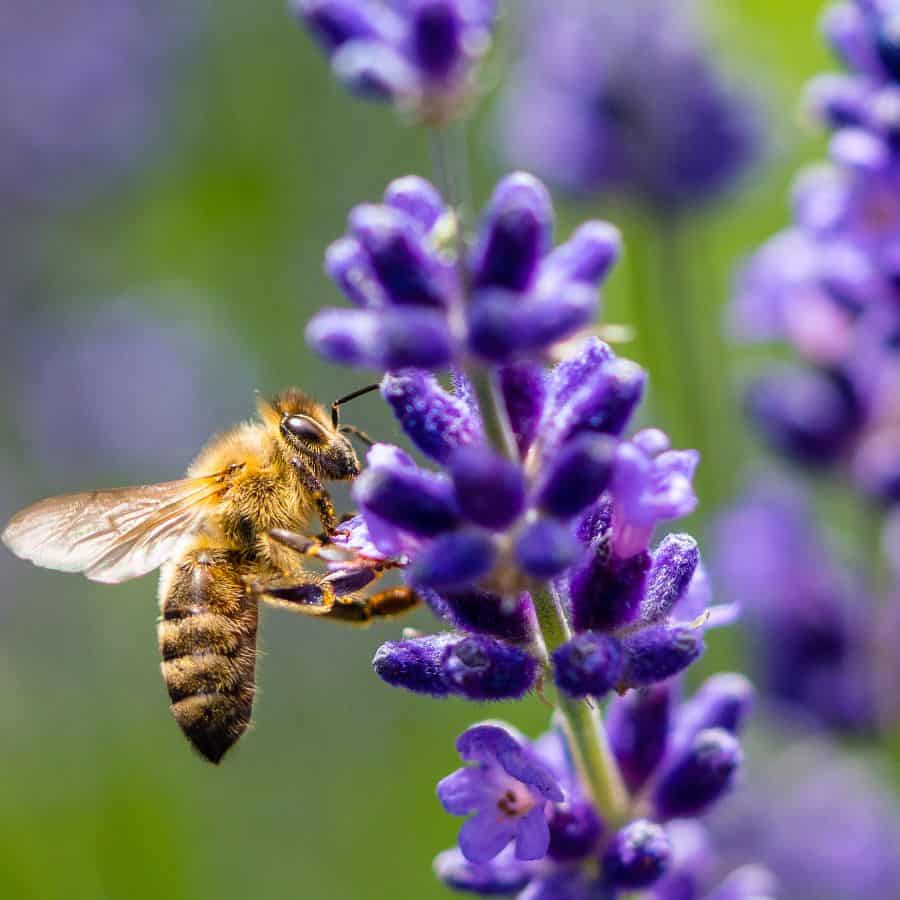
• Summer: Lavender, coneflower, bee balm, borage, sunflowers
• Fall: Asters, goldenrod, sedum

Choose flowers in blues, purples, yellows, and whites. Bees see these colors best and are naturally drawn to them.
2. Ban the Chemicals (Yes, ALL of Them)
Even products labeled “organic” or “natural” can be deadly to bees. That convenient spray that kills aphids? It’s probably killing bees, too.
The difference between new and experienced gardeners is this: experienced gardeners work with nature, not against it. Instead of reaching for chemicals:
• Welcome beneficial insects like ladybugs (they eat aphids)
• Plant companions that naturally repel pests (marigolds, nasturtiums)
• Accept that a few holes in leaves mean your garden is alive and functioning
If you absolutely must treat a plant problem, do it after sunset when bees are tucked in for the night.
3. Add a Bee Spa (They Need Water Too)
Bees get thirsty, especially during hot summers. Without a safe water source, they can become dehydrated while working to pollinate your garden.
Create a bee watering station with:
• A shallow dish or birdbath
• Rocks, marbles, or wine corks as landing pads
• Fresh water replenished regularly
Think of it as creating a place where they can safely sip without drowning.
4. Build Bee Hotels (No Reservation Required)
Most bees aren’t living in hives. About 90% of bee species are solitary and need completely different accommodations than honeybees. Your local pollinators might simply need more housing options.
Create diverse bee housing by:
• Leaving a patch of bare soil unmulched for ground-nesters
• Installing a “bee hotel” with various-sized hollow tubes
• Keeping dead wood or stems in a corner of your garden
What looks messy to you looks like prime real estate to a bee.
5. Design with Diversity
The real trick for your garden isn’t just more flowers. It’s strategic diversity. Layer your garden like a thriving ecosystem with:
• Ground covers and low growers
• Mid-height perennials and flowering shrubs
• Trees that provide early spring pollen when bees need it most
Flowering herbs do a little of everything – delicious for your kitchen and irresistible to bees. Plant extras of basil, rosemary, thyme, and oregano specifically for letting them flower.
6. Rethink Your Lawn (That Green Desert)
Your perfectly manicured lawn? To bees, it’s basically a food desert. Even reducing your lawn by 25% can create valuable habitat.
If you’re keeping some lawn:
• Embrace clover and dandelions (they’re not weeds, they’re bee food)
• Mow higher and less frequently
• Convert edges to wildflower borders
One square foot of diverse flowering plants provides more bee support than 100 square feet of grass.
7. Leave the Fall Cleanup for Spring
Those dead stems, fallen leaves, and seed heads aren’t messy – they’re winter survival shelters for bees and beneficial insects.
When you leave garden cleanup until spring:
• Overwintering bee eggs and larvae remain protected
• Beneficial insects have places to hibernate
• Seeds provide food for birds (who also eat garden pests)
This might be the easiest conservation work you’ll ever do: literally doing less work.
Small Space? No Problem
Even a tiny balcony can become a bee oasis. A single pot of flowering herbs or a window box with native blooms can nourish dozens of pollinators. In the bee world, every flower counts.

The best bee gardens often start small and grow over time. Begin with just 3 bee-friendly plants this season and watch how quickly the pollinators find you.
Creating a bee-friendly garden isn’t just about saving an endangered species. It’s about ensuring our own food security, creating beautiful outdoor spaces, and becoming part of the solution to one of our planet’s most pressing problems. Your garden can help save the world, one buzzing visitor at a time.