Here’s something that will blow your mind: a single wildflower meadow can sequester 1.7 tons of carbon per year while supporting hundreds of species. Yet most gardeners are missing out on this environmental game-changer in their backyard.
Forget what you’ve heard about wildflower meadows being only for rural properties. These biodiversity powerhouses are revolutionizing urban gardens and transforming boring lawns into thriving ecosystems.
The secret most landscapers won’t tell you? Creating your own meadow paradise is easier than maintaining a traditional lawn.
I was shocked to discover how many people struggle with their gardens when the solution is literally growing wild around them.
Your yard is crying out for this transformation, and these 11 essential steps will turn you from amateur gardener to meadow master.

1. The Hidden Environmental Superpowers of Wildflower Meadows
Think of wildflower meadows as nature’s carbon vacuum cleaners. While your neighbors are emitting with their gas mowers, your meadow is silently fighting climate change by capturing significant amounts of CO2.
But here’s the breakthrough most people miss: these meadows don’t just store carbon; they’re soil rehabilitation machines.
Their diverse root systems work like underground architects, preventing erosion and creating natural flood control. It’s like having an environmental engineer working 24/7 in your backyard.
2. Why Wildflower Meadows Are Biodiversity Goldmines
Your meadow isn’t just pretty. It’s a wildlife rescue center disguised as a garden. Every square foot becomes a bustling metropolis for bees, butterflies, birds, and beneficial insects desperately searching for habitat in our concrete world.
The game-changer for supporting endangered species isn’t donating to distant causes. It’s creating a sanctuary space right outside your door. One meadow can support more species than a combined neighborhood of traditional lawns.

3. The Secret to Choosing Your Perfect Meadow Location
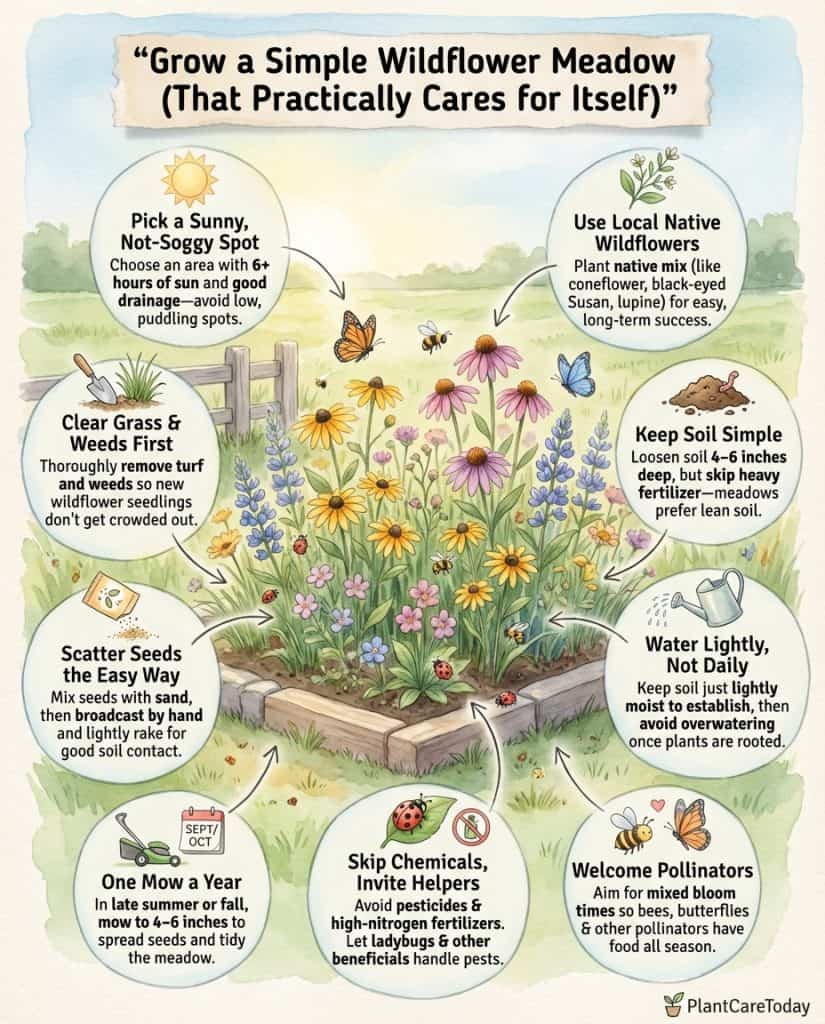
Most people make this critical mistake: they choose the prettiest spot instead of the most functional location. Your wildflowers are like solar panels. They need at least six hours of direct sunlight to reach their full, spectacular potential.
Here’s the trick professional landscapers use: avoid areas where water pools after rain. Wildflowers thrive in well-drained soil; waterlogged roots are the fastest way to turn your meadow dreams into a soggy nightmare.
4. Selecting Wildflower Species That Actually Thrive
The difference between amateur and pro meadow creators is simple: native plant selection. Exotic species might look stunning in catalogs, but native wildflowers are the reliable workhorses that will flourish year after year.
Think of native plants as the locals who know all the best spots in town. They’re already adapted to your climate, soil, and seasonal patterns.
Popular powerhouses like black-eyed Susans, coneflowers, and lupines are the reliable stars of most meadow communities.

5. Soil Preparation: The Foundation of Meadow Success
Your soil preparation is like clearing the stage before a spectacular performance. Remove existing grass and weeds ruthlessly. They’re the bullies who will steal resources from your delicate wildflower seedlings.
Here’s a revelation that surprised me: most wildflowers prefer slightly poor soil. Skip the heavy fertilizers that make grass grow like crazy. Instead, focus on loosening soil to 6 inches deep and ensuring proper drainage.
6. Planting Techniques for Maximum Meadow Magic
The secret to even seed distribution isn’t expensive equipment. It’s the broadcasting method your grandmother probably used. Mix your seeds with sand for better visibility, then scatter by hand in a crosshatch pattern for complete coverage.
After sowing, resist the urge to bury seeds deep. A light rake and gentle watering create the perfect seed-to-soil contact. Remember: patience is your superpower here. Meadows are marathoners, not sprinters.
7. Viral Maintenance Hacks That Actually Work
Forget weekly mowing schedules. Your meadow only needs one annual haircut in late summer.
This single mowing session controls woody invaders while allowing seeds to disperse naturally. It’s like hitting the reset button on your entire ecosystem.
The viral hack is taking social media by storm. Introduce beneficial insects like ladybugs as your personal pest-control team. They work for free and never take sick days.
8. How Pollinators Transform Your Meadow Into a Powerhouse
Your meadow becomes a pollinator highway. A crucial rest stop in their daily survival journey. These tiny workers don’t just visit your flowers; they strengthen your entire plant community by promoting genetic diversity through cross-pollination.
Think of pollinators as nature’s matchmakers, creating stronger, more resilient plant populations that can weather environmental challenges. Your meadow becomes an insurance policy for ecosystem stability.
9. Seasonal Care That Keeps Your Meadow Thriving
Spring is weed patrol season. Catch invasive species before they establish their territory. Summer requires monitoring for drought stress, though most wildflowers are surprisingly drought-tolerant once established.

Fall maintenance is beautifully simple: mow to 4-6 inches, leaving enough stubble to protect roots while encouraging natural seed dispersal. Your meadow essentially takes care of its own reproduction.
10. Critical Mistakes That Kill Meadow Dreams
The most common meadow killer isn’t drought or disease. It’s overwatering. Wildflowers evolved to handle nature’s irregular watering schedule, and your daily sprinkler routine can literally drown them.
Another dream crusher: chemical fertilizers and pesticides. These artificial interventions disrupt the delicate balance your meadow works so hard to get. Trust nature’s systems over chemical shortcuts.
11. Why Every Garden Desperately Needs This Transformation
Your wildflower meadow isn’t just a garden feature. It’s a rebellion against environmental destruction.
While climate change accelerates around us, your meadow fights back by sequestering carbon, supporting biodiversity, and creating climate resilience.
The miracle of meadow gardening is that less work creates more beauty. Lower maintenance, higher environmental impact, and stunning seasonal transformations that make your neighbors stop and stare. Your struggling lawn is begging for this liberation.
Ready to join the wildflower revolution? Your yard, and the planet, will thank you for making this powerful choice.