Your clematis should be the crown jewel of your garden, draping your trellis in cascading blooms that make neighbors stop and stare. Instead, you’re probably looking at a struggling, sparse plant that barely flowers.
Here’s the shocking truth: 85% of clematis failures happen because gardeners make the same critical mistakes in the first year.
The secret most plant experts won’t tell you is that clematis isn’t just another climbing plant. It’s more like a diva performer demanding specific conditions to deliver that spectacular show you dream of.
Know Your Clematis Type or Watch It Fail
Here’s where most folks mess up right from the start. Clematis isn’t just clematis. Three distinct groups behave entirely differently.
Think of them like different breeds of dogs: they’re all canines, but a Chihuahua and a Great Dane have vastly different needs.
- Group 1 varieties bloom early on old wood
- Group 2 produces those dinner-plate-sized flowers twice per season
- Group 3 saves all its energy for a late-season spectacular
Get the pruning wrong for your group, and you’ll wonder why your plant looks like it’s given up on life.
I was shocked to discover that clematis belongs to the buttercup family, which explains why these plants can be so particular about their growing conditions. They’re not just pretty faces; they’re sophisticated beauties with specific requirements.
Location Selection: The Make-or-Break Decision
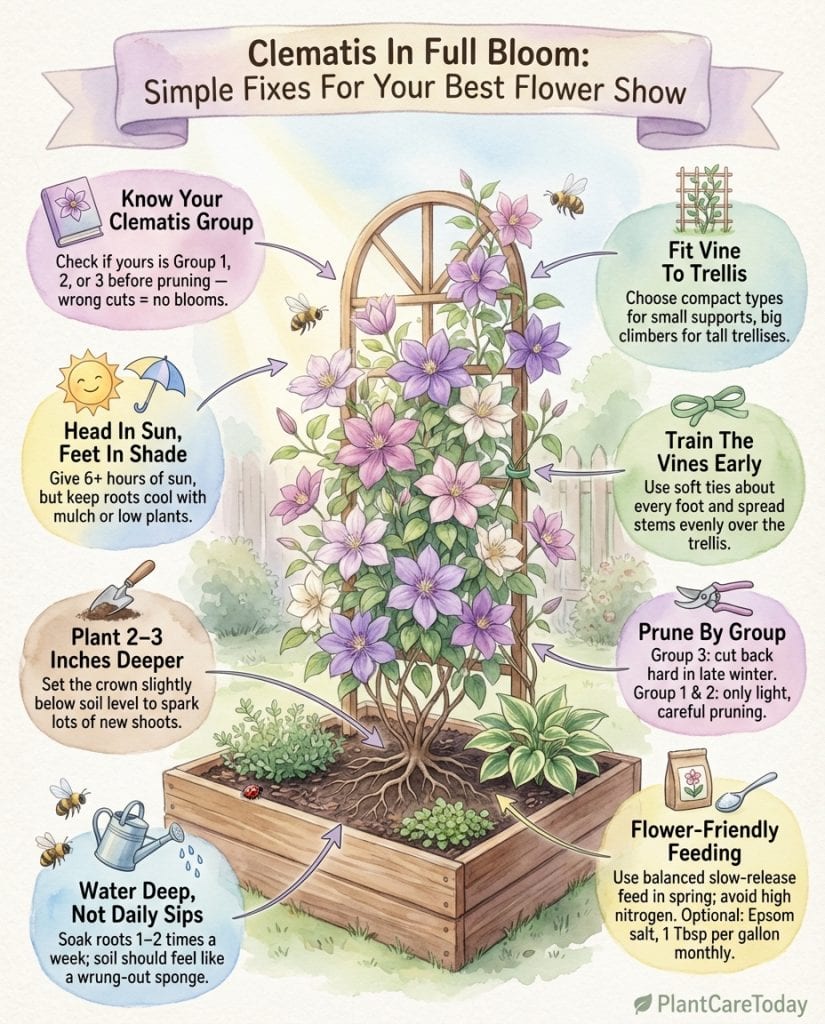
Your clematis wants its “head in the sun, feet in the shade”; this isn’t just garden folklore. This plant requires at least six hours of sunlight for stunning blooms, but its roots must remain cool and protected.
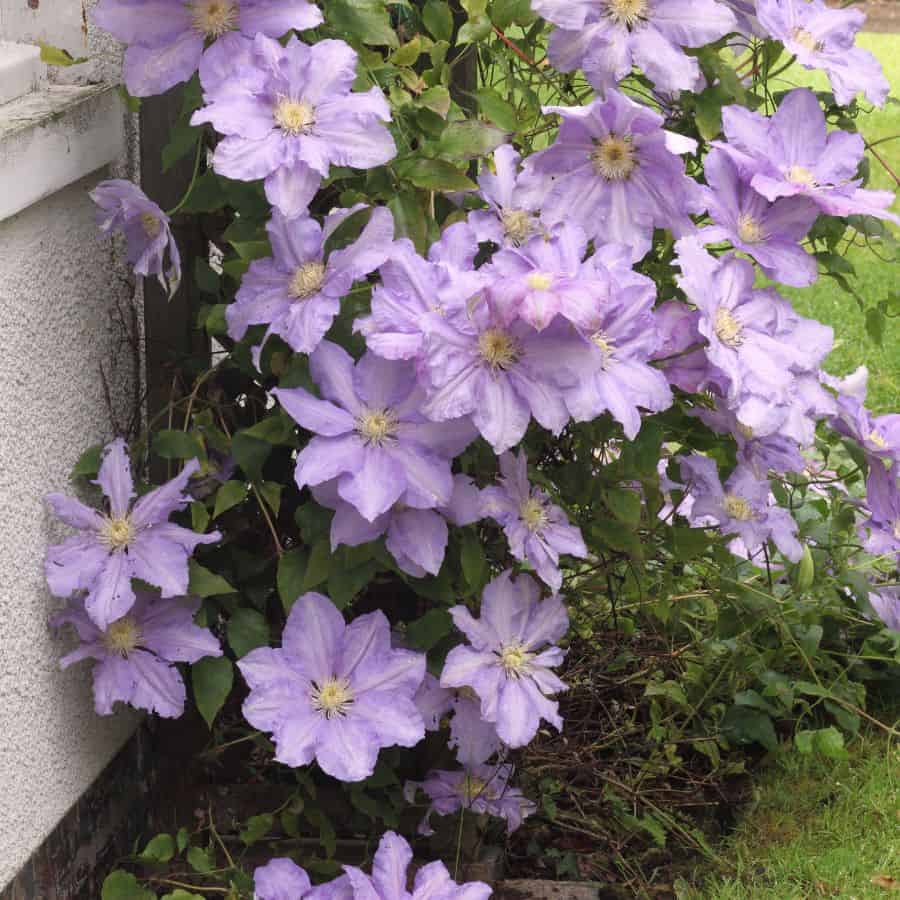
Position your trellis where morning sun can energize the plant, but afternoon shade protects those delicate root systems.
Poor air circulation is like putting your clematis in a stuffy room. It’s a recipe for fungal disasters that can kill your plant faster than you’d imagine.
The Right Variety Changes Everything
Choosing the wrong clematis variety for your space is like trying to fit a basketball player into a Smart car.
Compact varieties like ‘Bijou’ and ‘Pixie’ max out at 2-3 feet, perfect for smaller trellises, while vigorous growers like ‘Jackmanii’ can rocket up to 20 feet.
The difference between amateur and pro plant parents is simply matching the plant to the space. Your trellis size should determine your variety choice, not the other way around.
Planting Depth: The Secret They Don’t Tell You
Here’s the game-changer for your clematis that most people get wrong: plant it 2-3 inches deeper than you would other plants. This encourages new shoots to develop from the base, creating that full, lush look you’re after.
Think of it like building a house. You want a strong foundation underground to support the spectacular structure above. Most gardeners plant too shallow and wonder why their clematis looks sparse and struggles to establish.
Trellis Training That Actually Works
Your clematis tries to tell you something important when it starts reaching and twining. Use soft plant ties 12 inches apart; the key is to check them monthly and adjust as needed.
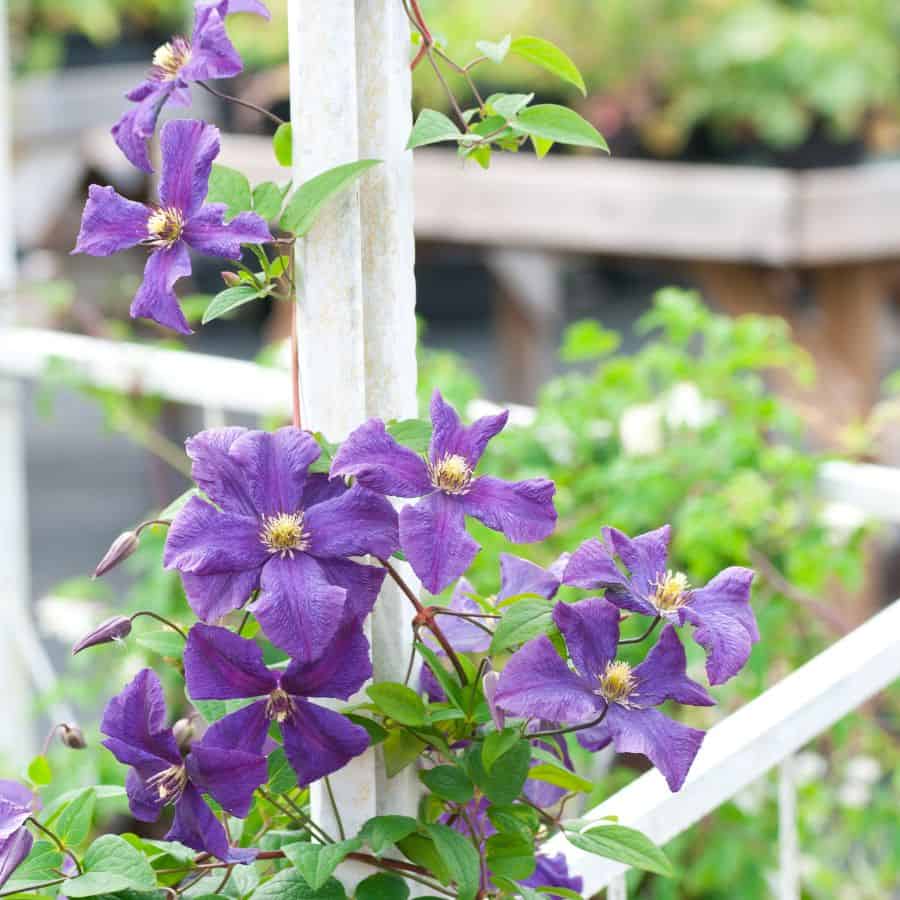
Forget what you’ve heard about letting clematis “find its own way.” Guide those stems evenly across your trellis from the beginning.
It’s like teaching a child good habits – much easier to do it right from the start than fix problems later.
The Watering Formula for Lush Growth
Clematis demands consistency like a high-maintenance friend, but it’s worth it for the payoff.
Deep watering twice weekly outperforms daily shallow sprinkling. During heat waves, frequency is increased, but the deep-watering approach is maintained.
The roots should feel like a wrung-out sponge – moist but never waterlogged. Inconsistent watering creates stressed plants that refuse to bloom.
Pruning: Where Dreams Go to Die
Most people make this mistake with their clematis: they either prune everything the same way or are too scared to prune. Group 3 clematis needs hard pruning in late winter – cut those stems back to 12-18 inches above ground level.
Group 1 varieties only need deadheading after flowering, while Group 2 requires light pruning to promote healthy buds.
Use the wrong technique, and you’ll cut off next year’s blooms. I’ve seen grown gardeners cry over this mistake.
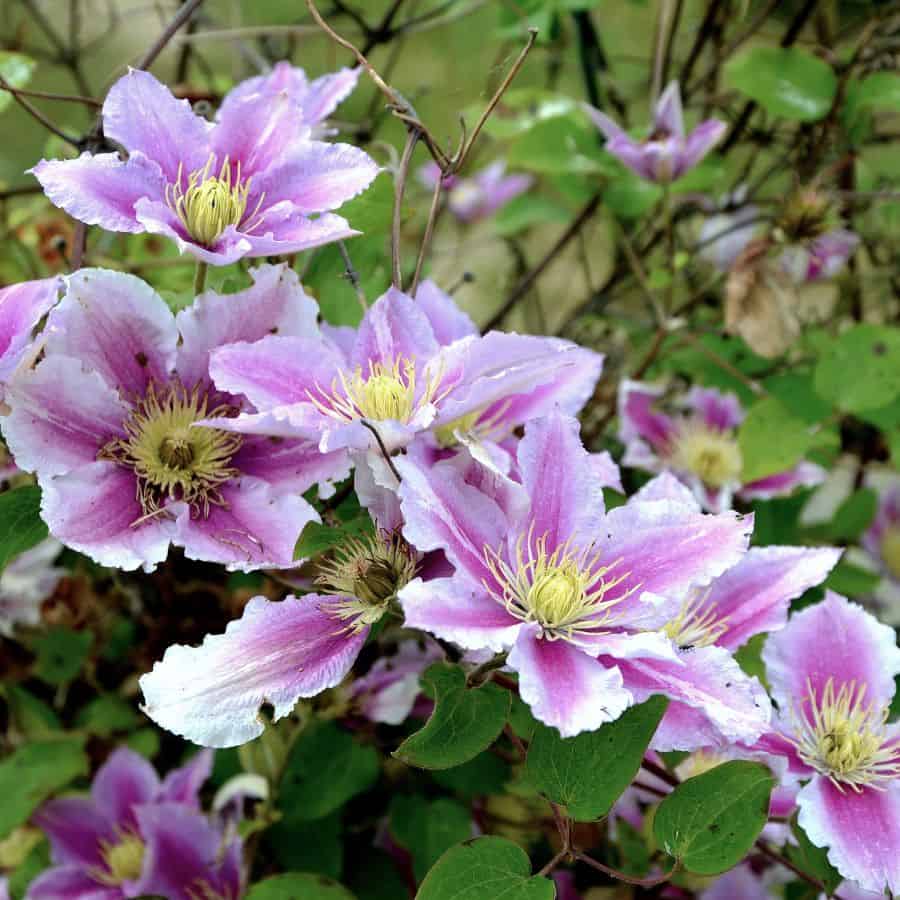
The Fertilizer Secret for Spectacular Blooms
Transform your struggling clematis with this revelation: balanced, slow-release fertilizer in early spring, followed by a mid-summer boost if needed.
Avoid high-nitrogen fertilizers like they’re plant poison. They’ll give you gorgeous leaves and zero flowers.
The viral hack that works? Epsom salt solution: one tablespoon per gallon of water, applied monthly during the growing season. The magnesium boost can be the difference between mediocre and magnificent blooms.
Seasonal Care That Keeps Clematis Thriving
Spring is training season: guide new growth and apply fertilizer. Summer demands consistent moisture and mulch maintenance.
Fall cleanup prevents disease disasters, while winter protection protects roots from freeze damage.
Your clematis can become a stunning focal point that transforms your entire garden. The difference between struggling and spectacular is simply understanding what this remarkable plant needs to flourish.