Sick of staring at cold, lifeless fencing? Imagine stepping into your garden surrounded by a vibrant, living wall that changes with the seasons, buzzes with wildlife, and actually improves with age.
Unlike traditional fences that deteriorate yearly, living fences, nature’s answer to boundary problems, get stronger and more beautiful over time.
And here’s the shocker: they can increase property values by up to 20% while providing benefits no wooden fence ever could. Ready to ditch the dead wood?
What Exactly IS a Living Fence? (Nature’s Best-Kept Secret)
A living fence is exactly what it sounds like: a boundary created from actual living plants instead of dead materials.
Think closely planted shrubs, small trees, or flowering vines that grow together to form a lush, breathing barrier.
These natural boundaries have been used for centuries across Europe and rural landscapes worldwide.
(I was shocked to discover that some living fences in England have stood for over 500 years, outlasting every other structure on the property!)
7 Reasons Your Garden is Begging for a Living Fence
Forget what you’ve heard about living fences being “too much work.” Their benefits far outweigh any maintenance:
- Privacy Without the Prison Look: Dense shrubs create a soft, natural screen that doesn’t scream “keep out!” like harsh wooden panels
- Wind & Noise Buffers: Thick hedges can reduce wind speeds by up to 75% and absorb traffic noise like living sound panels
- Wildlife Paradise: Birds, butterflies, and beneficial insects will transform your yard into a mini ecosystem
- Ever-Changing Beauty: Unlike static fences, living barriers transform with the seasons, flowering in spring, fruiting in summer, blazing with color in fall
- Soil Superheroes: Roots prevent erosion and improve soil structure (especially crucial on sloped properties)
- Earth-Friendly Choice: While traditional fences contribute to landfills, living fences actively clean the air and capture carbon
- Property Value Booster: Mature hedges can add substantial curb appeal and make your property stand out
The secret most plant experts won’t tell you is that a well-established living fence actually requires less maintenance than constantly staining, replacing boards, or fixing rusted metal panels.
5 Types of Living Fences (Which Fits Your Style?)
Not all living fences are created equal. Your personality, style, and needs should dictate which type is perfect for your garden:
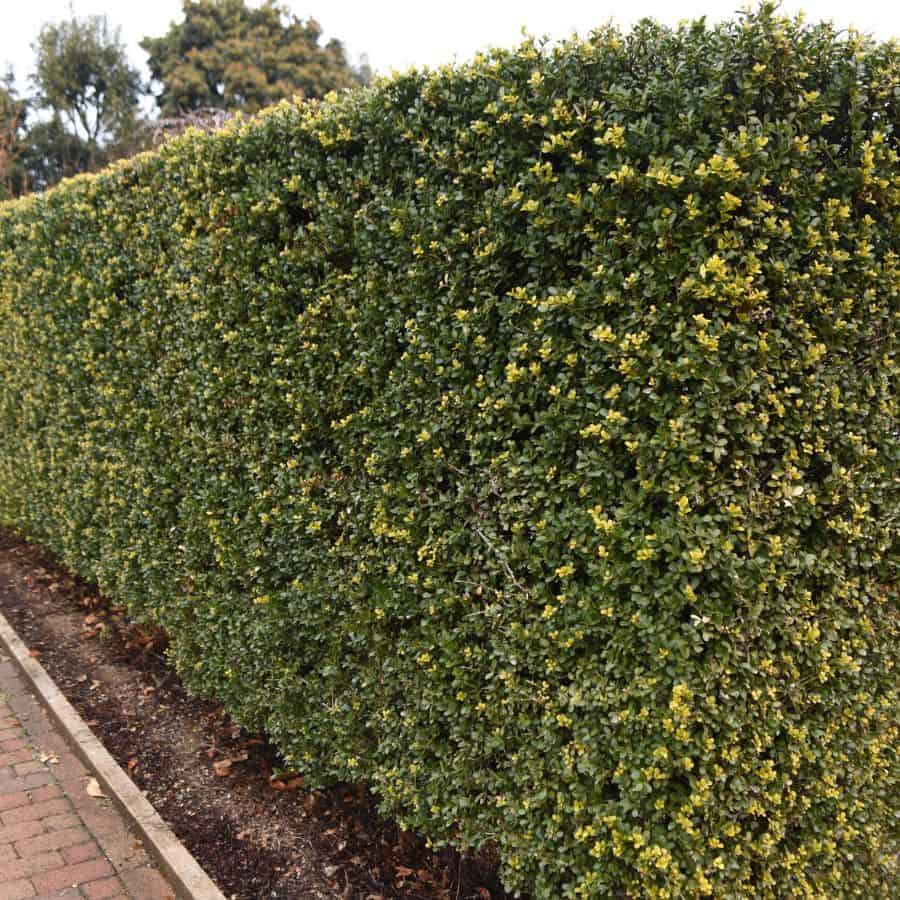
- Formal Hedge: The sophisticated option with clean, manicured lines (think boxwood, privet, or yew)
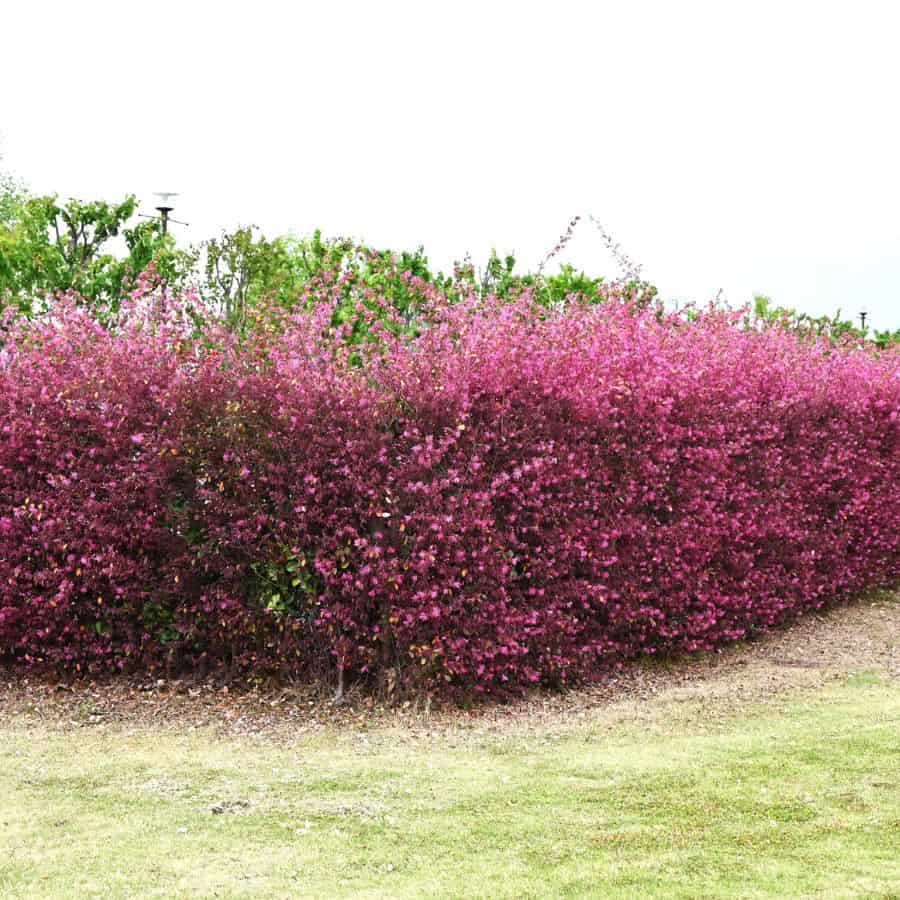
- Informal Hedge: The free-spirit choice with natural growth patterns and seasonal surprises (lilac, forsythia, spirea)
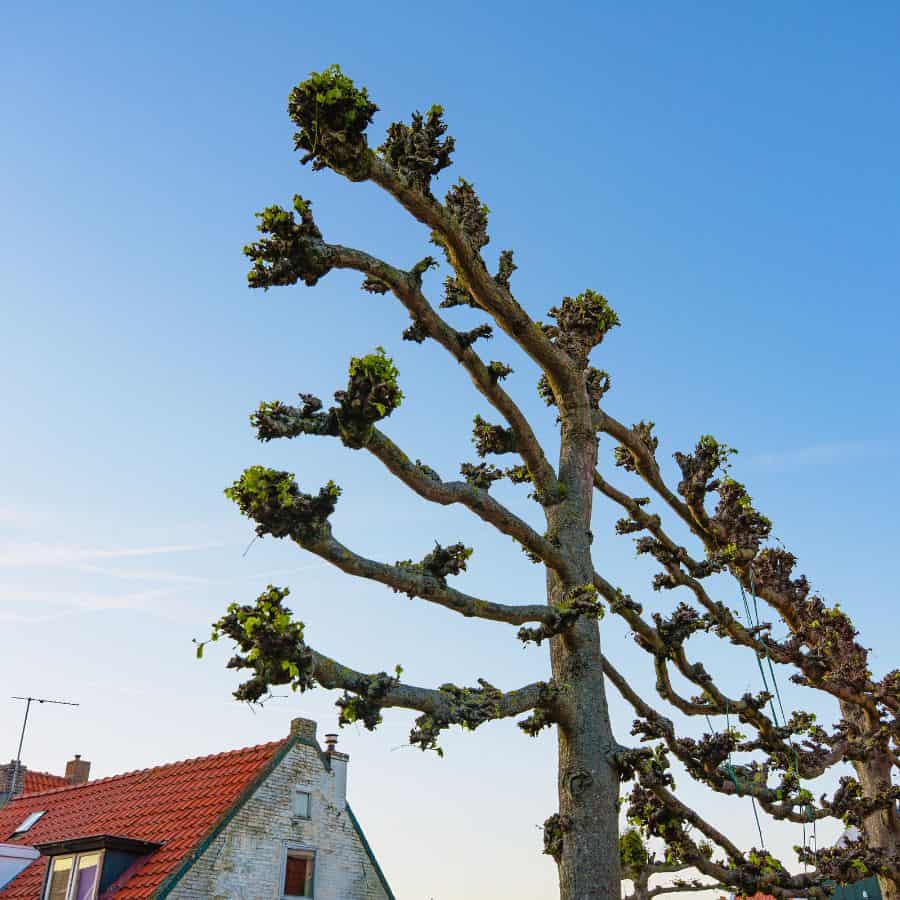
- Espalier: The space-saving artist’s choice where plants are trained flat against walls or wires (apple trees, pear trees)
- Mixed Living Fence: The biodiversity champion combining multiple species for maximum wildlife benefit
- Windbreak Fence: The practical protector using tall trees or shrubs to shield gardens from harsh elements
Planning Your Living Dream Fence (Without Nightmares)
The game-changer for your garden isn’t just choosing living over dead. It’s planned properly. Skip these steps, and your fence might flop faster than a wilted lettuce leaf:
- Assess Your True Needs: Privacy? Wind protection? Wildlife habitat? Be honest about your priorities
- Check Local Rules: Some municipalities limit height or restrict certain species (bamboo is the outlaw of the plant world in many areas)
- Evaluate Sunlight: Full sun areas support different plants than shady spots. This can make or break your fence
- Test Your Soil: Like building a house on sand, planting without knowing your soil is asking for trouble
The Plant Superstars for Spectacular Living Fences
Your fence is only as good as the plants you choose. These categories will help you narrow down the perfect performers:
- Evergreen Privacy Champions: Arborvitae (grows up to 3 feet per year!), Holly (glossy leaves plus bird-feeding berries), Juniper (thrives in poor soil where others fail)
- Flowering Show-Offs: Lilac (that fragrance!), Hydrangea (enormous blooms), Rose of Sharon (hummingbird heaven)
- Wildlife Magnets: Viburnum (offers four-season appeal), Serviceberry (produces edible berries humans AND birds love)
- Edible Boundaries: Blueberry shrubs (beautiful fall color AND breakfast), Raspberry bushes (delicious natural security system)
- Security Specialists: Hawthorn (thorns like nature’s barbed wire), Rugosa Rose (beautiful but impenetrable barrier)
Your living fence is trying to tell you something important: choose plants matched to your climate zone! A fence that struggles is no fence at all.
From Blank Canvas to Living Wall: Planting Your Fence
The difference between amateur and pro plant parents is simply following these critical planting steps:
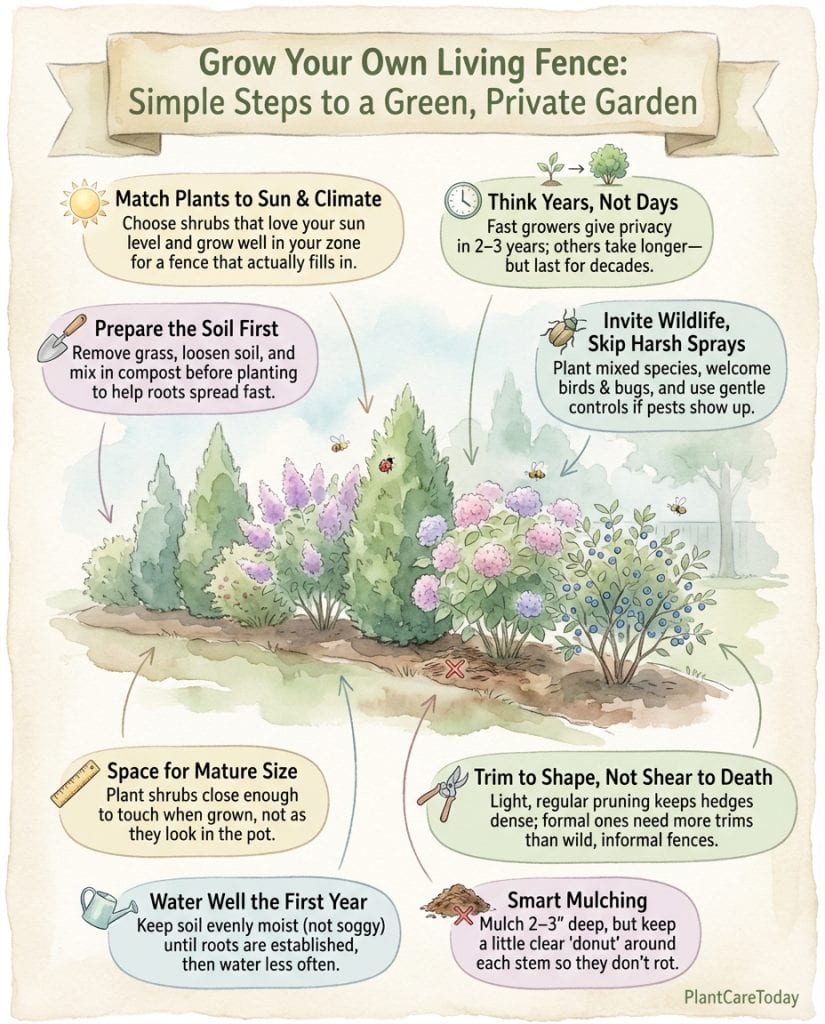
- Measure and mark your fence line (curves create a softer look than rigid straight lines)
- Space plants properly based on mature width (most novice gardeners plant too far apart)
- Prepare the soil thoroughly by removing grass and adding compost
- Plant so the top of the root balls sits level with the ground
- Mulch 2-3 inches deep, but keep it away from stems (mulch mountains kill plants!)
Most people make this mistake with their living fence: expecting instant gratification. Remember, you’re growing a fence, not building one. Patience yields spectacular results.
Keeping Your Living Fence Lush & Thriving
A living fence needs love, but probably less than you think:
- Water religiously the first year (this is when roots establish)
- Prune according to type. Formal hedges need 2-3 trims yearly; informal ones just occasional shaping
- Feed annually with compost or slow-release fertilizer
- Watch for pest issues, but resist chemical warfare . Healthy plants resist problems naturally
From Planting to Privacy: The Timeline
How long until your living fence becomes a true barrier? It depends on your plant choices:
- Fast growers (Arborvitae, Privet): 2-3 years to significant privacy
- Medium growers (Viburnum, Holly): 3-5 years to mature density
- Slow-but-worth-it options (Yew, Boxwood): 5+ years, but will outlive you
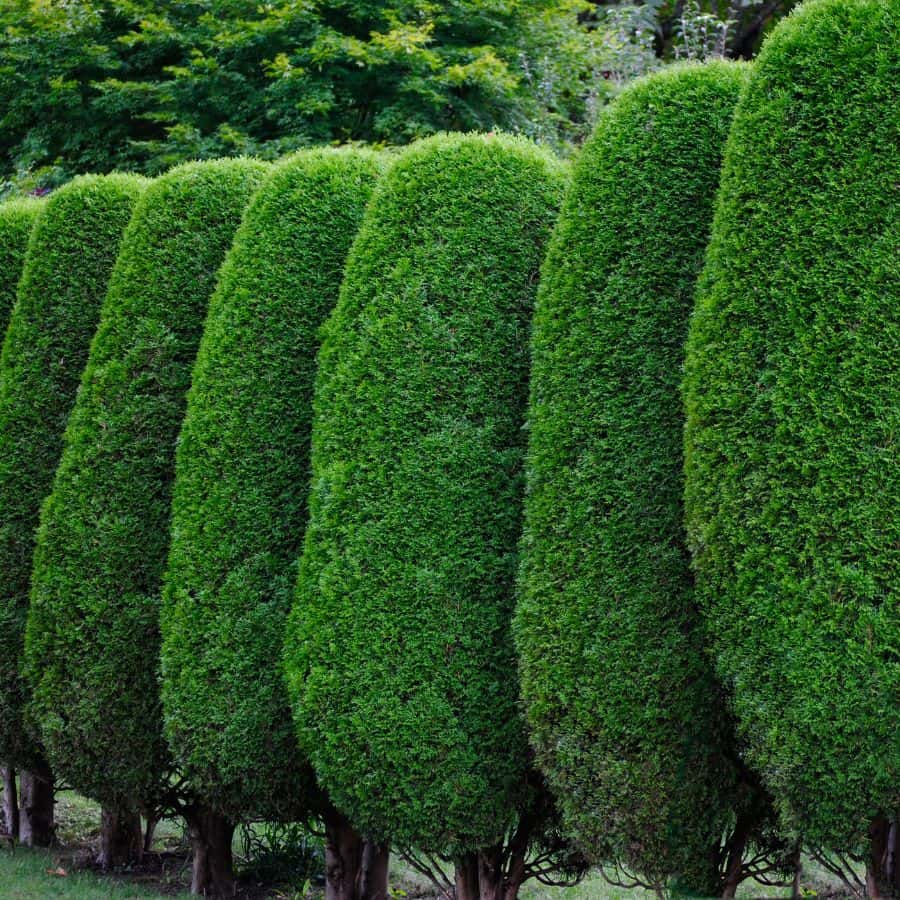
Investing in larger plants initially costs more but accelerates your timeline dramatically. Think of it like compound interest; the sooner you start, the sooner you’ll reap the rewards.
The Best of Both Worlds: Hybrid Approaches
Can’t wait for plants to grow? Consider these clever combos:
- Install a simple wire fence, then plant climbing roses or clematis to soften it
- Use a low wooden fence with taller shrubs behind it for immediate AND growing privacy
- Create a “living fence sandwich” with different plants at varying heights for instant interest while waiting for maturity
Remember, the most stunning gardens aren’t created overnight. They evolve like fine wine, getting better with age. Your living fence is the perfect embodiment of this garden truth.