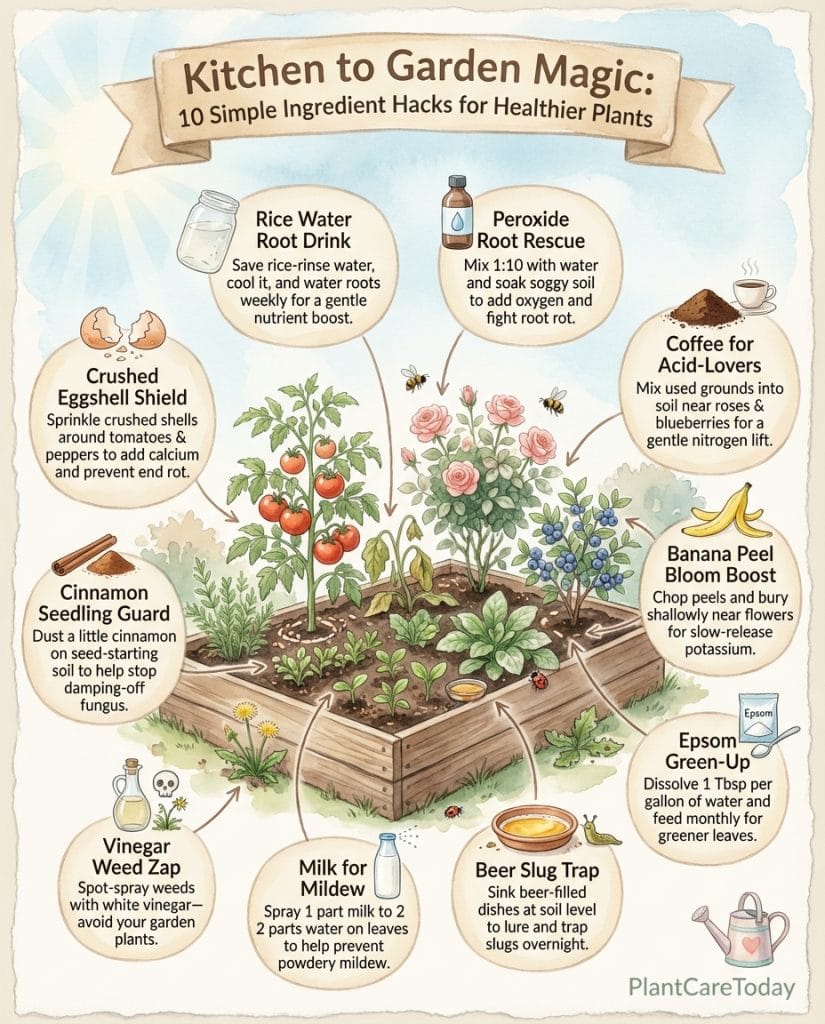
Here’s something that will blow your mind: many of the most powerful plant fertilizers and treatments are sitting in your kitchen right now.
While you’ve been spending money on expensive garden center products, professional gardeners have been quietly using everyday household items to create spectacular gardens.
I was shocked to discover that a simple kitchen ingredient could literally bring dying plants back to life. After testing these hacks in my own garden, I watched my struggling plants transform into lush, vibrant showstoppers that had neighbors asking for my secrets.
These 15 kitchen-to-garden hacks will transform your approach to plant care. The best part? You probably already have everything you need.

1. Rice Water for Healthy Roots
Save the water from rinsing rice, let it cool, and use it to water your plants weekly. This simple trick works like liquid gold for plant roots .
Rice water contains vitamins, minerals, and amino acids that supercharge root development. The starches feed beneficial soil bacteria, creating a thriving underground ecosystem that your plants will absolutely love.
2. Eggshells for Calcium Boost
Crush dried eggshells into a powder and sprinkle them around the plant bases. Think of it as calcium supplements for your green babies.
This hack prevents blossom end rot in tomatoes and peppers – that heartbreaking black spot that ruins perfect fruit. Your plants’ cell walls become stronger, creating more resilient, healthier growth.
3. Hydrogen Peroxide for Dying Plants
Mix one part 3% hydrogen peroxide with ten parts water for a monthly plant revival treatment. This is your plant emergency room in a bottle.
The secret most plant experts won’t tell you is that dying plants often suffocate from a lack of oxygen in waterlogged soil. Hydrogen peroxide adds oxygen while fighting root diseases; it’s like CPR for struggling plants.
4. Banana Peels for Nutrient-Rich Fertilizer
Chop banana peels and bury them around flowering plants. Your garden becomes like a gourmet restaurant for plants.

As banana peels decompose, they release potassium, phosphorus, and calcium – the holy trinity of nutrients for spectacular blooms and abundant fruit production.
5. Coffee Grounds for Acid-Loving Plants
Mix used coffee grounds into the soil around blueberries, roses, and azaleas. It’s like giving your plants their morning caffeine boost.
Coffee grounds provide nitrogen and slight acidity that these plants crave. Your roses will reward you with more vibrant blooms, and your blueberries will be sweeter than ever.
6. Epsom Salt for Greener Leaves
Dissolve 1 tablespoon of Epsom salt per gallon of water for monthly feeding. This creates dramatically greener, more lush foliage.
Magnesium is the secret ingredient in chlorophyll production. Without it, plants can’t photosynthesize properly – it’s like trying to run a car without oil.
7. Cinnamon for Fungal Prevention
Sprinkle cinnamon powder on the soil around the seedlings. This kitchen spice becomes your natural plant bodyguard.

Cinnamon’s antifungal properties prevent damping-off disease, the silent killer that destroys seedlings overnight. One light dusting can save your entire seed-starting operation.
8. Milk for Powdery Mildew
Mix one part milk with two parts water and spray on affected plants. Milk isn’t just for cookies; it’s a plant disease fighter.
The proteins in milk create an environment hostile to powdery mildew while actually feeding your plants. It’s both treatment and prevention in one natural solution.
9. Aspirin for Plant Immunity
Dissolve one aspirin tablet per gallon of water for tri-weekly treatments. Think of it as boosting your plants’ immune system.
Salicylic acid in aspirin triggers plants’ natural defense mechanisms, making them more resistant to diseases and pest attacks. It’s like vaccinating your garden.
10. Vinegar for Weed Control
Spray pure white vinegar directly on weeds, avoiding desirable plants. This turns your kitchen staple into a precision weed-killing weapon .
Forget expensive herbicides that harm beneficial insects. Vinegar’s acidity kills weeds by drying them out, and it’s safe for your family and pets.
11. Honey for Rooting Cuttings
Dip the cutting ends in honey before planting. Honey becomes nature’s rooting hormone and infection protector rolled into one.
The antibacterial properties prevent rot, while enzymes actually stimulate root development. Your cutting success rate will skyrocket using this ancient gardening secret.
12. Beer for Slug Traps
Bury containers filled with beer near slug-damaged plants. Create irresistible slug motels they can’t escape from.

Slugs are attracted to beer’s yeast but can’t climb out once they fall in. It’s more effective than expensive slug baits and completely organic.
13. Sugar for Pest Control
Dissolve 2 tablespoons of sugar in 1 quart of water, then spray on aphid-infested plants. This creates a beneficial insect dinner invitation.
Sugar water attracts ladybugs and other aphid predators, helping restore a natural balance in your pest problem. Let nature handle pest control for you.
14. Chamomile Tea for Seedlings
Water seedlings with cooled chamomile tea. This gentle herb becomes seedling insurance against fungal disasters.
Chamomile’s natural antifungal compounds protect vulnerable seedlings during their most critical growth phase. It’s like wrapping your baby plants in a protective blanket.
15. Baking Soda for Sweeter Tomatoes
Sprinkle small amounts of baking soda around tomato plants. This common household item becomes your tomato sweetness enhancer.
By reducing soil acidity, baking soda decreases plants’ absorption of compounds that create tartness. Your tomatoes will taste like candy compared to store-bought varieties.

The game-changer for your garden isn’t expensive products; it’s recognizing the incredible plant care arsenal already in your kitchen. Start with just 2-3 of these hacks and watch your plants change from surviving to absolutely thriving.