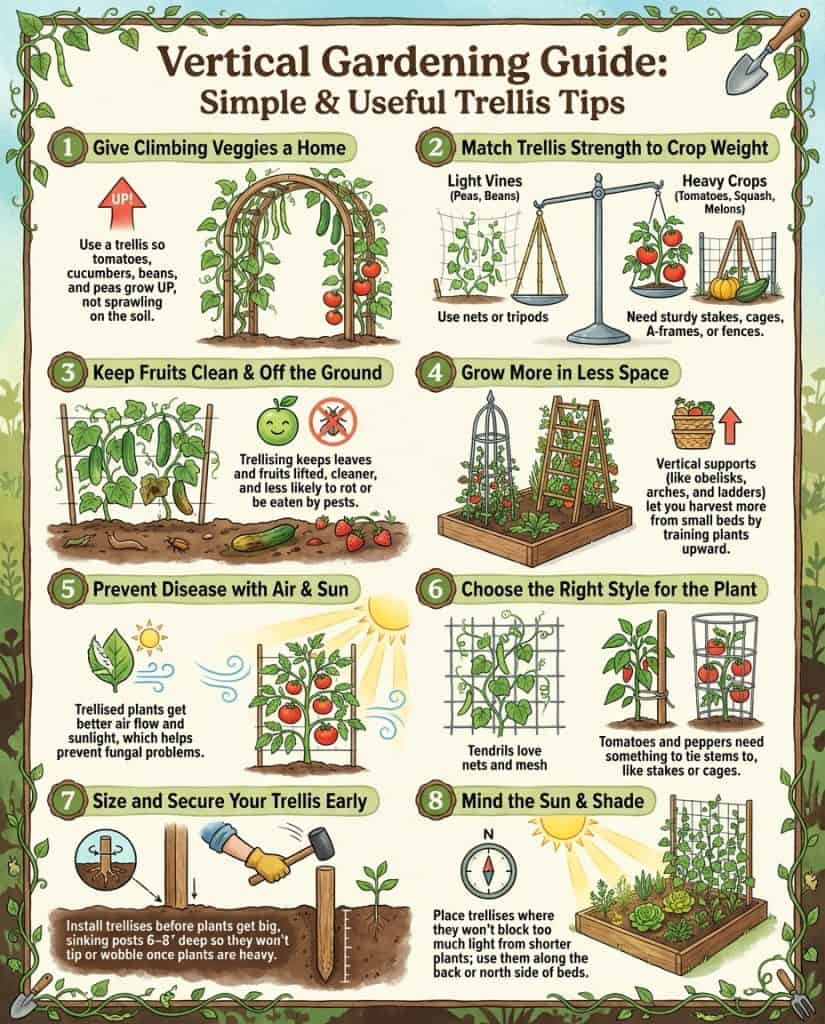
Your vegetable plants are literally screaming for support, but are you listening? That sad tomato flopping over like a teenager on a couch isn’t just being dramatic.
It’s begging for the right trellis! I was shocked to discover that proper trellising can increase your vegetable yields by up to 30% while reducing disease by keeping plants off the ground.
Let’s revolutionize your garden with the perfect vertical solution !
Why Your Garden is Desperately Craving a Trellis Revolution
Forget what you’ve heard about trellises being optional garden decor. They’re actually life-support systems for your vegetables!
Think of them as the spine for your garden; without one, everything collapses into a chaotic, disease-prone mess.
A proper trellis transforms your garden by:
- Supporting vertical growth that prevents plants from face-planting into the soil
- Keeping developing fruits elevated and clean (no more muddy tomatoes!)
- Reducing fungal diseases that thrive in ground contact (a silent plant killer)
- Maximizing your growing space. Expand upward instead of outward!
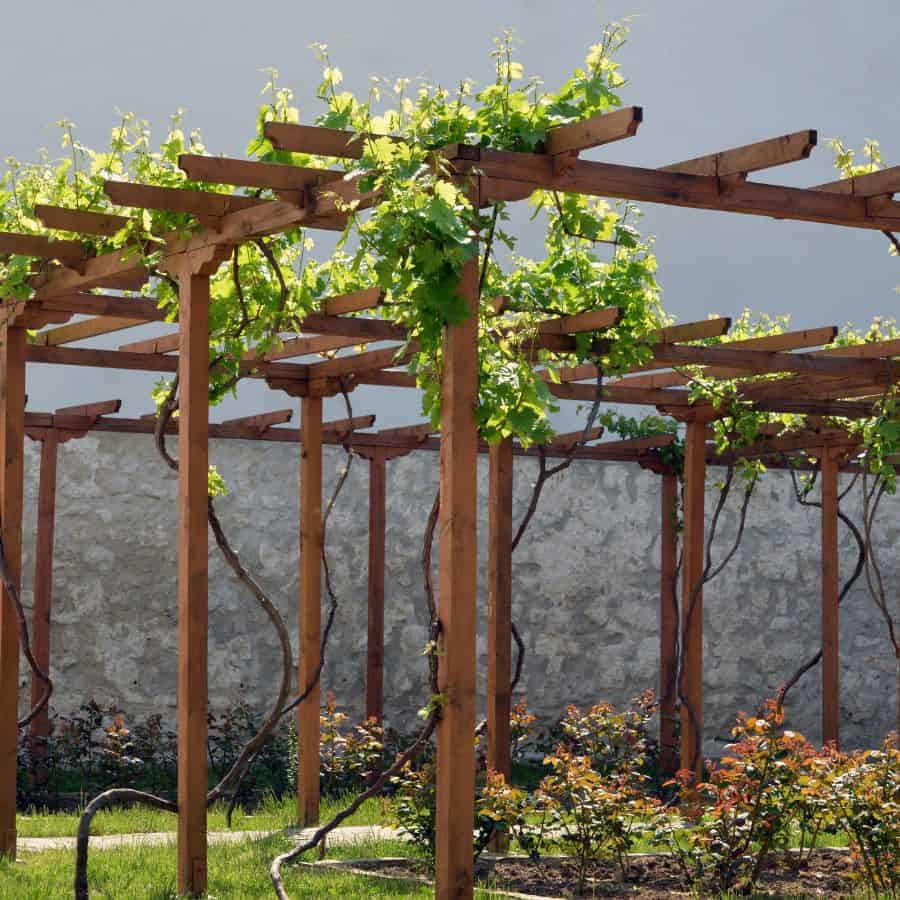
Psst… did you know that a trellised cucumber plant can produce up to 3x more fruit than one left to sprawl on the ground? Your plants are literally trying to reach their full potential!
The 11 Trellis Styles That Will Revolutionize Your Harvest
1. Stake Trellis: The Minimalist’s Dream
The difference between amateur and pro plant parents is simply knowing when a single stake will do the trick.
Perfect for tomatoes, peppers, beans, and eggplants, these individual supports are like personal trainers for your plants, providing just enough guidance to keep them standing tall.
For best results, drive stakes at least 8 inches into the soil and secure plants with soft garden ties that won’t cut into growing stems. For extra support, try connecting multiple stakes with garden twine for a DIY cage effect.
2. Cage Trellis: The Bodyguard Your Tomatoes Deserve
If your tomatoes have ever collapsed under their own weight (a true garden tragedy), a cage trellis is your salvation. These circular fortresses provide 360-degree support for peas, tomatoes, and peppers.
The secret most plant experts won’t tell you is that you should actually install these BEFORE your plants get too big, not as an emergency measure when they’re already sprawling!
3. Tripod Trellis: The Three-Legged Wonder
Like a circus acrobat’s balancing platform, tripod trellises create a sturdy teepee structure that’s perfect for lightweight climbers, including peas, beans, and cucumbers. Three poles tied at the top create a natural climbing gym for your veggies.
Pro tip: For extra stability, bury the pole ends at least 6 inches deep and spread them wider at the base than at the top.
4. Teepee Trellis: The Heavy-Lifter
The bigger, burlier cousin of the tripod, teepee trellises handle your garden’s heavyweight champions. Pole beans will race to the top of these structures like marathon runners sprinting for gold.
For an eco-friendly option that won’t break the bank, bamboo poles create spectacular teepees that can withstand even the most vigorous climbers. Just ensure they’re securely tied at the top; a collapsing teepee is the gardening equivalent of a demolition site!
5. A-Frame Trellis: The Heavyweight Champion
When your squash and melons need serious support, the A-frame steps up to the plate. This trellis is like a greenhouse roof; two panels leaning together to create a peak that can handle your most ambitious climbers.
The game-changer for your melons isn’t what you think. Try adding small fabric slings under developing fruits to prevent them from tearing off the vine as they grow. Your melons will thank you!
6. Flat Trellis: The Classic That Never Fails
Sometimes the classics endure for a reason. A flat trellis, whether wood lattice or metal mesh, provides reliable vertical support for peas, beans, and cucumbers. It’s the little black dress of the garden world: always appropriate, never overdone.
Position flat trellises where they’ll receive even sunlight distribution to prevent plants from leaning dramatically toward light sources.
7. Fence Trellis: The Multitasker
Why buy a trellis when your fence is begging to multitask? Repurposing an existing fence for squash, tomatoes, and melons is like discovering free real estate in your garden.
Just ensure your fence can handle the weight. Most people make this mistake with their heavy climbers, only to watch their fence buckle under pressure like a card table at Thanksgiving dinner.
8. Arch Trellis: The Garden Showstopper
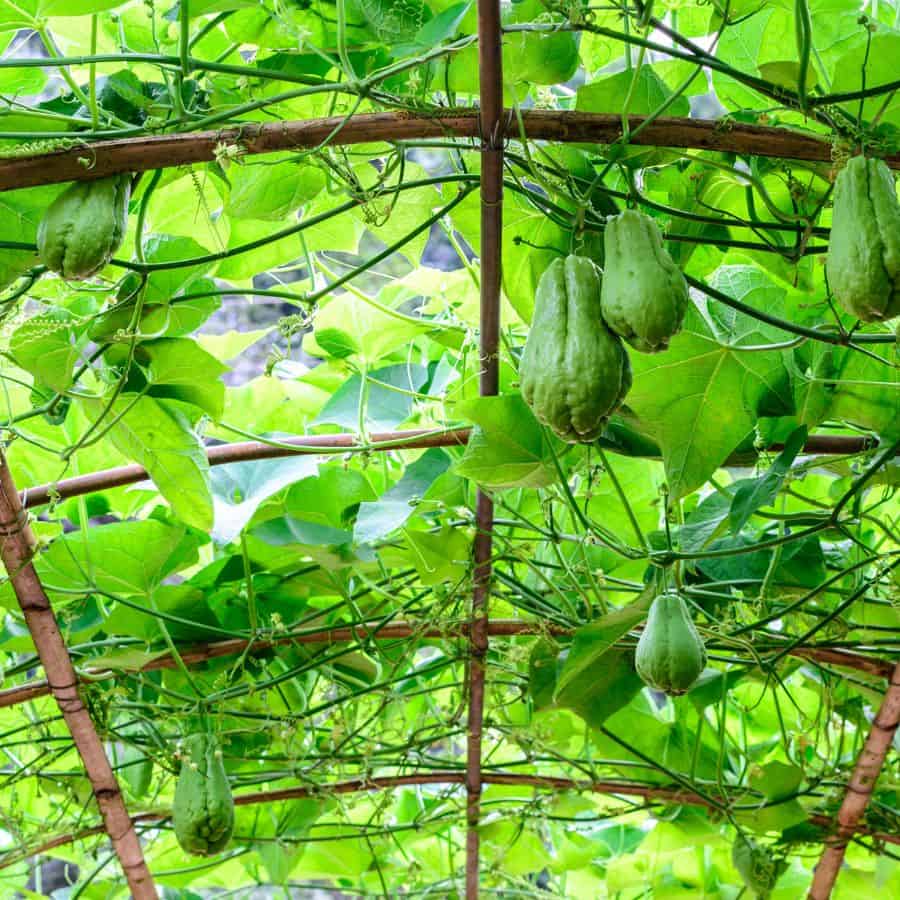
Want to create a lush, vibrant tunnel in your garden? Arch trellises transform functional support into a garden feature that will make neighbors stop and stare. Cucumbers, beans, and squash will flourish as you create a magical walkway.
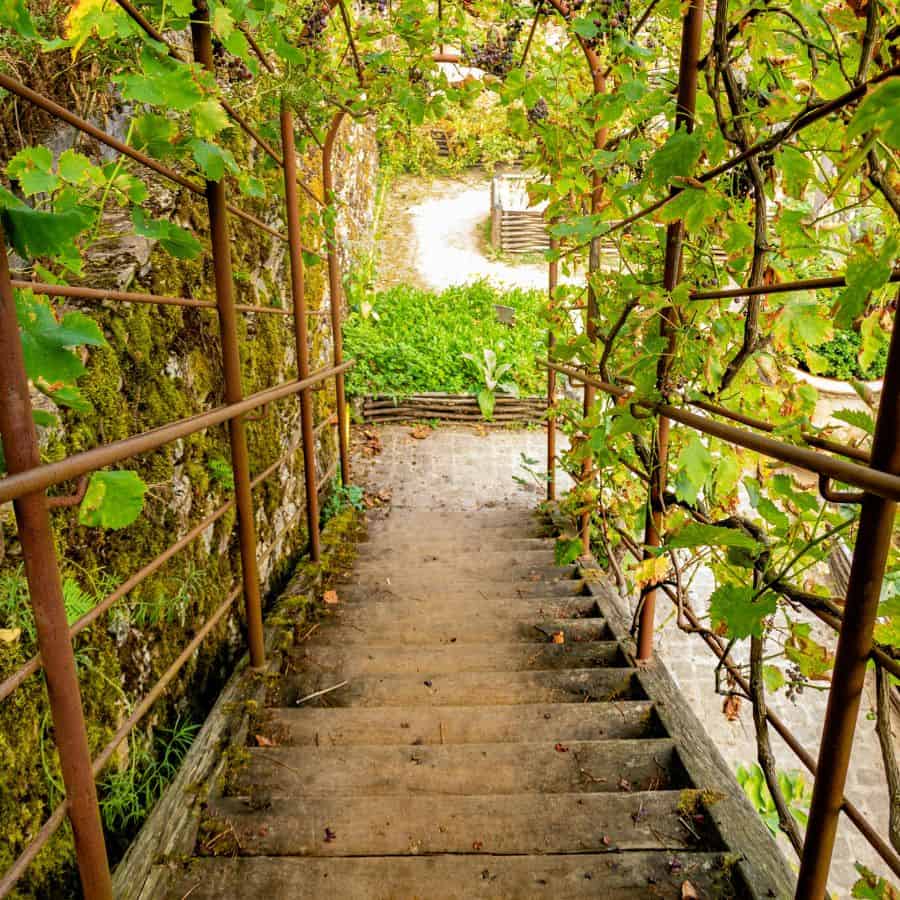
Your garden visitors will be awestruck as they walk through your vegetable tunnel. It’s like stepping into a living green cathedral!
9. Obelisk Trellis: The Space-Saver
Urban gardeners, rejoice! The pyramid-shaped obelisk creates dramatic vertical growing space in tight quarters. These structures are perfect for cucumbers, tomatoes, and beans when you’re playing the small-space gardening game.
A 6-foot obelisk can support plants that would otherwise require 16 square feet of ground space; talk about a breakthrough for small gardens!
10. Ladder Trellis: The Upcycler’s Delight
That old wooden ladder in your garage isn’t trash. It’s a garden revelation waiting to happen! Ladder trellises provide natural climbing rungs for beans, peas, and cucumbers.
You can lean it against a wall at a 75-degree angle for the perfect climbing angle, or secure it horizontally as a unique overhead growing structure. Your plants will climb the career ladder to success!
11. Net Trellis: The Lightweight Specialist
For delicate climbers like peas and small cucumber varieties, a flexible netting creates the perfect climbing surface. These tendriled plants will grab the netting like eager children on a playground.
Warning: Only use nets for lightweight crops! A watermelon on a net trellis is like putting a bowling ball in a hammock designed for a chihuahua—disaster awaits!
Rescue Your Garden: 4 Trellis-Matching Secrets
Your vegetables are trying to tell you something important about their support needs. Listen closely by following these crucial matching principles:
- Match weight to strength – Heavier fruits (melons, large tomatoes) need sturdier trellises like A-frames or cages
- Consider growth patterns – Tendriled plants (peas, cucumbers) love nets, while tomatoes need something to be tied to
- Right-size your support – An 8-foot trellis for 3-foot plants is overkill; match height to expected growth
- Position for sun exposure – Ensure your trellis design doesn’t create excess shade on nearby plants
The Plant Parent’s Final Takeaway
Choosing the right trellis isn’t just garden busywork. It’s the difference between sad, sprawling plants and a thriving vertical garden that produces abundant harvests. Your vegetable plants literally reach their highest potential when properly supported!
Start with one trellis type that matches your most needy vegetables, then expand your collection as you see the dramatic difference in plant health and productivity. Remember: a trellis isn’t an accessory. It’s essential infrastructure for garden success!