I was shocked to discover that my “unkillable” snake plant was dying… because I was being too attentive. Turns out, these striking plants aren’t just surviving neglect. They’re actually designed for it.
If you’ve been loving your snake plant to death (literally), this might be the most important plant advice you’ll read this year.

The Desert Secret Your Snake Plant Wishes You Knew
Snake plants (Sansevieria) didn’t evolve in our cozy living rooms. These tough-as-nails beauties come from the harsh West African terrain, where rain is a rare luxury and drought is the norm.
Like camels of the plant world, their thick, fleshy leaves are actually built-in water reservoirs!
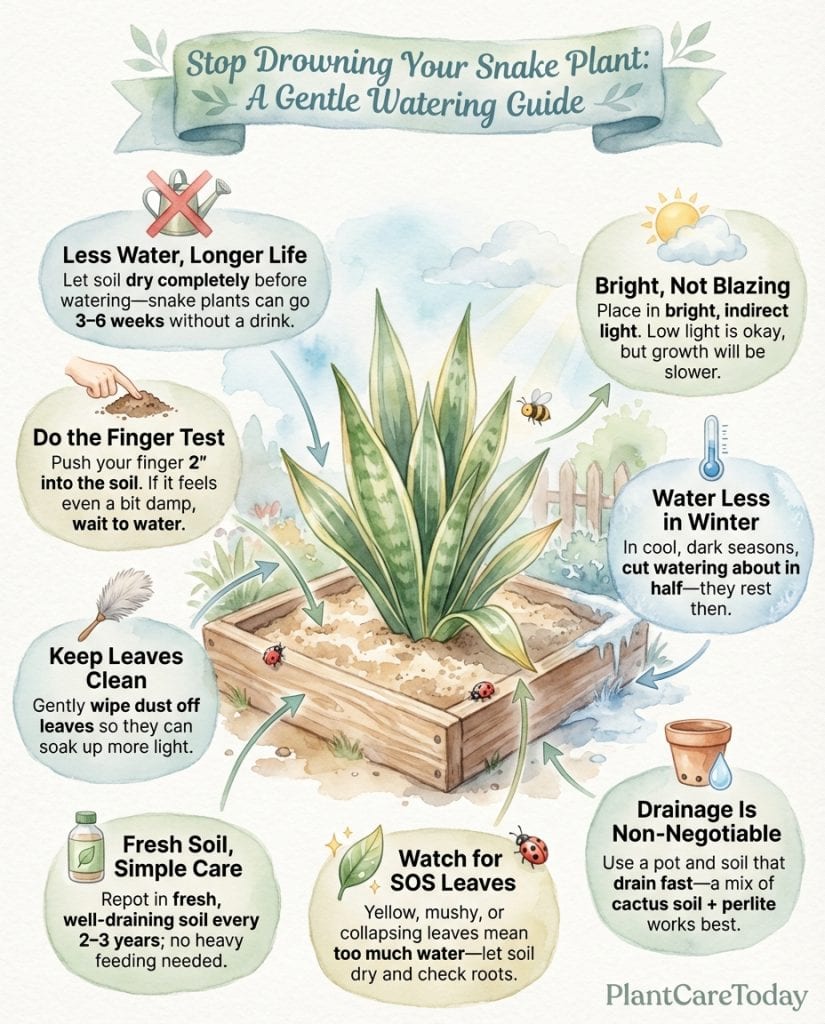
The game-changer for your snake plant isn’t what you think: it’s letting it go thirsty. Studies show these plants can thrive for up to 6 weeks without a single drop of water. Shocking, right?
Forget what you’ve heard about regular watering schedules. That weekly ritual that keeps your ferns lush? It’s sending your snake plant into a slow, soggy decline.
The Silent Killer: How Overwatering Destroys From Below
Most people make this mistake with their snake plants: they drown them with kindness. When you overwater, you’re not just giving extra refreshment. You’re creating a death trap.
Here’s what’s happening beneath the soil: Constantly wet conditions create an oxygen-deprived environment where roots can’t breathe. It’s like trying to jog underwater; eventually, you suffocate.

Root rot, the number one snake plant killer, thrives in these soggy conditions. Once it takes hold, your plant’s foundation literally melts away. And the scary part? By the time you see symptoms above ground, the damage below is often severe.
Your Plant Is Screaming (But You Can’t Hear It)
Your snake plant is trying to tell you something important when these warning signs appear:
- Yellow leaves – The plant equivalent of waving a distress flag
- Mushy, soft texture – Those once-firm leaves are literally bursting from excess water
- Foul soil smell – That swamp-like odor? It’s rotting roots
- Collapsing leaves – When they can’t stand tall anymore, it’s critical
- Brown spots – Bacterial infections moving in as roots fail
The difference between amateur and pro plant parents is simply recognizing these cries for help before it’s too late. Your snake plant doesn’t want to die. It’s built to survive much worse than your living room!
The Dramatic Rescue Plan: Saving a Drowning Snake Plant
If your snake plant is showing these distress signals, don’t panic! Even plants on death’s doorstep can make spectacular comebacks with the right emergency care:
- Emergency repotting: Remove your plant from wet soil immediately
- Root surgery: Trim away any black, mushy roots with sterilized scissors (they’re goners)
- Drying period: Let the remaining roots air dry for 24-48 hours (yes, really!)
- Fresh start: Repot in well-draining soil with a 50/50 mix of cactus soil and perlite
- Hydration reset: Wait a FULL WEEK before even thinking about water
I’ve seen snake plants bounce back from situations that would have killed lesser houseplants. They’re the botanical equivalent of action movie heroes. When you think they’re done for, they make an against-all-odds comeback!

The Secret Watering Formula That Guarantees Success
The secret most plant experts won’t tell you is that there is no perfect watering schedule for snake plants. Instead, use this foolproof method:
- The finger test: Stick your finger 2 inches into the soil, if it’s even slightly damp, WAIT
- Seasonal adjustments: Cut watering by half in the winter months
- The “forget about it” rule: When in doubt, wait another week
- Drainage check: Water should flow freely from drainage holes, never pooling
Here’s a mind-blowing fact: in a study of houseplant deaths, researchers found that approximately 80% of succulent-type plants like snake plants die from overwatering rather than underwatering. Your plant is far more likely to survive neglect than too much attention!
Transform Your Snake Plant Into a Thriving Showpiece
Once you’ve mastered the art of benign neglect, your snake plant will reward you with dramatic growth and stunning, architectural beauty. These plants aren’t just survivors; when properly cared for, they’re showstoppers.
Beyond proper watering, give your plant:
- Bright, indirect light (they can handle low light but won’t thrive)
- A snug pot (they actually flower when slightly root-bound!)
- Occasional leaf cleaning (dust blocks photosynthesis)
- Fresh soil every 2-3 years (even desert plants need nutrients)
With these simple tweaks, your snake plant won’t just survive. It’ll flourish into a vibrant specimen that might even reward you with the rare snake plant bloom, something that happens only when these plants are truly thriving.
The Counterintuitive Truth About Plant Parenthood
Sometimes the most loving thing you can do for your plants is… nothing at all. In our eagerness to nurture, we often smother the very qualities that make certain plants special.

Snake plants teach us a powerful lesson about resilience and adaptation. They don’t need helicopter plant parents checking soil moisture daily or adhering to rigid watering schedules.
Embrace the liberation that comes with owning a plant that genuinely thrives on neglect. Your snake plant isn’t judging your forgetfulness. It’s celebrating it! In fact, that “neglect” might just be the perfect environment it’s been craving all along.