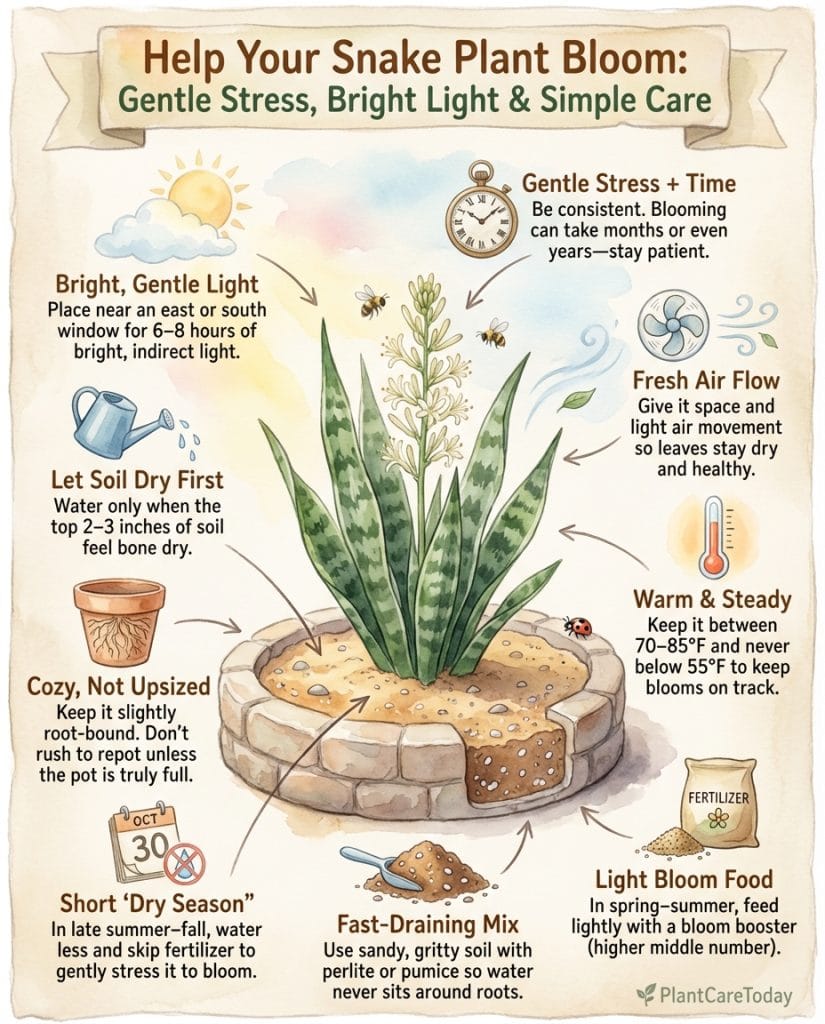
Here’s a shocking statistic: Less than 5% of indoor snake plants ever bloom, yet every single one can produce stunning, fragrant flowers.
If you’ve never seen those dramatic white flower spikes emerge from your Sansevieria, you’re making the same mistake as millions of other plant parents.
The secret most plant experts won’t tell you? Your snake plant is desperate to bloom. You’re being overly kind to it.
Snake plants are like friends who thrive under pressure but get lazy when life’s too comfortable. These desert warriors bloom in the wild after experiencing stress, drought, and crowded conditions.
But in our cozy homes, we pamper them into perpetual leaf production instead of the spectacular flowering they’re capable of.

1. Flood Your Plant with Bright, Indirect Light
Here’s where most people go wrong: they’ve heard snake plants survive in dark corners, so that’s where they stick them.
Surviving isn’t thriving. Your plant needs bright, indirect light to trigger its flowering hormones. Think of it like a plant’s morning coffee.
Place it near a south- or east-facing window that receives filtered sunlight for 6-8 hours daily. If your home lacks natural light, a grow light positioned 12-18 inches away works like magic.
I was shocked to discover that this simple change can change a sluggish plant into a blooming powerhouse within months.
2. Master the Art of Strategic Neglect
This might sound counterintuitive, but your snake plant is begging you to ignore it more. These plants bloom when they’re slightly stressed. It’s their survival mechanism kicking in.
Water only when the top 2-3 inches of soil are bone dry. In winter, I sometimes go 3-4 weeks between waterings.
Think of it like interval training for plants: periods of drought followed by deep drinks create the perfect conditions for blooming.

3. Create a Root-Bound Pressure Cooker
Here’s a game-changer most plant parents get backwards: don’t repot so often. Snake plants are like introverts at a party. They perform better when they feel a little crowded and uncomfortable.
Let those roots settle into their pot. When your plant feels root-bound, it shifts energy from making new leaves to producing flowers. It’s nature’s saying, “I’d better reproduce before I run out of space!”
4. Feed It Like a Blooming Machine
Forget what you’ve heard about basic plant fertilizers. Phosphorus is your secret weapon. It’s like steroids for flower production. Use a bloom booster fertilizer with a higher middle number (like 5-10-10) during spring and summer.
But here’s the kicker: fertilize sparingly. Too much nitrogen creates lush, green growth but zero flowers. Less is definitely more when you’re trying to trigger blooming mode.
5. Mimic the African Drought Cycle
Your snake plant’s DNA remembers the harsh African savannas where dry seasons trigger dramatic flowering displays. You can hack this ancient programming right in your living room.

During late summer and early fall, reduce watering and stop fertilizing completely. This mimics the natural dry season, signaling to your plant, “Time to bloom or bust!” It’s like giving your plant a wake-up call from its comfortable indoor life.
6. Maintain Desert-Level Temperatures
Snake plants are heat lovers at heart. Keep daytime temperatures between 70-85°F and never let them drop below 55°F. Cold stress shuts down flowering faster than you can say “Sansevieria.”
Think of temperature like a plant’s metabolic rate: warmer conditions accelerate the internal processes that lead to flower production. Your heating bill might go up slightly, but those fragrant nighttime blooms are worth every penny.
7. Give It Breathing Room
Stagnant air is a flowering killer. Your snake plant needs good air circulation to prevent fungal issues and maintain the healthy metabolism required for blooming.
Don’t crowd it with other plants, and consider using a small fan nearby if your home tends to be stuffy. Fresh air movement is like yoga for plants – it keeps everything flowing smoothly.
8. Use Well-Draining Soil Mix
Regular potting soil is like quicksand for snake plants. These desert natives require fast-draining, chunky soil that allows water to drain quickly. Mix in perlite, pumice, or coarse sand to create the perfect drainage system.
Soggy roots equal zero flowers. It’s that simple. Your plant can’t think about reproduction when it’s fighting for survival in waterlogged soil.
9. Apply Controlled Stress Techniques
This is where plant parenting gets counterintuitive: a little stress is good stress. Occasionally, skip a watering session or move your plant to a slightly different location to create mild environmental pressure.

It’s like how some people perform better under deadlines. Plants often bloom better when they’re uncomfortable. Just don’t overdo it. We want productive stress, not plant trauma!
10. Practice Patience and Consistency
Here’s the truth: even under ideal conditions, snake plants bloom on their own mysterious timeline. Some flowers respond within months of improved care, others take years. Consistency is your superpower here.
Keep following these techniques religiously, and when your plant finally decides it’s ready, you’ll wake up to tall, fragrant flower spikes that smell like heaven and look absolutely spectacular. Trust me. The wait is worth it.
The difference between amateur and pro plant parents is simply understanding that sometimes the best care means stepping back and letting nature take its course. Your snake plant knows how to bloom. You just need to create the right conditions and get out of its way.