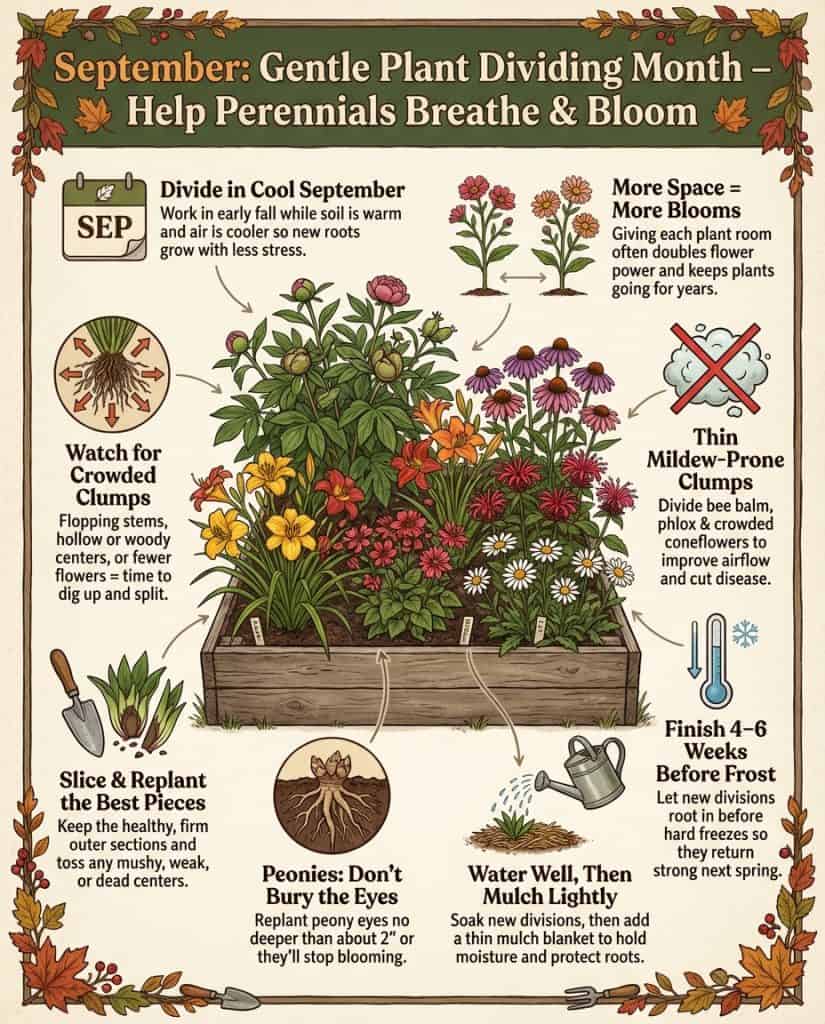
Your garden might need some attention right now, but it’s easy to miss the signs. Those crowded perennials aren’t just getting cozy. They’re competing for resources.
September is a great time to divide them and give each plant more room. I was surprised to learn that dividing perennials can double their blooming power and extend their lifespan.
Here’s how to tell which plants need dividing and when to divide them.
Why September Is Your Division Sweet Spot
Spring isn’t the only time for garden work. September is actually ideal for dividing plants. The soil is still warm enough to support root growth, but the air is cooling, reducing transplant stress.
Fall division gives your plants a solid 4-6 weeks to establish before frost. This timing means your divided perennials will be ready to bloom beautifully next season, often doubling their flower production compared to undivided plants.
September division also helps protect against winter damage. Overcrowded root systems are more susceptible to frost heaving and winter rot.
9 Perennials That Need a September Breakup
1. Peonies: The Divas That Need Space (Zones 3-8)
These garden favorites get cranky when overcrowded. When their foliage starts fading in early fall, it’s time to divide. Just remember to plant those peony “eyes” (the pink or red growth buds) no deeper than 2 inches below soil level. A peony planted too deep won’t bloom well .
2. Daylilies: The Rapid Expanders (Zones 3-9)
These low-maintenance perennials can take over if you’re not careful. When blooming slows or clumps become dense, it’s time to divide. September gives them the perfect recovery window before frost. The difference between new and experienced gardeners is knowing when to split these aggressive spreaders.
3. Coneflowers: The Overcrowded Colonies (Zones 4-9)
When coneflowers develop woody centers, they need division. These prairie natives may look tough, but poor airflow from overcrowding makes them susceptible to fungal issues. Only replant divisions with healthy root sections—toss anything mushy or rotted.
4. Shasta Daisies: The Middle-Aged Spreaders (Zones 4-9)
When your daisies start flopping over, it’s division time. These perennials develop hollow centers after 2-3 years. Dividing in September restores their upright growth and prevents that doughnut-shaped pattern that makes them look sparse in the middle.
5. Bee Balm: The Powdery Mildew Magnets (Zones 4-9)
Bee balm spreads fast. Its aggressive growth makes it a prime candidate for September division. Breaking up dense clumps improves air circulation, which can reduce powdery mildew by up to 70%. Trim and compost the woody centers—they won’t produce new growth anyway.
(If you’re in Zones 8-9, aim for early September division to avoid any surprise heatwaves.)
6. Garden Phlox: The Disease-Prone Beauties (Zones 4-8)
When phlox stems start crowding, they need help. Division every 3-4 years prevents the powdery mildew these plants are known for attracting. Plant divisions in rich, moist soil, and they’ll come back strong next season.
7. Coreopsis: The Rapid Replicators (Zones 4-9)
These sunny bloomers multiply quickly. Without division every 2-3 years, flowering drops off. The best thing you can do for your coreopsis is give them breathing room through strategic September splitting.
8. Asters: The Fall Showstoppers (Zones 3-8)
Are your asters flopping over? That means they need division. Early September rejuvenation can transform leggy, weak plants into compact sources of fall color. The key is dividing them before they’re in full bloom, which puts less stress on the plants.
9. Siberian Iris: The Clump Formers (Zones 3-8)
These architectural plants need splitting every 3-4 years to maintain their best appearance. Divide them 4-6 weeks after blooming ends, separate the rhizomes, and replant immediately in fresh soil. They’ll bounce back with renewed vigor.
The “Don’t Divide in September” List
Not all perennials like September division. These plants will struggle if you try to divide them now:
• Bleeding Hearts: Currently entering dormancy and division now risks rot. Wait until early spring.
• Oriental Poppies: They’re in a late-summer dormancy phase. Spring division only.
• Baptisia: With deep taproots, these rarely need division and don’t respond well to disturbance.
• Lavender: Prefers propagation through cuttings rather than division. Those woody stems won’t regenerate well.
Division Success: The 5-Step Plan
Pre-Hydrate: Water deeply 24 hours before division.
Use Sharp Tools: Sharp tools make clean cuts. Dull spades create ragged wounds that can lead to disease.
Trim Foliage: Cut foliage by half to reduce stress. Your plants will establish faster.
Replant Quickly: Don’t leave divisions out to dry. Replant immediately at the original depth.
Water Consistently: Provide steady moisture for 1-2 weeks after division to help plants recover.
While dividing plants might seem harsh, it’s actually one of the best things you can do for struggling perennials. My grandmother maintained beautiful gardens for over 50 years using this technique, and her divided perennials often outlived the original plants by decades.
September division isn’t just maintenance—it’s a garden refresh that transforms tired, struggling perennials into healthy, productive plants . Your garden will thank you come spring.