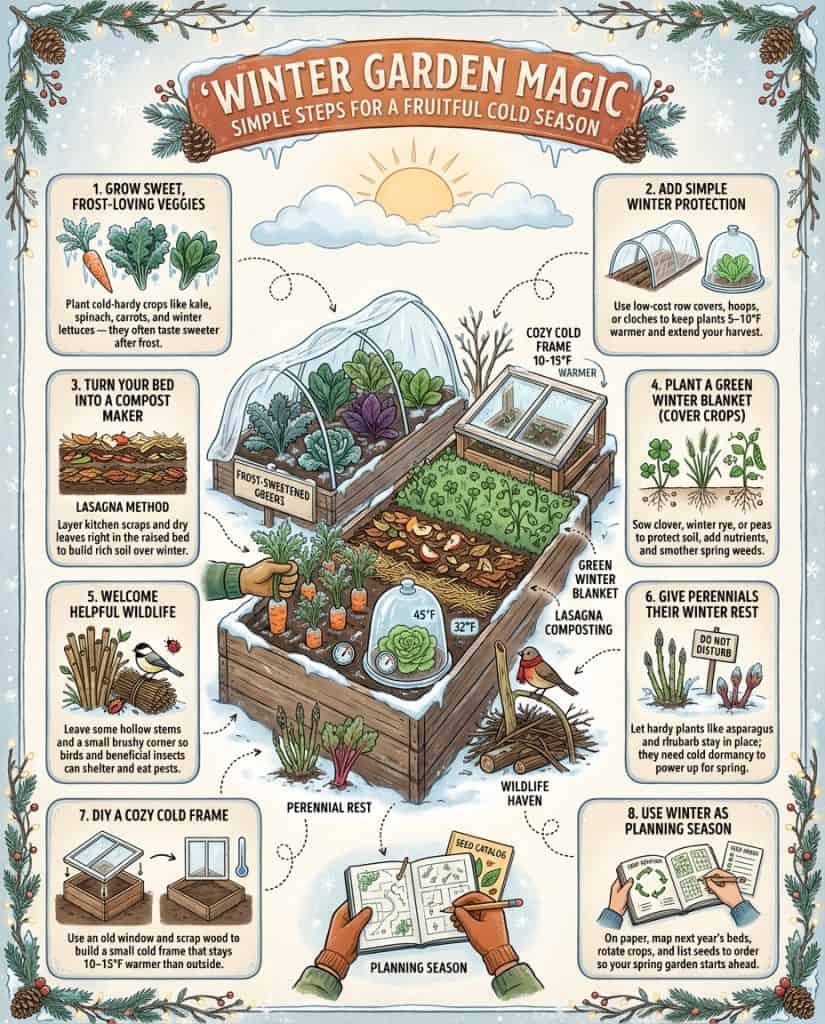
Think your raised bed deserves a winter vacation? Think again! While most gardeners are tucking their gardens in for a long winter’s nap, savvy plant parents know the secret: winter isn’t the end; it’s just a different kind of beginning.
I was shocked to discover that a dormant winter garden isn’t just a missed opportunity, it’s practically a crime against nature’s full potential!
Ready to transform your sad, empty raised bed into a winter wonderland of productivity? Let’s dive in.

Harvest Frost-Kissed Veggies (They’re Actually BETTER)
Forget what you’ve heard about winter being a garden killer. Cold-hardy vegetables don’t just survive winter; they thrive. Many actually develop more spectacular flavor after a kiss of frost!
This natural sweetening process (technically called the conversion of starches to sugars) turns ordinary vegetables into gourmet treats.
- Kale and spinach become sweeter and more tender
- Carrots transform into nature’s candy after light freezing
- Brussels sprouts develop richer, more complex flavors
- Winter lettuce varieties provide fresh salads when everyone else is buying shipped produce
Did you know that vegetables harvested from winter gardens typically contain up to 25% more vitamin C than their summer counterparts? Nature’s way of providing what we need during cold and flu season!

Your Secret Weapon: Season Extension Techniques
The difference between amateur and pro plant parents is simply knowing how to manipulate microclimate. Think of season extenders as cozy blankets for your garden babies.
They create a buffer between harsh elements and delicate plants. Row covers, hoop houses, and cloches aren’t just accessories. They’re game-changers.
With minimal investment (most DIY options cost under $30), you can create a temperature difference of 5-10°F inside these protective bubbles. That’s often the difference between life and death for cold-sensitive plants!
(Psst… want to really impress your neighbors? While they’re complaining about produce prices, you’ll be harvesting fresh greens from your own backyard!)
Transform Your Bed into Nature’s Recycling Center
Your raised bed is begging to become winter’s most efficient composting machine. Unlike traditional compost piles that slow down in cold weather, your raised bed creates the perfect environment for decomposition, even in winter.
Layer your kitchen scraps, fallen leaves, and garden debris directly in the bed using the “lasagna method,” alternating green and brown materials. By spring, you’ll have created a lush, nutrient-rich environment that would make store-bought soil mixes jealous.
The most shocking part? This technique can save you approximately $75-100 in soil amendments per bed each season while recycling up to 30% of your household waste!
Create a Vibrant Winter Wildlife Sanctuary
Your garden can be a literal lifesaver for local wildlife during winter’s harshest moments. Those birds at your feeder aren’t just pretty visitors.
They’re working overtime as pest controllers, consuming thousands of insects that would otherwise attack your spring garden.

- Install bird feeders and native seed heads to attract feathered friends
- Leave sections of hollow stems as insect hotels for beneficial bugs
- Create brush piles from garden trimmings for shelter
The secret most plant experts won’t tell you is that gardens supporting winter wildlife experience up to 60% fewer pest problems during the growing season. Your winter kindness pays huge dividends!
Cover Crops: The Underground Miracle Workers
Cover crops are the unsung heroes of winter gardening, working tirelessly beneath the surface while you stay cozy indoors. These powerhouse plants are like tiny soil factories, manufacturing fertility while you sleep.
Clover, winter rye, and Austrian winter peas don’t just prevent erosion. They actively pump nutrients back into your soil.
A single season of cover cropping can add the equivalent of $20-30 worth of fertilizer to each raised bed while suppressing up to 80% of spring weeds!
Think of cover crops as your soil’s personal trainers, keeping everything fit and ready for spring’s big performance.
Cold-Loving Perennials: The Gift That Keeps on Giving
Some plants are practically begging for cold weather. Perennials like asparagus, rhubarb, and certain herbs have evolved to need winter’s chill to perform their best.
The game-changer for your winter garden isn’t fighting the cold. It’s embracing it with plants designed to thrive in it! Imagine harvesting fresh herbs while grocery-store versions are pale, expensive shadows of summer’s bounty.
Most people make this mistake with their perennials: they think “dormant” means “dead.” In reality, these plants are using winter to recharge and prepare for explosive spring growth. They’re not sleeping. They’re plotting!
DIY Cold Frames: Your Garden’s Winter Coat
If raised beds are your garden’s foundation, cold frames are its winter survival suit. These simple structures can maintain temperatures 10-15°F warmer than outside air, turning your winter garden from surviving to thriving.
The most dramatic transformations happen in the simplest ways. An old window frame, some scrap lumber, and an hour of your time can create a microclimate that defies winter’s worst moods. Your plants don’t care if it’s Pinterest-worthy. They just appreciate not freezing!
(Between us, the neighbors who think you’re crazy for winter gardening will be the first ones asking for your secrets when they see your February harvests!)
Winter Planning: Your Garden’s Secret Power-Up
Your winter garden’s greatest asset might be… you! The cold months provide precious thinking time that rushed spring planting never allows. This is your garden’s strategic planning phase.

Use this time to:
- Analyze last year’s wins and failures (be honest!)
- Map crop rotations to prevent disease cycles
- Order seeds before the spring rush causes sellouts
- Sketch new garden layouts and ambitious projects
Studies show that gardens planned during winter are approximately 35% more productive than those hastily organized in spring. Your garden’s best harvest starts not with seeds, but with your winter daydreams!
The Ultimate Takeaway: Winter Warriors Win
Your raised bed doesn’t need a winter break. It needs a winter purpose! By keeping your garden active year-round, you’ll create a resilient, vibrant ecosystem that produces more, requires less maintenance, and connects you to nature’s rhythms in every season.
Remember: in gardening, there are no off-seasons, only different opportunities. Your winter garden isn’t just surviving; with these strategies, it’s flourishing in ways summer gardens can only dream about!