Let’s be honest. Those pale, flavorless supermarket strawberries are pretty disappointing. But your backyard could produce berries so juicy and delicious that you’d never want to buy store-bought again.
The best part is that growing great strawberries isn’t complicated. It just requires knowing a few key things.
Choose Your Berry Destiny: Variety Matters More Than You Think
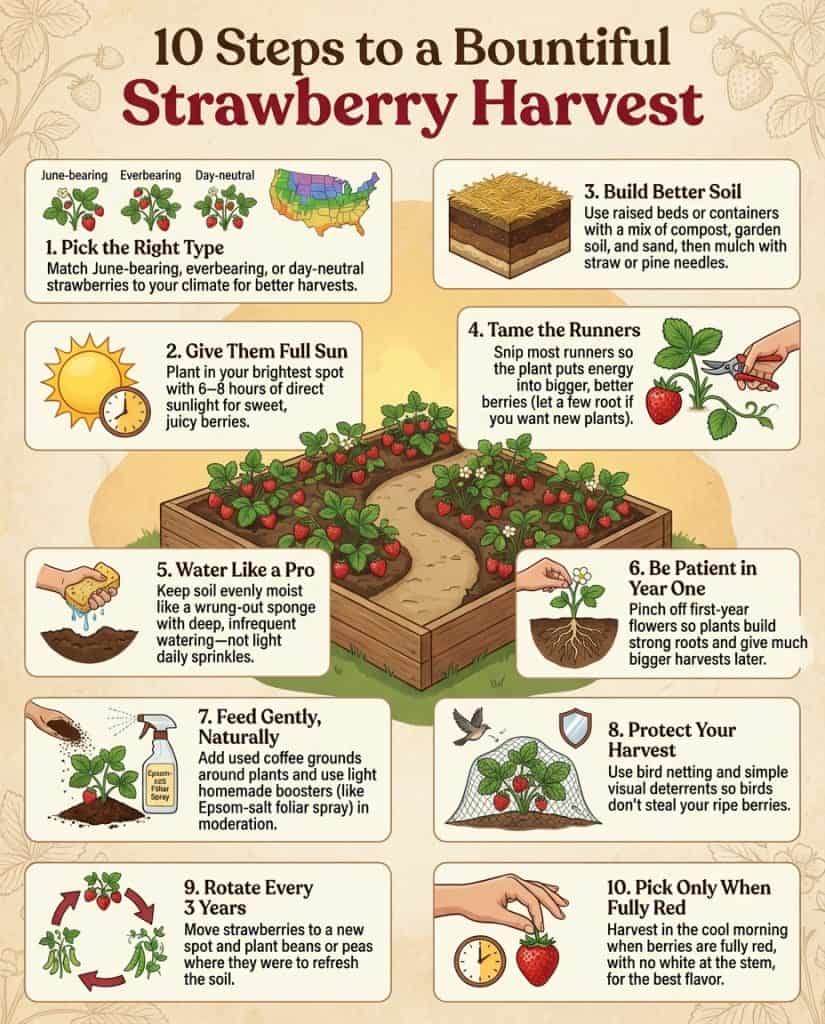
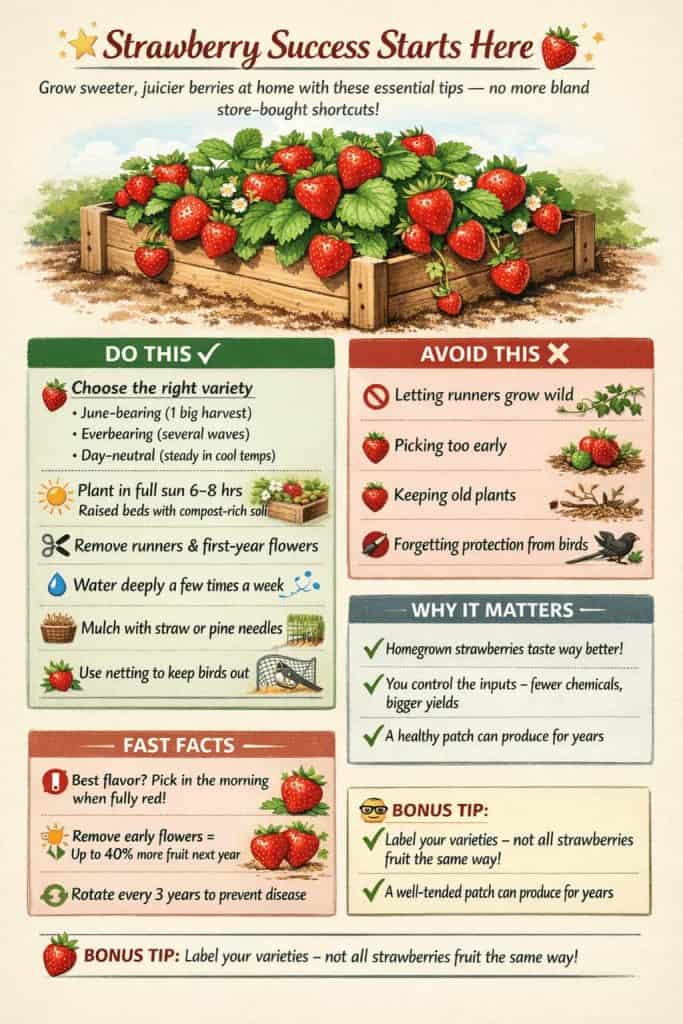
Not all strawberries are created equal. Before you plant anything, you need to know which type matches what you want.
• June-Bearing: One massive harvest per year. They all come at once.
• Everbearing: Multiple smaller harvests throughout the season. Good for a steady supply.
• Day-Neutral: These keep producing as long as temperatures stay friendly.
I was surprised to learn that planting the wrong variety for your growing zone can cut your harvest by up to 70%.
Research shows that matching strawberry genetics to your local climate is the single biggest factor in success.
Not sure which variety is right for your area? Check resources from your local extension office for region-specific recommendations.
Location, Location, Location: The Sunshine Factor
Strawberries need at least 6-8 hours of direct sunlight daily to reach their full potential.
That shady corner of your yard won’t work well. Your brightest, sunniest spot is where these plants belong.
Think of sunlight as strawberry fuel. The more they get, the sweeter and juicier your berries will be.
A strawberry in partial shade is like trying to charge your phone with a potato. It just won’t work.
The Foundation of Flavor: Soil & Planting Secrets
Don’t just throw strawberry plants in the ground and hope for the best. The planting method makes all the difference between sad berries and great ones.
• Raised beds or containers work really well. They provide better drainage and disease protection. Plus, they make harvesting easier on your back.
• A good soil mix delivers better results than basic potting soil. Mix equal parts compost, garden soil, and sand for a solid foundation.
• Mulch with straw or pine needles to keep berries clean, conserve moisture, and prevent disease.
The Tough Love Approach: Pruning for Productivity
The real trick for your strawberry patch is what you take away, not what you add. Those runners (the vine-like stems that shoot out from the plant) are energy drains.
Most people make this mistake with their strawberries: letting those runners go wild. Cut them off. Every ounce of energy your plant puts into growing runners is energy not going into growing berries.
Studies show that properly managed plants can produce berries up to 3x larger than those from neglected plants.
Want to expand your patch? Let just a few runners root in small pots, then snip them from the mother plant. Free strawberry plants.
Water Wisdom: The Hydration Basics
Inconsistent watering leads to stressed plants and shriveled berries. Deep, infrequent watering beats light, daily sprinkles every time.

The difference between new and experienced gardeners often lies in their watering discipline. Aim to keep soil moisture consistent, like a wrung-out sponge.
Not soaking wet, not bone dry. Your reward is plump, juicy berries that burst with flavor.
The Patience Principle: First-Year Discipline
Here’s a tough one: pinch off those first-year flowers. Yes, it feels wrong, but removing flowers during the first growing season redirects energy into developing stronger root systems.
Think of it as an investment. Short-term sacrifice for long-term gains. Plants that focus on root development in year one can produce up to 40% more fruit in subsequent years. Your future self will thank you.
Fertilizer Solutions That Actually Work
Strawberries respond well to the right nutrients. These DIY solutions sound unusual, but they work really well:
• Coffee grounds: Sprinkle dried, used coffee grounds around plants. They add nitrogen and improve soil texture. Plus, worms love them.
• Epsom salt solution: Mix 1 tablespoon with a gallon of water and spray leaves every two weeks. This boosts magnesium levels, making berries sweeter.
• Baking soda: A light sprinkle at the base of plants reduces soil acidity and enhances sweetness.
• Cinnamon powder: Dust around plant bases to prevent fungus, mold, and pests . Yes, the same cinnamon that goes in your cookies.
Defend Your Harvest: Anti-Theft Systems
After all your hard work, there’s nothing more frustrating than finding birds have sampled every single ripe berry.
Protect your berries with bird netting or hang reflective CDs that flash in the sunlight. A Cornell University study found that visual deterrents reduced bird damage by up to 75% in small fruit gardens.
The Three-Year Rule: Rotation Basics
Even the best strawberry patch needs a fresh start every three years. Rotating crops prevents the buildup of disease and nutrient depletion.
After your strawberries have given their all, plant nitrogen-fixing legumes like beans or peas in that spot. They’ll restore what the strawberries depleted, setting you up for success in the next growing cycle.
Timing Is Everything: Harvesting for Maximum Flavor
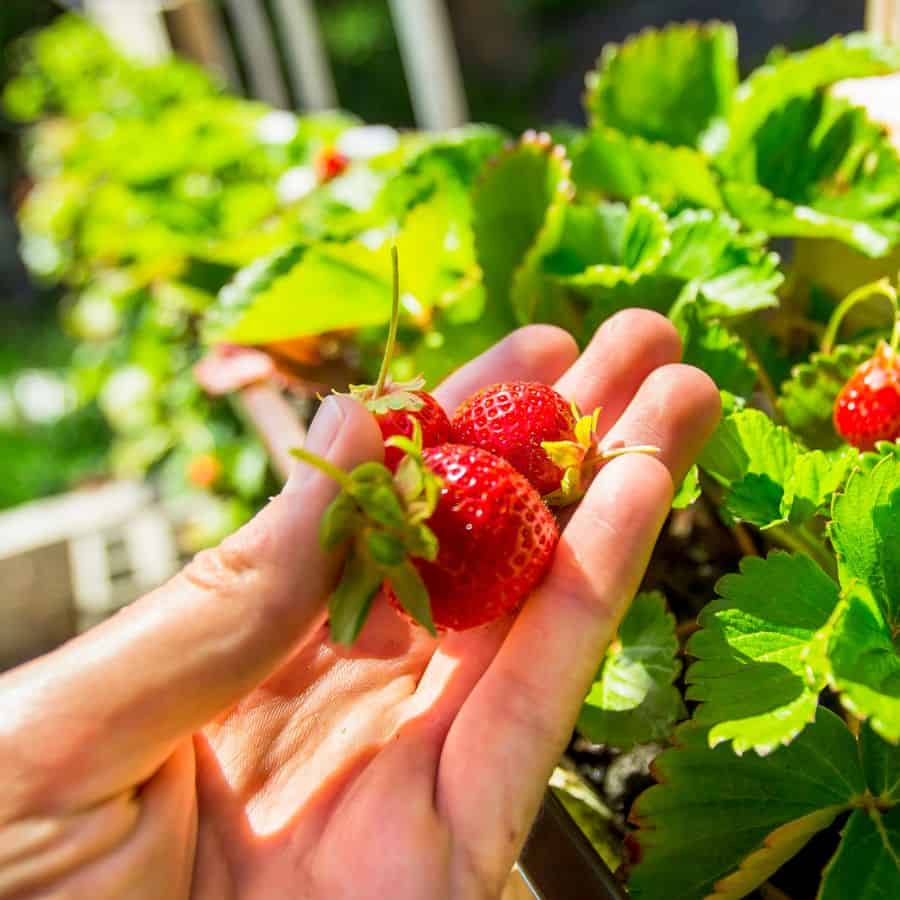
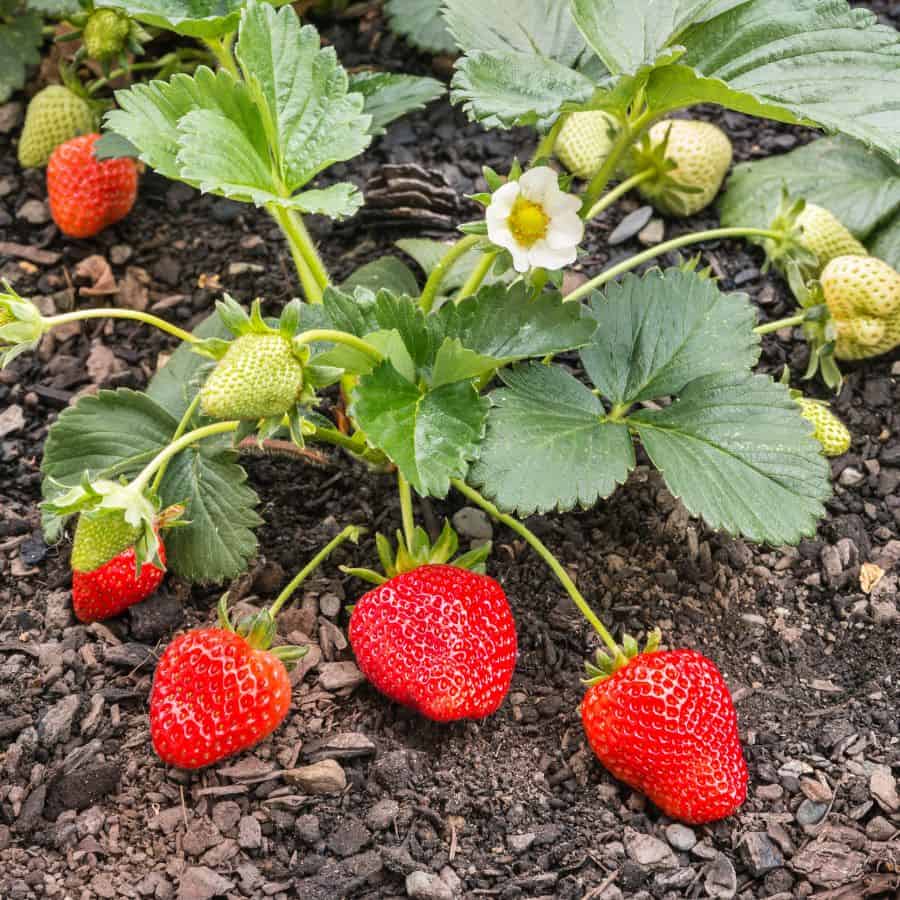
The single biggest mistake home gardeners make is picking berries too early. For the best flavor, wait until berries are completely red, with no white around the stem. If you have to tug even slightly to pick it, it’s not ready.
Harvest in the morning when berries are coolest and flavor compounds are most concentrated. Studies show morning-harvested berries can contain up to 20% more flavor compounds than those picked in hot afternoon sun.
With these tips, you’re ready to grow strawberries that taste amazing. The best part is eating them still warm from the sun, just minutes after picking. Happy growing!