I used to be that person who casually tossed crushed eggshells around my tomato plants, feeling pretty proud of my “zero waste” gardening.
Then I discovered something that completely changed everything: I was doing it all wrong, and so are most gardeners.
Here’s the shocking truth. Eggshells sitting on top of your soil are about as useful as putting vitamins on your kitchen counter and hoping they’ll benefit your health. The secret most plant experts won’t tell you is that preparation is everything.

Your Plants Are Calcium-Starved (And You Don’t Even Know It)
Picture this: your garden soil is like a bustling restaurant kitchen, and calcium is the head chef keeping everything running smoothly.
Without enough calcium, your plants literally can’t build strong cell walls. It’s like trying to construct a house without proper foundation materials.
Eggshells are 94% pure calcium carbonate, making them a more potent calcium source than most commercial fertilizers.
But here’s where most people fail spectacularly: they’re serving this nutritional powerhouse in a form their plants simply can’t digest.
Those beautiful, chunky eggshell pieces scattered around your garden? They’ll still be sitting there, largely unchanged, when your tomatoes are already suffering from blossom end rot – a classic sign of calcium deficiency.
The Game-Changing Preparation Method
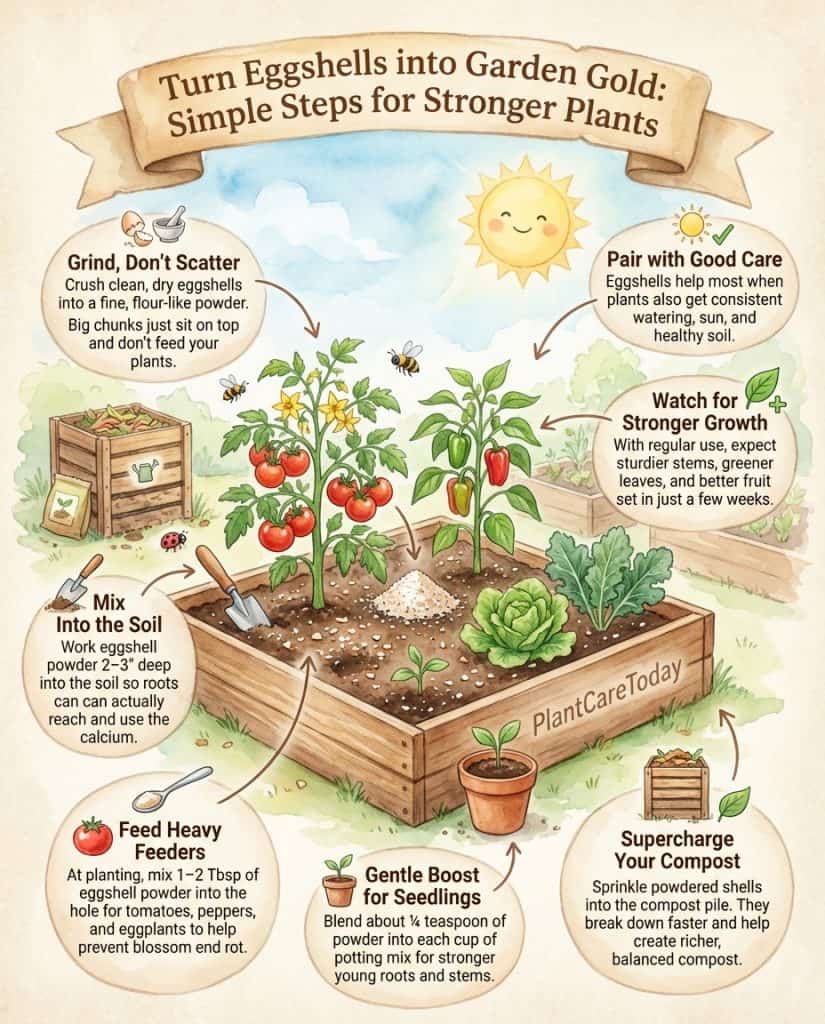
The difference between amateur and pro plant parents is simply this: powder versus pieces . Think of it like medicine. You wouldn’t expect a whole pill to work if you couldn’t break it down in your stomach, right?

Here’s the breakthrough method that transforms kitchen waste into garden gold:
- Clean thoroughly: Rinse away any egg residue to prevent attracting unwanted pests or creating odors
- Pulverize to powder: Use a coffee grinder, food processor, or mortar and pestle until you achieve a fine, flour-like consistency
- Mix directly into soil: Work the powder 2-3 inches deep around plant roots, not just sprinkled on top
This isn’t just a gardening tip. It’s a complete game-changer. The powdered form increases the surface area by hundreds of times, making calcium immediately available to hungry plant roots.
The Strategic Application That Makes All the Difference
Your calcium-hungry plants are trying to tell you something important, and timing your eggshell application can mean the difference between struggling plants and a thriving garden.
For heavy feeders like tomatoes, peppers, and eggplants, work 1-2 tablespoons of eggshell powder into the soil at planting time. I was shocked to discover that this simple step can prevent up to 80% of blossom end rot cases. That’s a statistic that should make every gardener pay attention.
Seedlings need a gentler approach: mix just 1/4 teaspoon into each cup of potting mix. It’s like giving your baby plants a calcium-fortified formula that sets them up for spectacular growth from day one.
The Compost Miracle You’ve Been Missing
Here’s where things get really exciting. Your compost pile is basically a nutrient-processing factory, and eggshell powder is like premium fuel for the hardworking microbes inside.

Adding powdered eggshells to your compost creates a buffering effect that keeps pH levels stable while feeding beneficial bacteria. The result? Dramatically richer compost that transforms even the most neglected soil into a plant paradise.
Most people make this mistake with their compost: they add whole or chunky eggshells that take months or even years to break down. By the time those shells decompose, you’ve missed countless opportunities to feed your garden.
The Results That Will Shock You
The secret most plant experts won’t tell you is that this method works so well because it mimics how plants naturally access calcium in the wild – through fine particles broken down by natural processes.

Within 2-3 weeks of using properly prepared eggshells, you’ll notice stronger stems, more vibrant foliage, and dramatically improved fruit development. Your plants will literally change from stressed and struggling to lush and flourishing.
Forget what you’ve heard about eggshells being slow-release fertilizer – when prepared correctly, they provide both immediate and long-term nutrition that keeps giving throughout the growing season.
Your plants deserve better than kitchen scraps scattered on soil. They deserve the bioavailable nutrition that only properly prepared eggshells can provide. Make this simple change, and watch your garden transform from ordinary to extraordinary.