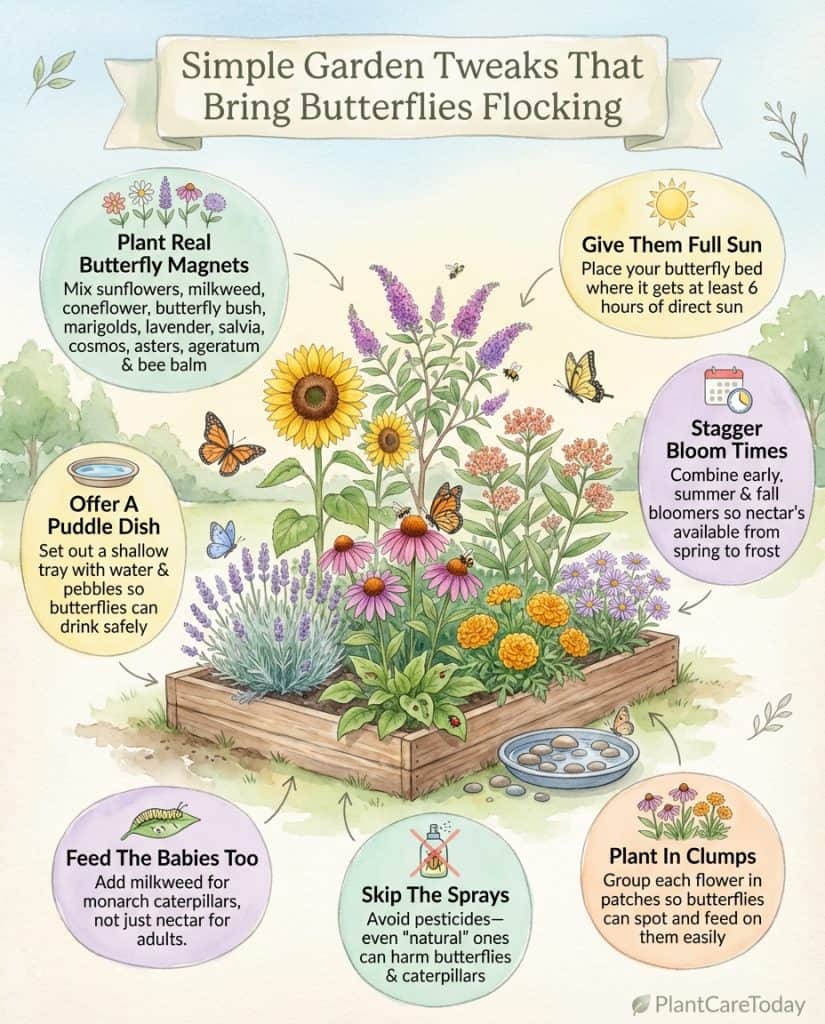
Ever spent hours creating the perfect garden only to wonder why butterflies never show up? The thing is, butterflies are actually quite picky visitors.
These winged beauties aren’t just randomly flitting about. They’re on a mission for nectar, and they know exactly which plants deliver the goods.
Why Your Garden Might Be a Butterfly Desert
Butterflies don’t love all flowers equally. These insects have evolved to seek out specific plants that offer high-quality nectar rewards.
Butterflies can see colors we humans can’t even perceive, including ultraviolet patterns that act like landing lights guiding them to nectar-rich blooms.
Studies show that butterflies can remember and return to productive feeding sites up to 5 miles away.
So when you plant the right plants, you’re not just getting random passersby. You’re creating a destination these creatures will actively seek out.
11 Plants That Transform Your Garden Into a Butterfly Paradise
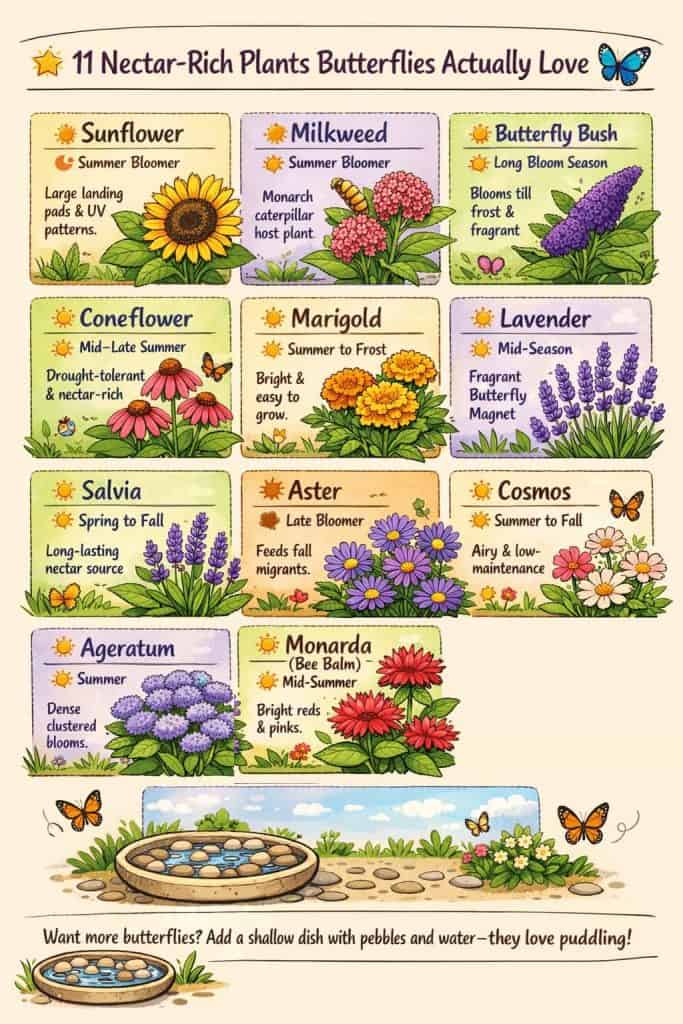
1. Sunflowers: The Ultimate Butterfly Beacon
There’s a reason our brains automatically pair butterflies with sunflowers. These towering yellow giants are like neon signs in the butterfly world.
Their large central disks provide stable landing pads where butterflies can feast without competition from larger pollinators.
2. Milkweed: The Monarch’s Lifeline
Milkweed isn’t just attractive to butterflies. It’s essential for monarch butterfly survival. Monarch caterpillars feed exclusively on milkweed leaves, which make them toxic to predators.
By planting milkweed, you’re not just attracting butterflies. You’re participating in the conservation of a species whose population has declined by 80% in recent decades.
3. Butterfly Bush: Lives Up to Its Name
With its cone-shaped clusters of purple, maroon, or white flowers, butterfly bush delivers what its name promises. These fragrant plants bloom from summer until frost.
They provide a reliable nectar source when many other plants have stopped blooming for the season.
4. Coneflower: The Butterfly Magnet
The pretty purple, pink, and white blooms of coneflowers (Echinacea) are genuine butterfly magnets.
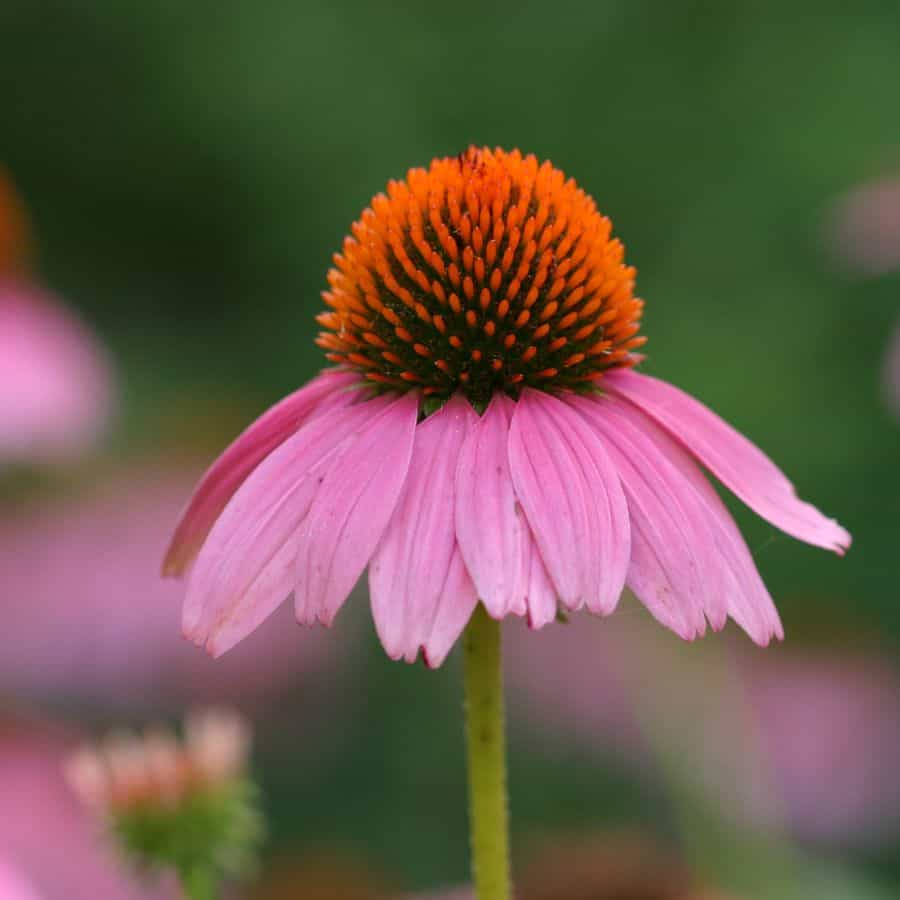
Their long blooming season makes them a reliable friend in your garden, attracting butterflies back again and again. Plus, they’re drought-tolerant and do well even when you forget to water.
5. Marigolds: Color Explosions Butterflies Can’t Resist
These golden-orange blooms aren’t just for bordering vegetable gardens. Marigolds offer butterflies exactly what they crave: bright colors their specialized vision can detect from impressive distances and nectar that keeps flowing month after month.
6. Lavender: The Aromatic Attractor
What helps your butterfly garden isn’t just visual. It’s the smell. Lavender’s strong fragrance acts like a butterfly dinner bell, drawing them in from surprising distances.
These purple spikes aren’t just pretty. They’re broadcasting “free nectar” announcements on the butterfly communication network.
7. Salvia: The Nectar Fountain
With their tubular flowers perfect for butterfly proboscises, salvias produce abundant nectar . They create a non-stop butterfly feeding station.
The difference between new and experienced butterfly gardens is having enough nectar-rich plants, like salvia, that bloom all season long.
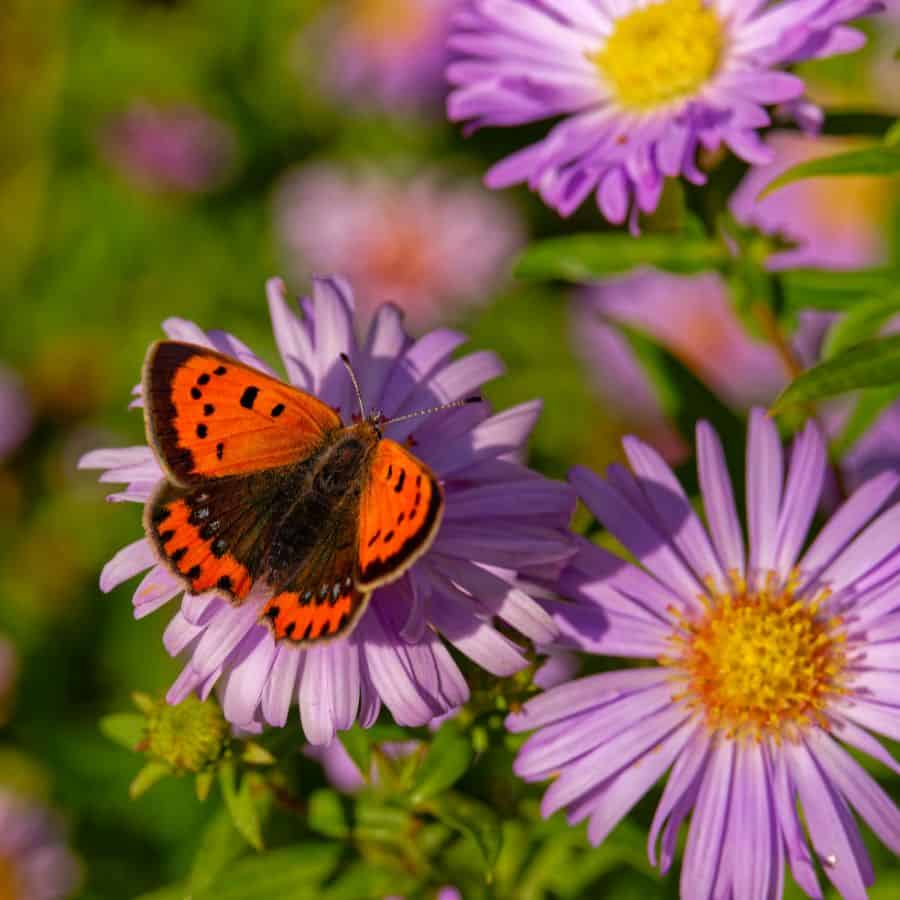
8. Asters: The Late-Season Lifesaver
When most garden flowers have stopped blooming, asters step up with their pretty fall display.
These late bloomers provide critical nectar when butterflies are fueling up for migration or winter. Their bright lilac flowers become butterfly central in autumn gardens.
9. Cosmos: The Easy Access Buffet
These daisy-like flowers are designed to give butterflies easy access to nectar, like a drive-through in the butterfly world.
And they’re user-friendly for gardeners too. Cosmos practically grow themselves, doing well in poor soil where other flowers would struggle.
10. Ageratum: The Fluffy Blue Wonderland
These soft, fluffy blue blooms offer butterflies something special: flowers clustered together in easy-to-access bunches.
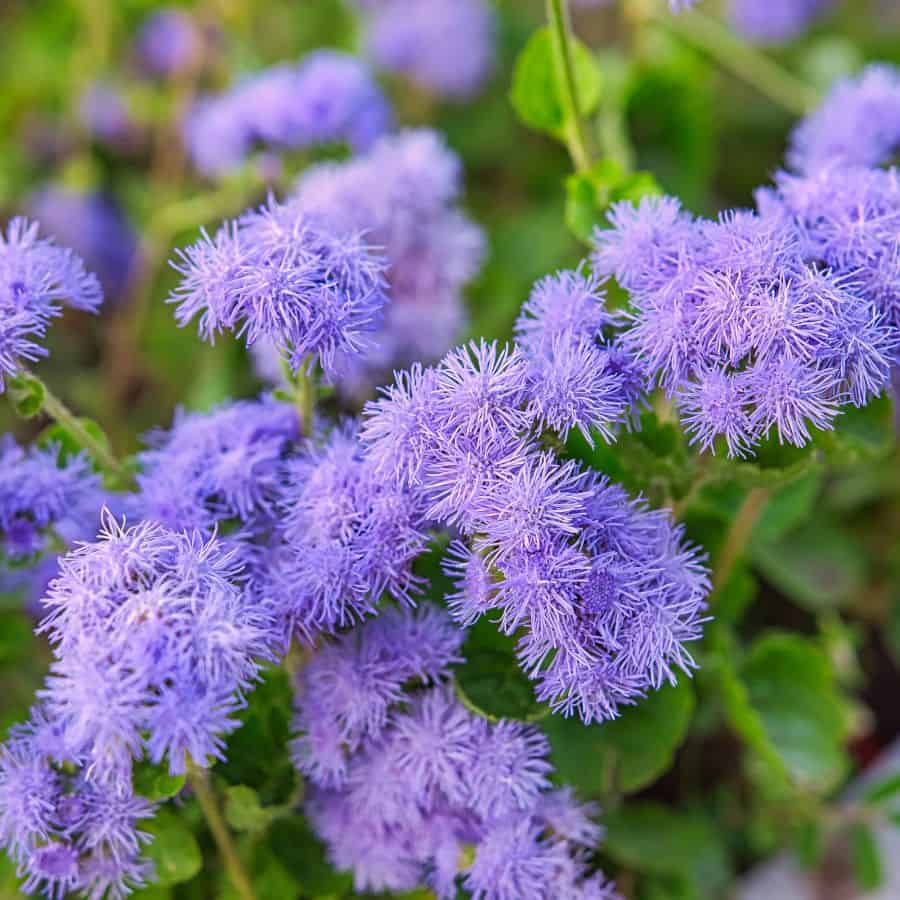
Think of them as butterfly fueling stations where visitors can hop from bloom to bloom without wasting energy flying between plants.
11. Monarda (Bee Balm): Not Just for Bees
A common mistake with bee balm is assuming it’s only for bees. This plant’s nectar-rich, tubular flowers are also a favorite of butterflies.
Their red, pink, or purple flowers bloom when summer heat peaks, providing critical nectar during potentially dry periods.
Transform Your Yard into Butterfly Heaven
Your garden transformation doesn’t need to happen overnight. Start with just 2-3 plants from this list, focusing on varieties that do well in your specific climate.
Position them in sunny spots (butterflies are solar-powered creatures that rarely feed in shade) and skip the pesticides; even organic ones can harm these delicate insects.
For better results, plant in clusters rather than single specimens. A mass of butterfly bush or coneflowers creates a visual target that’s easier for butterflies to spot from above than scattered individual plants.
The best butterfly gardens offer continuous blooming from spring through fall. Choose early bloomers like lavender, mid-season stars like butterfly bush, and late-season heroes like asters to keep the nectar flowing month after month.
Ready to transform your landscape? These plants are your best tools for butterfly attraction. Plant them, and the butterflies will come, turning ordinary backyard moments into experiences surrounded by nature’s most beautiful pollinators .