Did you know that a single butterfly can visit up to 5,000 flowers in one day? Yet most gardens remain butterfly wastelands because people don’t know the secret to attracting these spectacular pollinators.
The truth is, creating a butterfly paradise isn’t about luck. It’s about choosing the right plants. I was shocked to discover that butterflies can see ultraviolet patterns on flowers that are completely invisible to human eyes.
This hidden world of signals determines which gardens they’ll visit and which they’ll fly right past.
These 13 plants are like sending out butterfly invitations written in their secret language.
Your garden will transform from empty space to a vibrant butterfly highway that supports these crucial pollinators while giving you front-row seats to nature’s most beautiful show.

1. Butterfly Bush: The Ultimate Butterfly Magnet
If butterflies had a favorite restaurant, it would be the butterfly bush (Buddleja davidii).
This powerhouse produces cone-shaped flower clusters, basically butterfly buffets, blooming continuously from summer through fall.
Think of it as the Times Square of your garden, bright, bustling, and impossible to ignore.
The fragrant blooms come in purple, pink, white, and yellow, creating a spectacular display that can attract dozens of butterfly species at once.

2. Marigold: The Cheerful Pest-Fighting Hero
Marigolds (Tagetes spp.) are like the Swiss Army knife of butterfly plants. They attract butterflies with their vibrant orange, yellow, and red blooms while simultaneously repelling garden pests. It’s nature’s perfect two-for-one deal.
These annuals are so easy to grow that even plant-killing beginners can succeed. Their abundant nectar keeps butterflies happy, while their pest-repelling properties keep your other plants healthy.
3. Coneflower: The Landing Pad Champion
Coneflowers (Echinacea spp.) are the helicopter landing pads of the butterfly world. Their large, flat blooms with prominent central cones provide butterflies with a perfect platform to rest and feed.
These hardy perennials are like the reliable friend who’s always there, blooming from midsummer to fall, drought-tolerant, and thriving with minimal care. Purple, pink, and white varieties ensure there’s a perfect match for any garden color scheme.
4. Zinnia: The Non-Stop Nectar Factory
Forget what you’ve heard about high-maintenance flowers. Zinnias (Zinnia elegans) are the overachievers that bloom profusely all season long with almost zero effort from you.
Their flat, open blooms in dazzling reds, oranges, pinks, and purples are like neon signs for butterflies. Easy to grow from seed and thriving in sunny spots, they’re the ultimate low-effort, high-reward butterfly plant.
5. Milkweed: The Monarch Lifeline
Here’s something most people don’t know: milkweed (Asclepias spp.) is a matter of life and death for monarch butterflies. It’s the only plant where monarchs can lay their eggs and their caterpillars can survive.
Without milkweed, there are no monarchs. Period. By planting this essential species, you’re not just decorating your garden but participating in monarch conservation. The flowers also provide nectar for numerous other butterfly species, making it the ultimate multitasker.
6. Lantana: The Color-Changing Wonder
Lantana (Lantana camara) is like a mood ring for your garden. Its flower clusters change color as they age, creating a constantly shifting palette that butterflies find irresistible.

This tropical beauty thrives in hot, sunny conditions that would stress other plants. Its drought tolerance and spring-to-fall blooming period make it the marathon runner among butterfly plants: reliable, tough, and consistently performing.
7. Aster: The Migration Fuel Station
When other flowers are calling it quits for the season, asters (Symphyotrichum spp.) are just getting started. These late-blooming perennials provide crucial nectar for butterflies preparing for their epic migrations.
Think of asters as the gas stations along butterfly migration routes. Their star-shaped purple, blue, pink, and white flowers offer essential fuel when butterflies need it most, making your garden a critical rest stop in their incredible journeys.
8. Verbena: The Drought-Defying Bloomer
Verbena (Verbena spp.) laughs in the face of drought while producing clusters of tubular flowers that butterflies adore. This tough plant continues to bloom from spring through fall, even when other flowers struggle.
Its low-growing habit makes it ideal for borders and containers, while its exceptional resilience means you can enjoy continuous butterfly activity without constant watering and fussing.
9. Lavender: The Fragrant Butterfly Spa
The secret most gardeners don’t realize about lavender (Lavandula spp.) is that it’s not just beautiful and fragrant. It’s also a butterfly magnet that thrives in poor soil conditions where other plants fail.
Its purple flower spikes provide nectar while filling your garden with that distinctive, calming scent. Drought-tolerant and long-blooming, lavender transforms challenging growing spots into butterfly destinations.
10. Phlox: The Sweet-Scented Landing Strip
Phlox (Phlox spp.) produces dense clusters of sweetly scented flowers, creating perfect landing platforms for butterflies. Available in pink, white, red, and purple, these perennials bloom from spring through summer.
The combination of fragrance, color, and flat flower clusters makes phlox irresistible to butterflies while adding a lovely scent to your garden that you’ll notice every time you step outside.
11. Salvia: The Tubular Nectar Treasure
Most people make the mistake of thinking all flowers are created equal, but salvia’s (Salvia spp.) tubular flowers are specially designed nectar treasures that butterflies can access with their long proboscis.

Available in blue, purple, red, and pink, salvias bloom continuously throughout the growing season. Their drought tolerance and diverse species options mean there’s a perfect salvia for every garden condition and color preference.
12. Joe-Pye Weed: The Towering Butterfly Beacon
Joe-Pye weed (Eutrochium spp.) is the skyscraper of butterfly plants, producing massive clusters of pink or purple flowers that can be spotted from across the garden. This tall perennial creates a dramatic backdrop while serving as a butterfly beacon.
Its late-summer and fall blooms provide essential nectar when butterflies are preparing for winter or migration, making it a crucial component of any serious butterfly garden.
13. Black-Eyed Susan: The Reliable American Classic
Black-eyed Susan (Rudbeckia hirta) is the dependable friend of butterfly plants, always there when you need it, bright and cheerful, and requiring almost no maintenance to thrive.
These classic American wildflowers bloom from summer to fall with their distinctive yellow petals and dark centers. They’re virtually foolproof to grow and naturalize beautifully, creating expanding drifts of butterfly-attracting blooms year after year.
Creating Your Butterfly Paradise
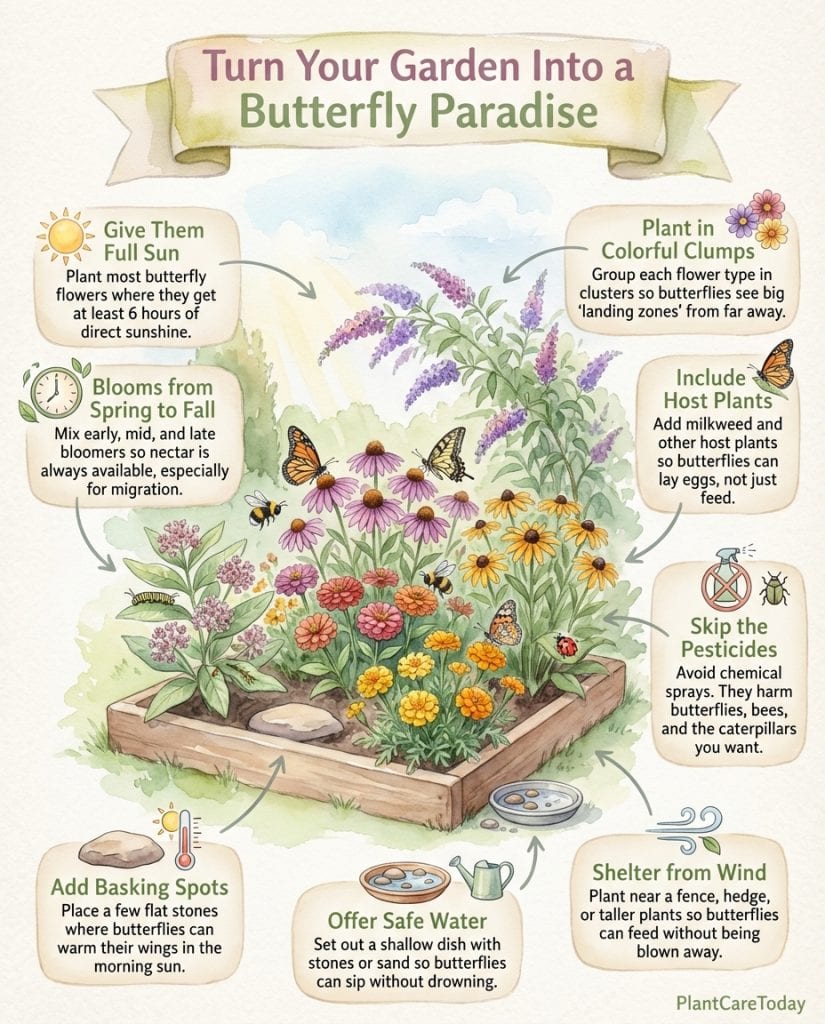
The game-changer for successful butterfly gardening isn’t just plant selection. It’s a strategy. Plant in clusters rather than scattering individual plants throughout your garden. Butterflies are more likely to notice and visit grouped plantings.

Choose a sunny, sheltered location where butterflies can warm up and feed comfortably. Add flat stones for basking spots and a shallow water source with perching stones. Most importantly, never use pesticides. They’re toxic to butterflies and caterpillars.
Your butterfly garden will become a thriving ecosystem that supports these crucial pollinators while providing you with endless entertainment and natural beauty. The transformation from an ordinary yard to a butterfly paradise is truly spectacular to witness.