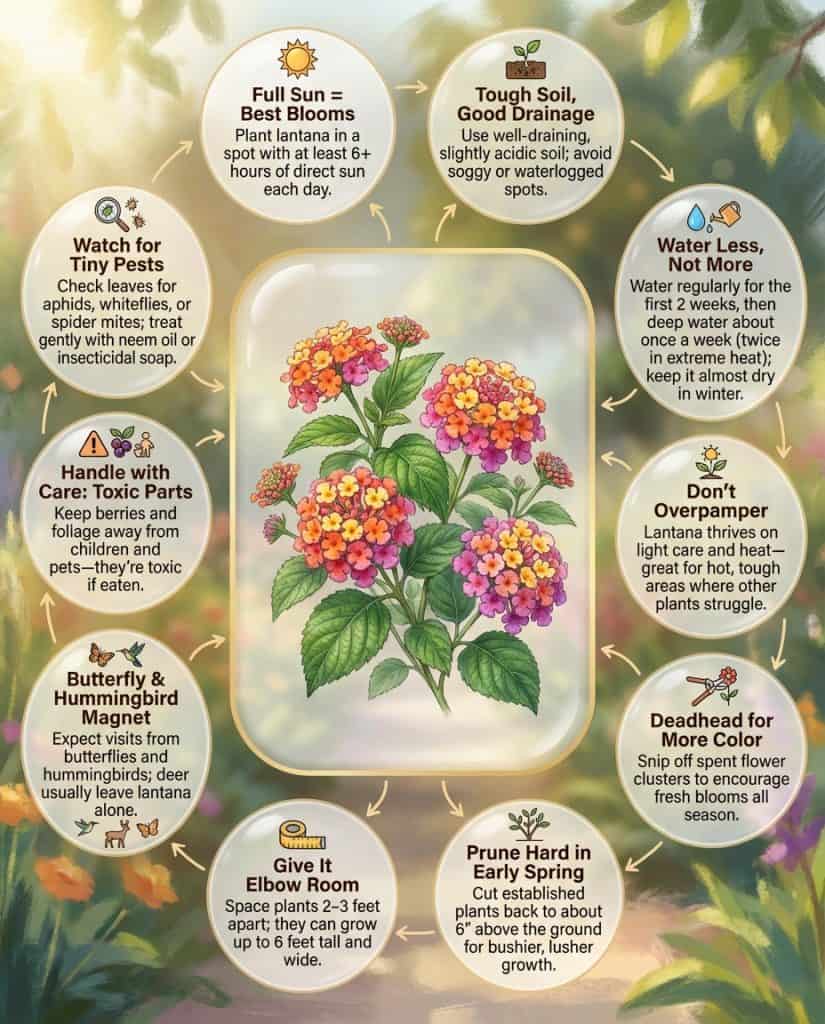
Think your garden can’t handle the summer heat? Think again! Lantana is about to become your new garden bestie.
This color-popping powerhouse laughs in the face of drought, shrugs off neglect, and still delivers a spectacular flower show that will have butterflies lining up like it’s an exclusive nightclub.
(And trust me, you’ll want VIP access to this party!)
Sun-Worshipper Extraordinaire: Lantana’s Secret Power
Forget what you’ve heard about delicate flowers wilting in the heat. Lantana is the sun-loving rebel of the garden world.
This tropical native thrives where other plants surrender, creating vibrant color explosions even during the hottest days of summer.

The game-changer for your summer garden isn’t fancy irrigation. This heat-embracing beauty performs better in scorching conditions. Like a sunbather who never burns, lantana soaks up those rays and transforms them into a dazzling flower display.
Did you know? Lantana belongs to the verbena family and boasts over 150 species! While most flowering plants retreat during heat waves, lantana is warming up.
Color That Keeps on Coming (When You Do This Right)
Most people make this mistake with their lantana: they baby it with too much fertilizer and shade. But here’s the shocking truth: Lantana delivers its most spectacular blooms when it’s treated a bit roughly!
Your lantana is trying to tell you something important: “Give me sun or give me death!” These flat-topped flower clusters come in a rainbow of show-stopping colors:
- Fiery reds and oranges
- Sunny yellows
- Soft pinks and whites
- Cool lavenders
- Multi-colored varieties that actually change hues as they mature!
Give your plants a quick haircut to keep the color show running all season long. Deadheading spent blooms signals the plant to produce even more flowers.

It’s like hitting the refresh button on your garden’s color palette!
Planting Lantana: The Foolproof Formula
The secret most plant experts won’t tell you is whether that lantana actually prefers neglect to pampering.
This plant practically begs for that hot, tough spot in your garden where nothing else survives.
Think of lantana as the cactus of the flower world—minus the spines and spectacular blooms. Their water needs are minimal once established, making them the perfect choice for drought-prone areas or gardeners who occasionally forget to water (we’ve all been there!).
For planting success:
- When to plant: After all danger of frost (lantana sulks in cold soil)
- Where to plant: Full sun locations (6+ hours daily)
- Soil needs: Well-draining, slightly acidic soil
- Spacing: Allow 2-3 feet between plants (they can reach 6 feet tall and wide!)

The Watering Trick That Makes Lantana Flourish
I was shocked to discover that most lantana plants die from kindness, not neglect! Overwatering is the #1 cause of these drought-tolerant plants’ decline.
Their roots strongly dislike sitting in wet soil and will quickly develop root rot.
Your watering schedule should look like this:
- First two weeks: Keep the soil consistently moist to establish roots
- Established plants: Deep water once weekly during the flowering season
- Super hot periods: You might need twice-weekly watering
- Winter: Barely any water needed (almost none in dormant zones)
The difference between amateur and pro plant parents is simply knowing when to hold back. With lantana, less water means more flowers; counter-intuitive but absolutely true!

Prune Like a Pro: The Key to Lantana Longevity
Lantana can go from perfectly behaved to garden bully faster than you can say “wow, that grew fast.” These rapid growers benefit from two types of pruning:
- Maintenance trimming: Light pruning throughout the growing season
- Rejuvenation pruning: Cut those woody stems back by two-thirds in early spring
Don’t be timid with your pruning shears! Lantana responds to a hard spring cutback the way some of us respond to coffee, with an enthusiastic burst of energetic growth.
You can cut established plants back to 6 inches above ground level, and they’ll respond with lusher, more compact growth.
Avoid harsh pruning in fall, as it reduces cold hardiness in borderline zones.
The Wildlife Magnet Effect (It’s Like Having a Nature Preserve)
If your garden feels a bit… well… dead, lantana might be the miracle resurrection it needs. These flowering powerhouses are absolute magnets for pollinators, creating a vibrant ecosystem in your backyard.

One lantana plant can transform your garden into nature’s hottest destination for:
- Butterflies (they simply can’t resist!)
- Hummingbirds (the tubular flowers are perfect for their long beaks)
- Beneficial insects (the good bugs that eat the bad bugs)
And the best part? Deer typically avoid lantana due to its aromatic foliage. It’s like having an invisible fence that only works on deer!
The Warning Label: What You Must Know
With great beauty comes great responsibility. Lantana does have a few quirks worth mentioning:
- The foliage has a distinctive smell when crushed (some find it pungent)
- The berries and foliage are considered toxic if ingested
- Some varieties are classified as invasive in certain regions
- They can develop pests like aphids, whiteflies, and spider mites if stressed
The good news? Most pest problems can be prevented with proper care and quick action. A simple spray of neem oil or insecticidal soap typically resolves most issues before they become serious.

The Bottom Line: Your Garden Deserves This Vibrant Survivor
Lantana isn’t just a pretty face. It’s a garden workhorse that delivers spectacular results with minimal effort.
Whether you’re a seasoned gardener or still killing succulents (they were supposed to be foolproof, right?), lantana offers that rare combination of striking beauty and bulldozer toughness.
Plant it once, and you’ll wonder how your garden ever looked complete without these vivid, butterfly-attracting blooms lighting up your landscape. Lantana stands out as the refreshingly low-drama option we all need in a world of high-maintenance plants!