Is your garden missing those spectacular hydrangea blooms everyone else seems to have?
You might be committing the #1 garden crime: pruning your hydrangeas all wrong. Forget everything you think you know, because I’m about to reveal why your beautiful bushes might be giving you the silent treatment (flower-wise) and how to turn things around dramatically!
The Secret Most Plant Experts Won’t Tell You About Hydrangeas
Here’s the game-changer: not all hydrangeas are created equal. That’s right. Your pruning schedule should depend entirely on what type you have!
Did you know that cutting a mophead hydrangea in early spring virtually guarantees you’ll have zero flowers that year?

Most people make this mistake with their hydrangeas because they don’t realize these plants bloom on either “old wood” or “new wood, ” and treating them all the same is like using the same haircut technique on completely different hair types. Disaster!
Know Your Hydrangea Before You Cut (Or Else…)
Before you pick up those pruners, you need to identify what you’re working with. Your hydrangea’s identity determines everything!
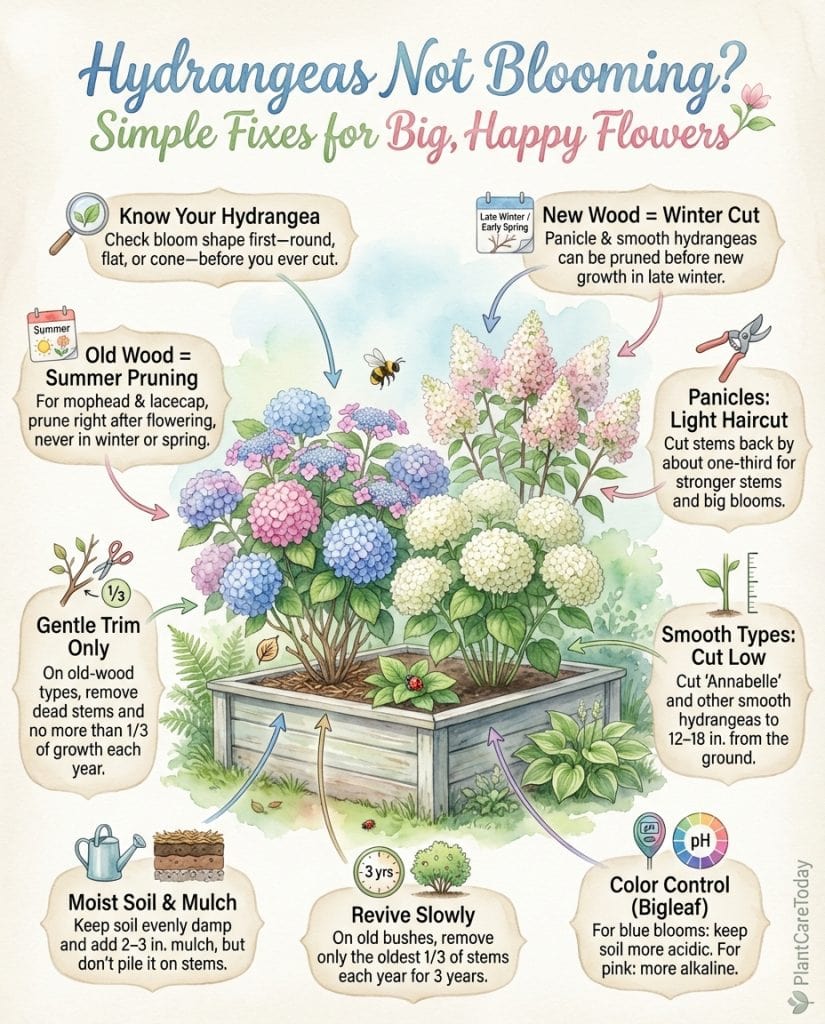
- Mophead & Lacecap Hydrangeas (Hydrangea macrophylla): Those classic, big, round blooms or flatter flower clusters? They form buds on OLD wood. Last year’s growth!
- Panicle Hydrangeas (Hydrangea paniculata): Featuring cone-shaped flowers that often start white and turn pink. These bloom on NEW wood.
- Smooth Hydrangeas (Hydrangea arborescens): Think “Annabelle” with those gorgeous snowball blooms. These also flower on NEW wood.
Not sure what type you have? Look at the flower shape or snap a photo and use a plant identification app – your pruning success depends on getting this right!
The Shocking Truth: You Might Be Cutting Off This Year’s Flowers!
I was shocked to discover that approximately 75% of home gardeners prune their hydrangeas at the wrong time, essentially beheading next season’s blooms before they ever had a chance! The difference between amateur and pro plant parents is simply knowing when to make the cut.
Old Wood Bloomers: Mophead & Lacecap Pruning Timeline
Your Mophead and Lacecap hydrangeas are trying to tell you something important: “Don’t cut me in spring or winter or I’ll punish you with a flowerless summer!”

- WHEN TO PRUNE: Immediately after flowering ends (usually late summer)
- HOW TO PRUNE: Selectively remove dead stems and cut living stems back to a pair of healthy buds
- PRO SECRET: Never remove more than one-third of the plant at once
Think of pruning these hydrangeas like editing a manuscript. You’re carefully refining, not completely rewriting. Too aggressive, and you’ve just deleted next year’s bestseller!
New Wood Warriors: Panicle & Smooth Hydrangea Pruning
These forgiving varieties are the perfect hydrangeas for pruning beginners. They bloom on fresh growth, making them much more resilient to your pruning experiments.
- WHEN TO PRUNE: Late winter or early spring before new growth emerges
- HOW TO PRUNE PANICLES: Cut stems back by about one-third of their length for stronger stems and bigger blooms
- HOW TO PRUNE SMOOTH TYPES: Cut these brave soldiers all the way back to 12-18 inches from the ground for spectacular flowers
These types are like that friend who bounces back from anything. You can cut them back hard, and they’ll return with even more vibrant energy!
Rescue Mission: Reviving Neglected Hydrangeas
Have an overgrown hydrangea monster taking over your garden? Don’t panic! The secret to rescuing it isn’t a single dramatic makeover but a thoughtful three-year rehabilitation plan.

For old wood bloomers, remove no more than one-third of the oldest stems each year, cutting them at the base. By year three, you’ll have completely rejuvenated your plant without sacrificing all your flowers in a single season.
It’s like giving your hydrangea progressive makeovers rather than drastic plastic surgery!
5 Game-Changing Pruning Techniques That Transform Hydrangeas
- Clean Cut Technique: Always use sharp, disinfected pruners to make clean cuts at a 45-degree angle just above a set of healthy buds.
- Dead Wood Detection: Scratch stems with your thumbnail – green underneath means live wood, brown means dead and should be removed completely.
- Strategic Thinning: Remove some interior stems completely to improve air circulation and prevent disease (your hydrangea needs to breathe!).
- Height Control: For panicle types that get too tall, cut back the tallest stems more aggressively than the shorter ones for a natural shape.
- Bloom Booster: Remove spent flowers on old wood bloomers promptly to direct energy back to the plant rather than seed production.
Beyond The Cuts: Year-Round Hydrangea TLC
Pruning is just one piece of the hydrangea happiness puzzle. These thirsty showstoppers need consistent moisture (their name literally means “water vessel” in Greek!). Apply 2-3 inches of mulch to retain moisture and suppress weeds, but keep it a few inches away from the stems to prevent rot.
For those stunning blue blooms on bigleaf varieties, the breakthrough trick is maintaining acidic soil with a pH between 5.2 and 5.5. For pink flowers, aim for more alkaline conditions. Yes, you can actually change your hydrangea’s flower color like a botanical magician!
The Final Cut: Your Hydrangea Success Plan
Your path to lush, flourishing hydrangeas comes down to this: identify your type, prune at the right time, and cut with confidence. Follow these guidelines, and next summer your neighbors will be asking what miracle you performed on those stunning shrubs!

Remember: When in doubt about pruning, it’s better to do too little than too much. Your hydrangeas would rather be slightly wild than completely bloomless. They’re dramatic that way – and honestly, that’s why we love them.