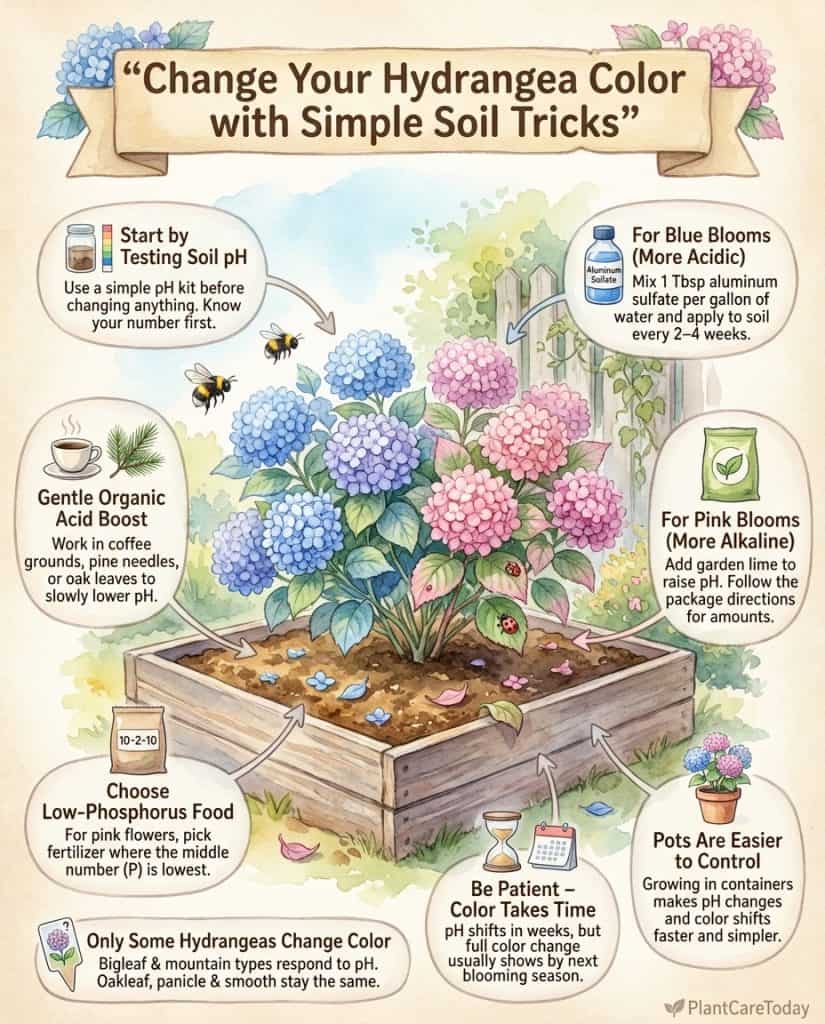
Ready for some garden magic? That gorgeous hydrangea in your yard can actually change color.
With just a few tweaks to your soil, you can shift those blooms from pink to blue or the other way around.
No need to buy new plants when you want different colors. Your existing hydrangeas can already do this with the right conditions.
The Secret Color-Changing Science Behind Hydrangeas
The real trick with hydrangeas isn’t complicated plant breeding or special fertilizers. It’s simply soil chemistry. These flowering shrubs are like nature’s pH meters, changing color based on what’s happening underground.
Your hydrangea doesn’t need to be born blue or pink. It can switch depending on its environment. Hydrangeas are among only 2% of flowering plants that can dramatically change color based on soil conditions.
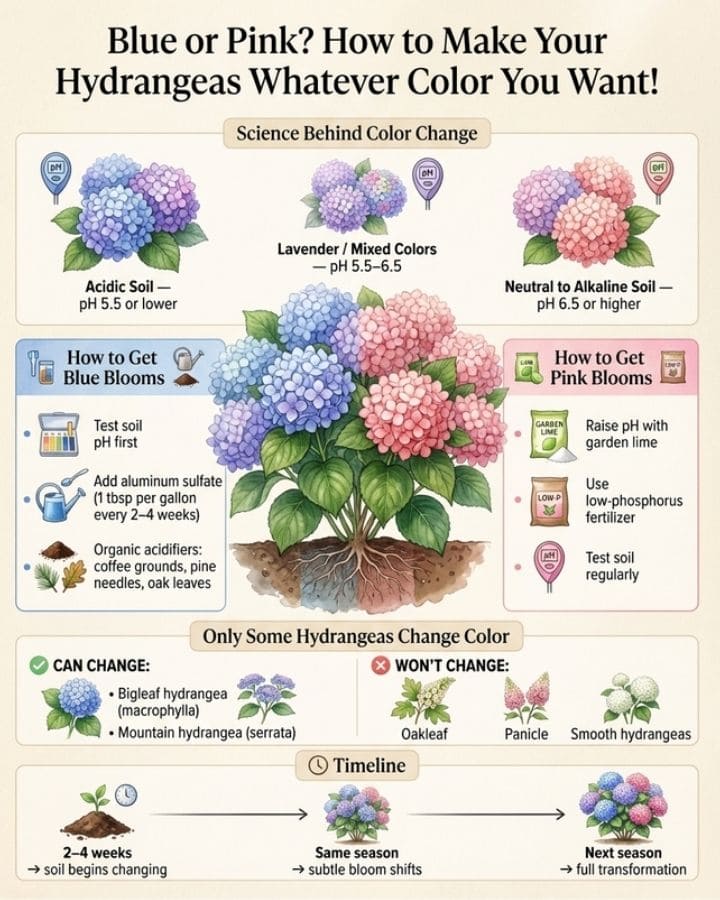
Here’s how soil pH affects your blooms:
• Acidic Soil (pH 5.5 or lower): Creates blue or purple flowers
• Neutral to Alkaline Soil (pH 6.5 or higher): Produces pink or red flowers
• In-between Soil (pH 5.5-6.5): Gives you lavender shades or even multi-colored blooms
Transform Those Blooms to Beautiful Blue
Want those cool blue hydrangeas? Your soil needs to get acidic.
Follow these steps to get blue blooms:
1. Test your soil first – Grab an inexpensive pH test kit from any garden center. You need to know where you’re starting.
2. Add aluminum sulfate – This is what creates the blue color. Mix 1 tablespoon per gallon of water and apply every 2-4 weeks during the growing season.
3. Go organic (if you prefer) – Coffee grounds, pine needles, and oak leaves can slowly acidify soil naturally. Your morning coffee habit finally pays off in the garden.
The difference between new and experienced gardeners is patience and consistency. Apply your amendments regularly, and by next blooming season, you should see those blue flowers.
Want Pink Instead? Here’s How to Flip the Switch
If pink blooms are more your style, you’ll need to swing your soil in the opposite direction. You need to make that soil more alkaline.
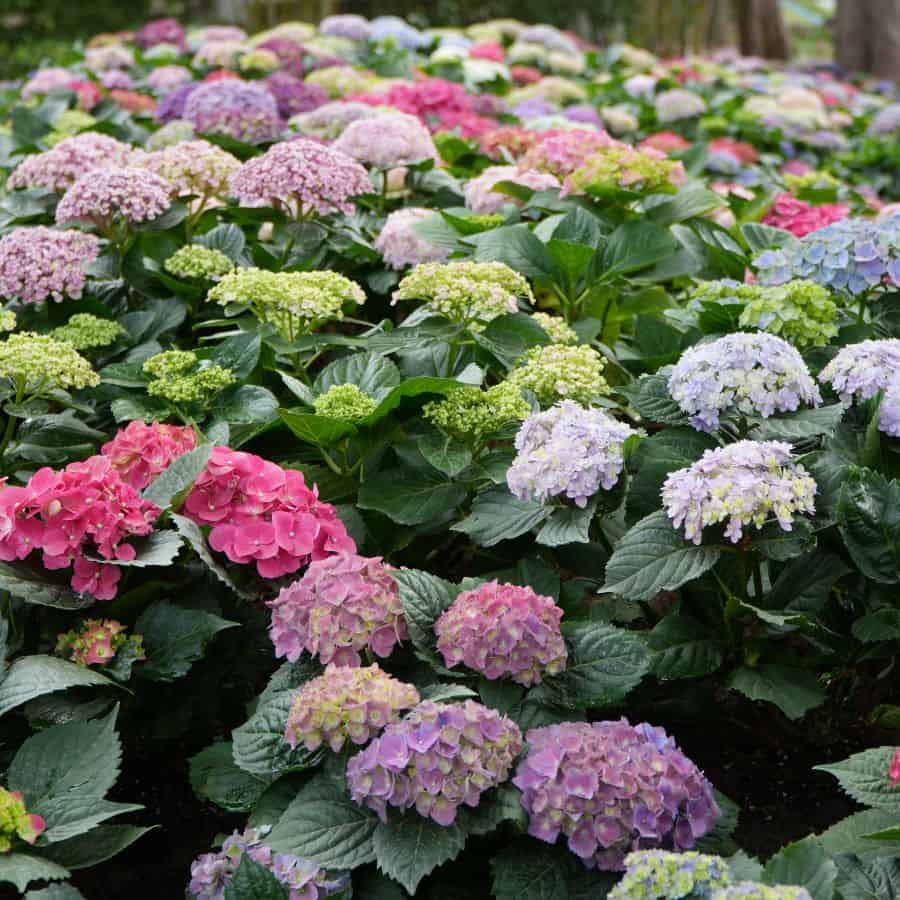
Your pink hydrangea action plan:
1. Test that soil – Just like with blue, you need to know your starting point.
2. Add garden lime – This calcium carbonate will raise pH levels. Follow the package instructions for quantity.
3. Choose low-phosphorus fertilizers – High phosphorus blocks aluminum uptake. Look for fertilizers where the middle number is lowest (like 10-2-10).
The best part: Container plants are easier to color-shift than in-ground ones. If you’re serious about color control, consider potting your hydrangeas.
Not All Hydrangeas Are Color Chameleons
Here’s what matters most: not all varieties can pull off this color-changing trick. This natural pH response mainly works with:
• Bigleaf hydrangeas (Hydrangea macrophylla) – The most common and dramatic color-changers
• Mountain hydrangeas (Hydrangea serrata) – Also responsive to soil pH
Meanwhile, these varieties stay the same color regardless of your soil changes:
• Oakleaf hydrangeas
• Panicle hydrangeas
• Smooth hydrangeas
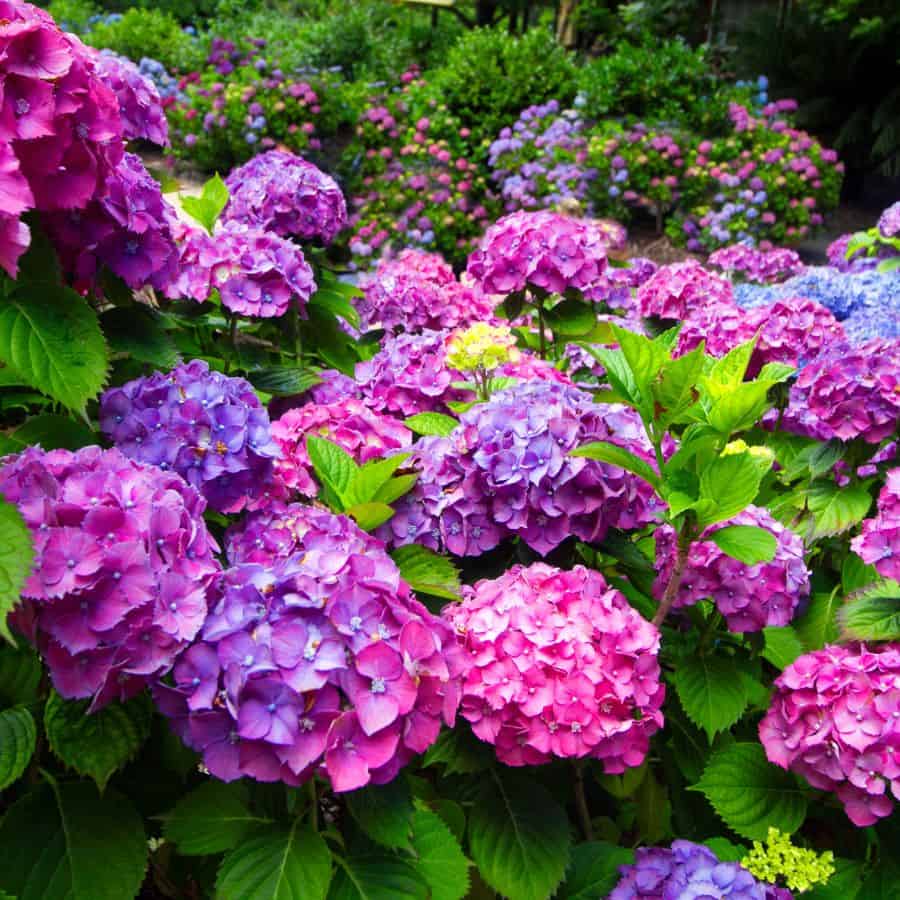
Some things are just not meant to change color.
Patience Pays Off: Your Color-Changing Timeline
Can you change hydrangea colors overnight? Not quite. This is a gradual transformation that requires consistency and patience.
The typical timeline looks like this:
• 2-4 weeks: Soil pH begins to change
• Current blooming season: You might see subtle shifts in new blooms
• Next blooming season: Full color transformation appears
Keep testing your soil and applying amendments throughout the growing season. Your hydrangeas aren’t being stubborn. They need time to adjust to their new chemistry.
The Colorful Bottom Line
Changing your hydrangea colors naturally is less like flipping a light switch and more like slowly turning a dial. But the results are worth the wait.
With just a few simple soil amendments and patience, you can transform your garden’s color palette season after season.
So instead of buying new plants every time you want a change, work with what you’ve got. Your hydrangeas are ready to put on a whole new show. You need to set the stage with the right soil chemistry.