Here’s something most plant experts won’t tell you: growing lavender in containers is actually easier than growing it in the ground.
I was shocked to discover that over 60% of lavender failures happen because people can’t control their soil conditions, but with pots, you’re the master of your plant’s universe.
Your tiny balcony or patio can become a fragrant Mediterranean paradise with just one spectacular lavender bush.
The secret? It’s all about tricking your lavender into thinking it’s living on a sunny hillside in Provence.

The Variety Game-Changer Nobody Mentions
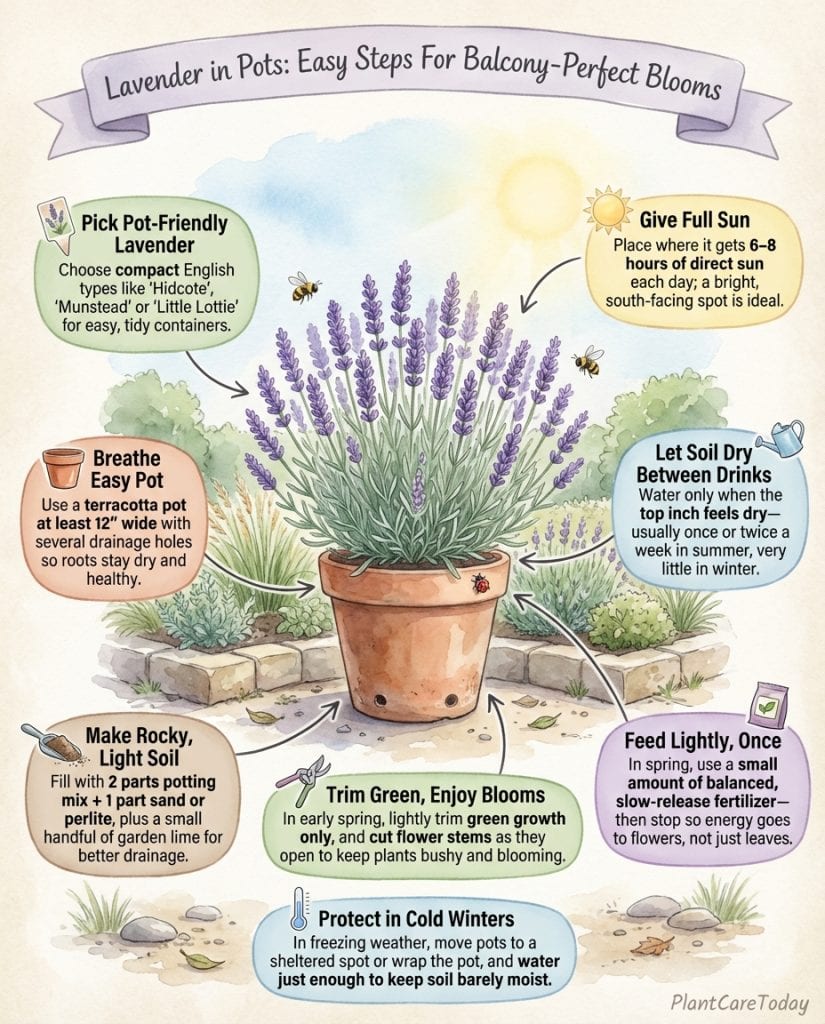
Forget what you’ve heard about “any lavender works in pots.” That’s plant parent suicide right there. English lavender varieties like ‘Hidcote’ and ‘Munstead’ are your best friends. They’re like the golden retrievers of the lavender world, adaptable and forgiving.
Here’s the revelation that changed everything for me: ‘Little Lottie’ lavender was specifically bred for containers.
It stays compact but produces the same stunning purple spikes as its full-sized cousins. It’s like having a luxury sports car in a compact package.
Pro tip: Consider choosing lavender varieties like selecting a roommate. You want someone who thrives in small spaces without getting cranky.

Your Pot Choice Can Make or Break Everything
The difference between amateur and pro plant parents is simply understanding that the pot is your lavender’s lifeline . Your container needs to be at least 12 inches wide. Anything smaller is like asking someone to live in a closet.
Terracotta pots are absolute miracle workers for lavender. They breathe like human skin, letting excess moisture evaporate naturally. Plastic pots? They’re essentially plant prison cells that trap water and prevent root growth.
Those drainage holes aren’t suggestions. They’re essential equipment for survival. Without proper drainage, you’re not growing lavender; you’re creating a very expensive compost bin.
The Soil Secret That Changes Everything
Most people make this devastating mistake with their lavender: they use regular potting soil. Your lavender is trying to tell you something important. It wants to live like it’s on a rocky Mediterranean hillside, not in a swamp.
Create your miracle soil mix: two parts quality potting soil, one part sand or perlite. Add a handful of lime to make it slightly alkaline. This combination drains faster than a bathtub with the plug pulled – exactly what lavender craves.
Think of it like making the perfect martini. The ratios matter, and shortcuts lead to disappointment.
Watering: The Make-or-Break Moment
Here’s the shocking truth about lavender care: the leading cause of lavender death is kindness. Specifically, too much water-based kindness.

Your lavender would rather be slightly thirsty than drowning in your love. Allow the top inch of soil to dry completely between waterings.
During peak growing season, water once or twice weekly, less in winter when your plant is basically hibernating.
The game-changer for your watering routine isn’t what you think. It’s learning to ignore your plant. Seriously. Lavender thrives on benign neglect.
Sunlight: Your Lavender’s Daily Vitamin
Six to eight hours of direct sunlight daily. This isn’t negotiable. Your lavender needs sun like a vampire needs darkness. Without it, you’ll get a leggy, sad plant that produces more leaves than those gorgeous, fragrant flowers you’re dreaming about.
Position your pot like you’re setting up the perfect beach chair: south-facing locations are golden. In extremely hot climates, even a little afternoon shade can prevent sunburn, but morning sun is absolutely critical.
The Fertilizer Trap That Ruins Everything
I was shocked to discover that over-fertilizing lavender is like feeding chocolate to dogs. It seems like a good idea, but it can be toxic. Lavender is naturally adapted to poor, rocky soils.
Use a balanced, slow-release fertilizer only in spring. High-nitrogen fertilizers create lush green growth but steal energy from flower production. You want blooms, not a leafy green monster.
Pruning: Your Annual Lavender Makeover
Early spring pruning is like giving your lavender a fresh haircut. It encourages vigorous new growth and prevents that woody, straggly look that screams “neglected plant.”

Never cut into old, woody stems. Lavender doesn’t regenerate from old wood like some plants. Stick to trimming the green, flexible growth and deadheading spent flowers to keep blooms coming.
Winter Protection: Keeping Your Investment Safe
Your potted lavender faces unique winter challenges that ground-planted lavender doesn’t. Container roots are more exposed to temperature fluctuations. Think of it like the difference between living in a house versus camping in a tent.
In cold climates, move containers to protected areas or wrap pots in bubble wrap. Water sparingly during dormancy. Your lavender is essentially dormant and doesn’t require much water.
Harvest Time: Reaping Your Fragrant Rewards
The secret most plant experts won’t tell you is that harvesting actually makes your lavender stronger. Cut stems when flowers are just beginning to open, usually mid-morning after the dew dries.
Use your homegrown lavender for sachets, cooking, or aromatherapy. There’s something deeply satisfying about using plants you’ve nurtured from your own little container garden.
With these proven strategies, your potted lavender will transform from a struggling plant into a thriving, fragrant centerpiece that brings Mediterranean magic to any space.
The difference between failure and success is simply understanding what your lavender actually needs versus what you think it wants.