Is your lavender looking more like a sad, woody stick collection than the lush, fragrant cloud you envisioned? You’re not alone.
The difference between amateur and pro plant parents is simply knowing when and where to make the cut.
And I’m about to spill all the secrets that transformed my own struggling lavender into the neighborhood showstopper.
Why Your Scissors Could Save (or Kill) Your Lavender
Think of lavender pruning like a haircut for your moody teenager, too much, and they’ll never forgive you, too little, and things get wildly out of control. (And trust me, I’ve experienced both disasters!)
Proper pruning isn’t just about aesthetics. It’s life or death for your lavender. Did you know that neglected lavender typically lives half as long as properly pruned plants?
That’s right. Skip this ritual, and you’re essentially cutting your plant’s lifespan in half.
Regular pruning:
- Triggers a bloom explosion – redirects energy to making more of those gorgeous flowers
- Prevents the woody “point of no return” – keeps stems green and productive
- Maintains that Instagram-worthy rounded shape without any awkward bare patches
- Dramatically extends plant life, turning a 3-year plant into a 10-year garden staple
The Secret Timing Most Plant Experts Won’t Tell You
Forget what you’ve heard about pruning whenever it’s convenient. Timing is everything with lavender, like showing up to a party at the exact right moment.
Your lavender needs two distinct pruning sessions each year:
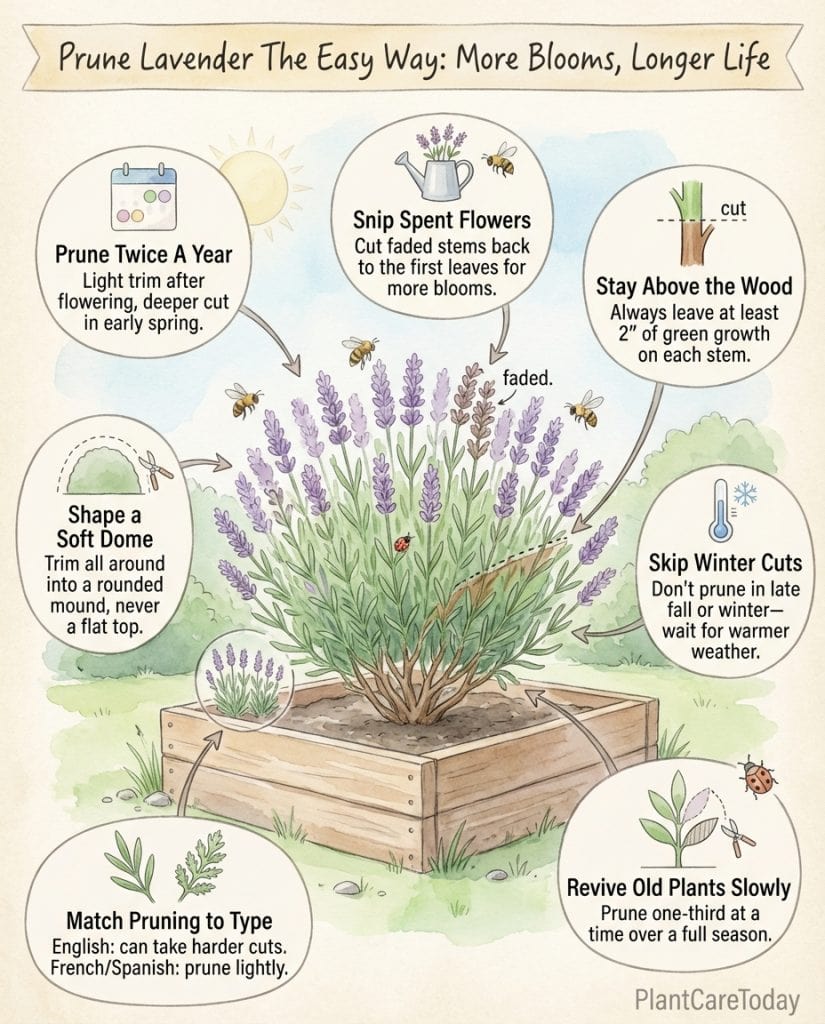
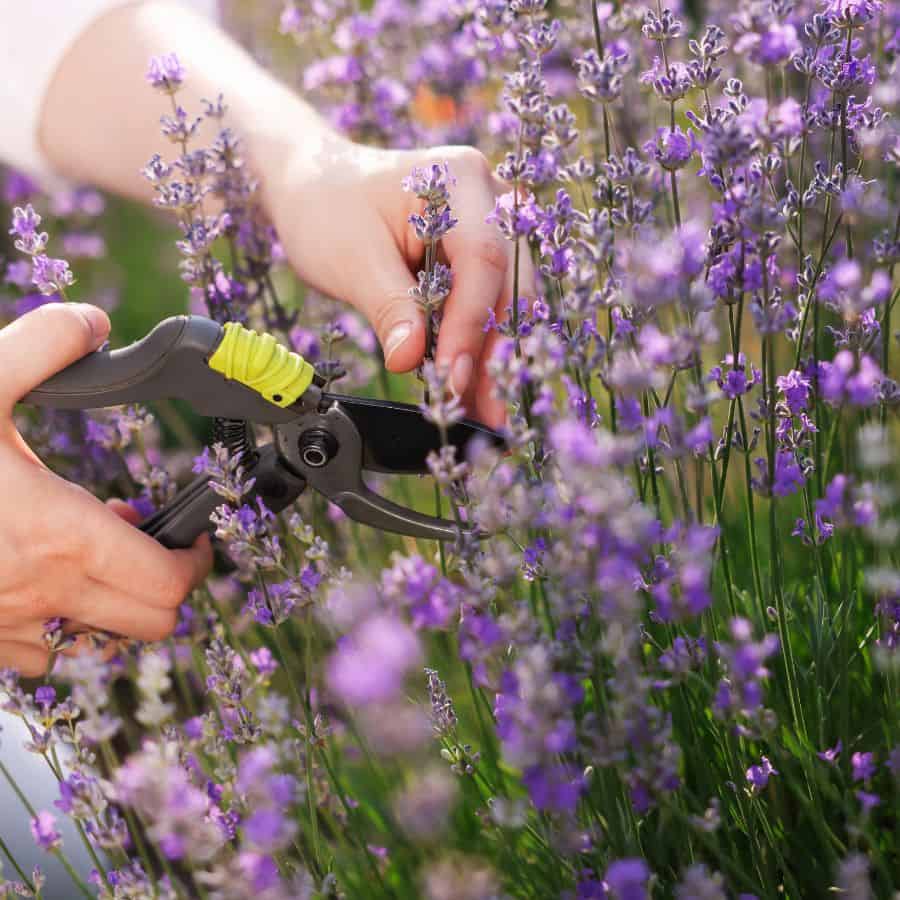
- The Summer “Haircut”: After flowering, when blooms fade. This light trim (about ⅓ of green growth) reshapes and removes spent flowers.
- The Spring “Makeover”: Before new growth emerges. This is your more aggressive cut (up to ⅔ of green growth) that sets the stage for a spectacular season.
I was shocked to discover that winter pruning, which seems so logical when the plant looks dormant, is actually a lavender death sentence! The plant can’t recover from cuts during cold months, leaving it vulnerable to frost damage and disease.
The Dramatic Difference Between Lavender Types
Your lavender has a personality all its own, depending on its variety. Like siblings raised in the same household, they need slightly different approaches:
- English Lavender (Lavandula angustifolia): The resilient overachiever that bounces back from hard pruning. Go ahead and be bold!
- French/Spanish Lavender (L. dentata, L. stoechas): The sensitive souls that need a gentler touch. Think “trim” rather than “chop.”
Not sure which type you have? Look at the leaves. English lavender has narrow, gray-green foliage, while French and Spanish varieties have tooth-edged or feathery leaves.
The 5-Step Pruning Method That Transforms Struggling Plants
Ready to turn that scraggly lavender into a flourishing masterpiece? Here’s your foolproof game plan:
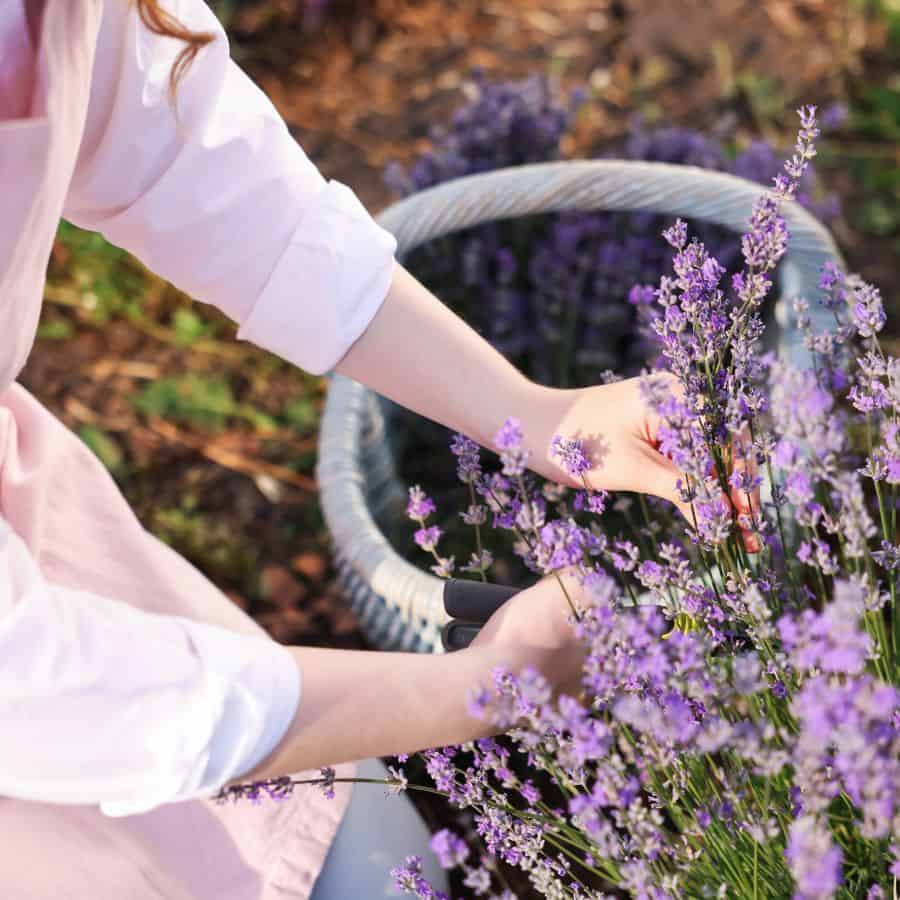
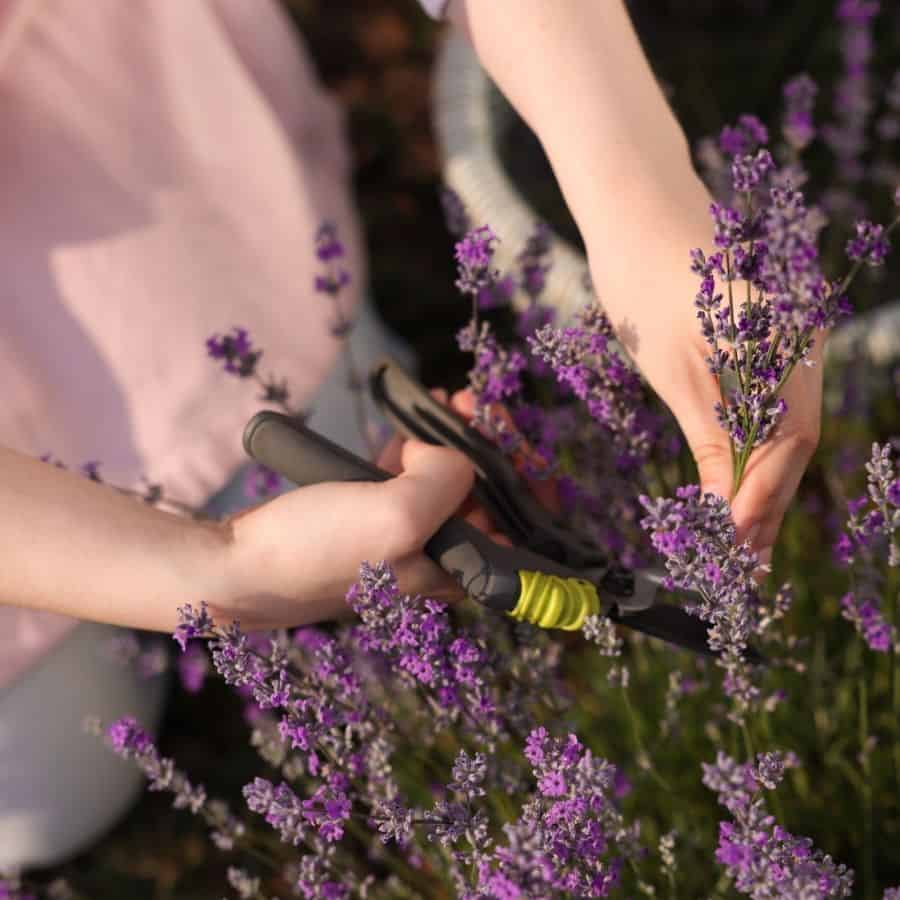
- Tool up: Sharp, clean pruning shears are non-negotiable. Dull blades are like using a butter knife for surgery – messy and traumatic for your plant.
- Find the “safe zone”: Examine your plant for the transition between green, soft growth and woody, brown stems. This boundary is your pruning safety line – cross it at your plant’s peril!
- Shape strategically: Always cut toward a rounded dome shape – lavender isn’t meant to be a cube or a ball. Think gentle cloud formation.
- Leave a lifeline: Never remove all green growth. Always leave at least 2 inches of soft, green foliage above the woody base.
- Clean up immediately: Remove all trimmings from around the base. These aren’t just messy. They can harbor pests and disease.
The game-changer for your lavender isn’t what you think. It’s not about how much you cut, but where you make those cuts.
Most lavender murders happen when people cut into woody stems, thinking they’ll regrow. They won’t! Once you cut into a piece of wood, that part of the plant is permanently damaged.
Rookie Mistakes That Are Killing Your Lavender
Your lavender is trying to tell you something important when it gets leggy and woody. It’s screaming, “Help me before it’s too late!”
Here are the top ways people accidentally sabotage their plants:
- The “One Big Annual Chop”: Treating lavender like other perennials with a single severe pruning. Lavender needs that two-phase approach.
- The “Better Late Than Never” Cut: Pruning in late fall or winter when the plant can’t heal properly.
- The “Deep Dive” Disaster: Cutting into woody stems hoping for rejuvenation. Unlike some plants, lavender rarely rebounds from this.
- The “First-Year Frenzy”: Going too aggressively on young plants that need to establish root systems first.
Rescue Mission: Can You Save Overgrown Lavender?
If your lavender resembles a small, woody tree with flowers only at the very tips, there’s still hope, but you’ll need patience.
Try this last-resort technique:
- Focus on one-third of the plant at a time
- Prune that section just above the woody base, leaving some green
- Wait until new growth appears before tackling another section
- Spread this renovation over a full growing season
Success rate? About 60%, which beats the guaranteed failure of doing nothing. Sometimes the kindest thing is a fresh start with a new plant, positioned where you can admire it (and remember to maintain it).
The 30-Second Maintenance Trick For Perpetual Blooms
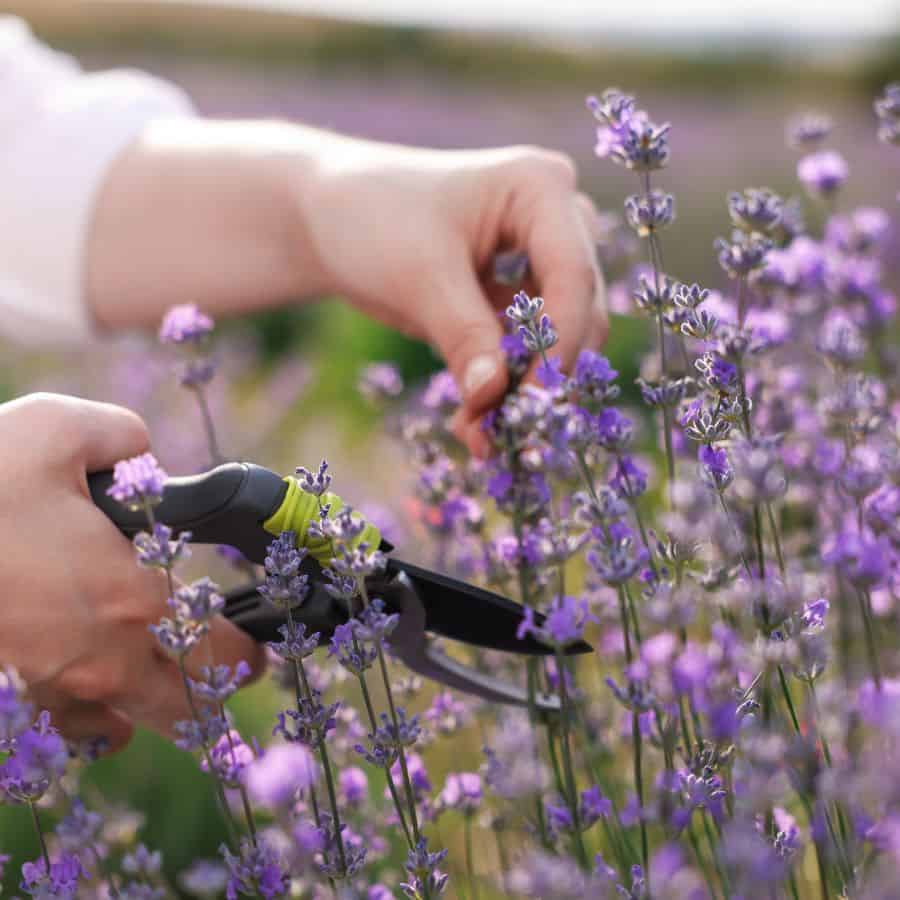
Want a lavender hack that takes seconds but delivers spectacular results? Try “spot pruning” throughout the season. Simply snip spent flower stems back to the first set of leaves as they fade. This mini-intervention tricks the plant into producing more blooms, extending your lavender show for weeks!
Your lavender can be the vibrant, aromatic showpiece of your garden for a decade or more with these simple pruning techniques. Remember: right timing, right location (never cut wood!), and right shape. Master these three elements, and you’ll have the most stunning lavender on the block – guaranteed.