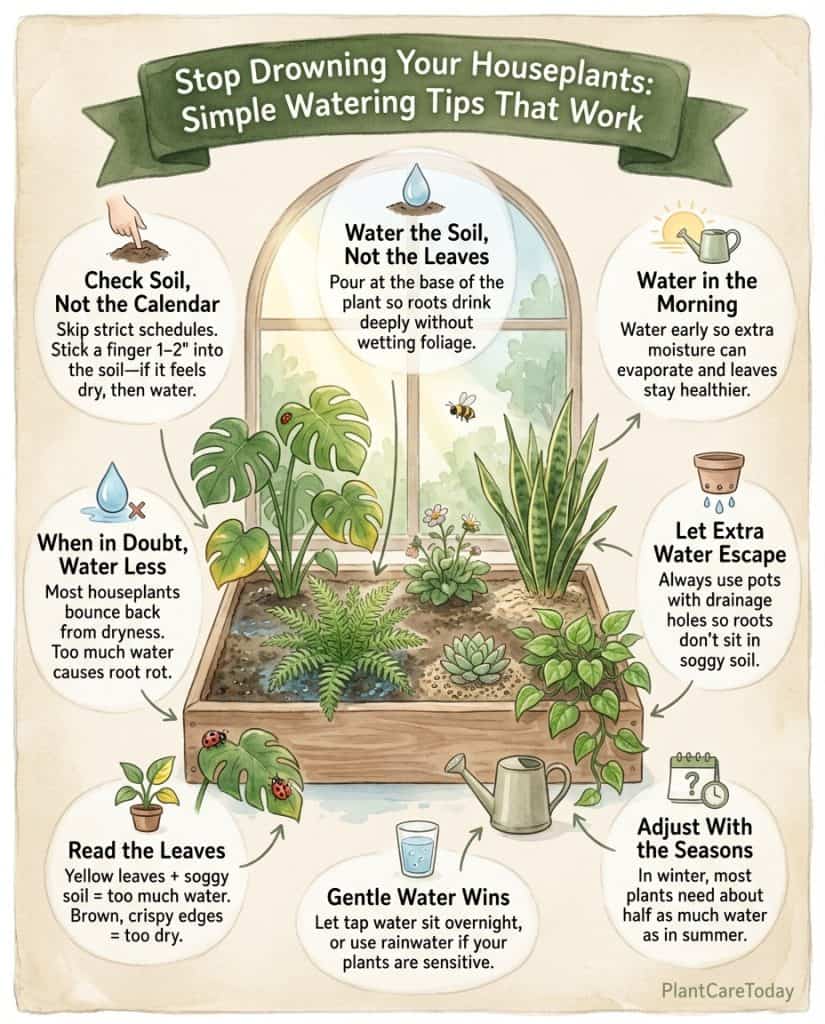
Forget what you’ve heard about watering plants on a strict schedule. Your plants aren’t robots. They’re living beings with different needs.
Here’s something that surprises most people: Overwatering kills more houseplants than underwatering.
Let’s figure out how to keep your plants healthy without all the guesswork.
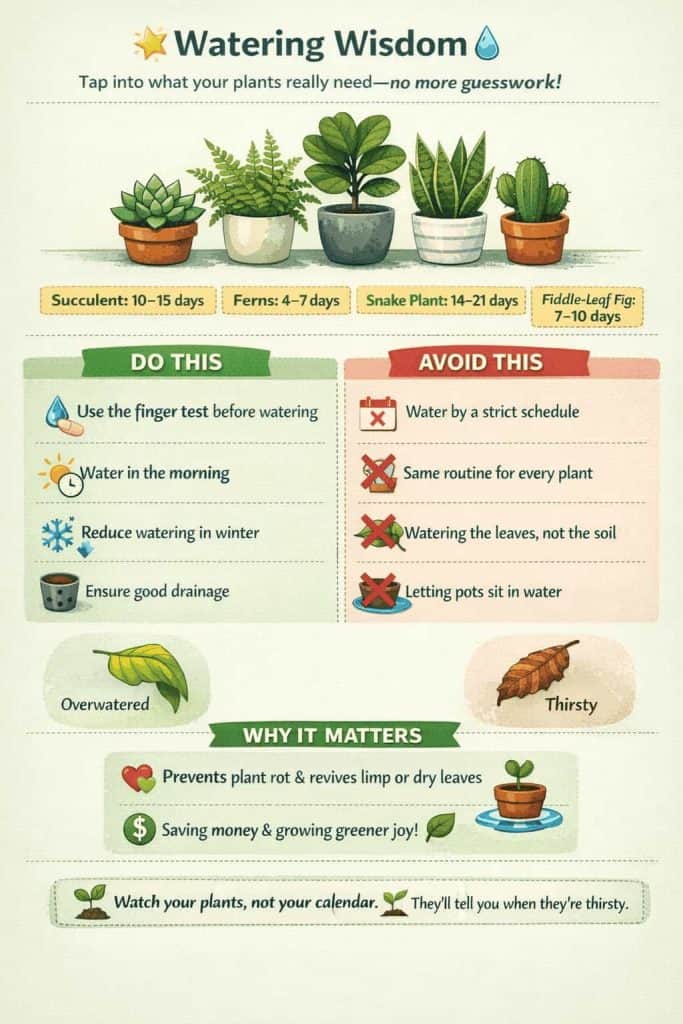
Your Plant Watering Guide: What Each Type Actually Needs
Each plant has different water needs. Some want attention every few days, while others prefer you leave them alone for weeks.
Here’s what to know:
- Fiddle-Leaf Fig: 7-10 days. Water only when the top inch of soil feels dry.
- Succulents & Cacti: 10-15 days, 3-4 weeks in winter. These store water and handle dryness much better than too much water.
- Orchids: 5-10 days. These prefer their roots just barely moist. Overwater them and they’ll suffer.
- Ferns: 4-7 days. These need consistent moisture. Think damp, not soaking wet.
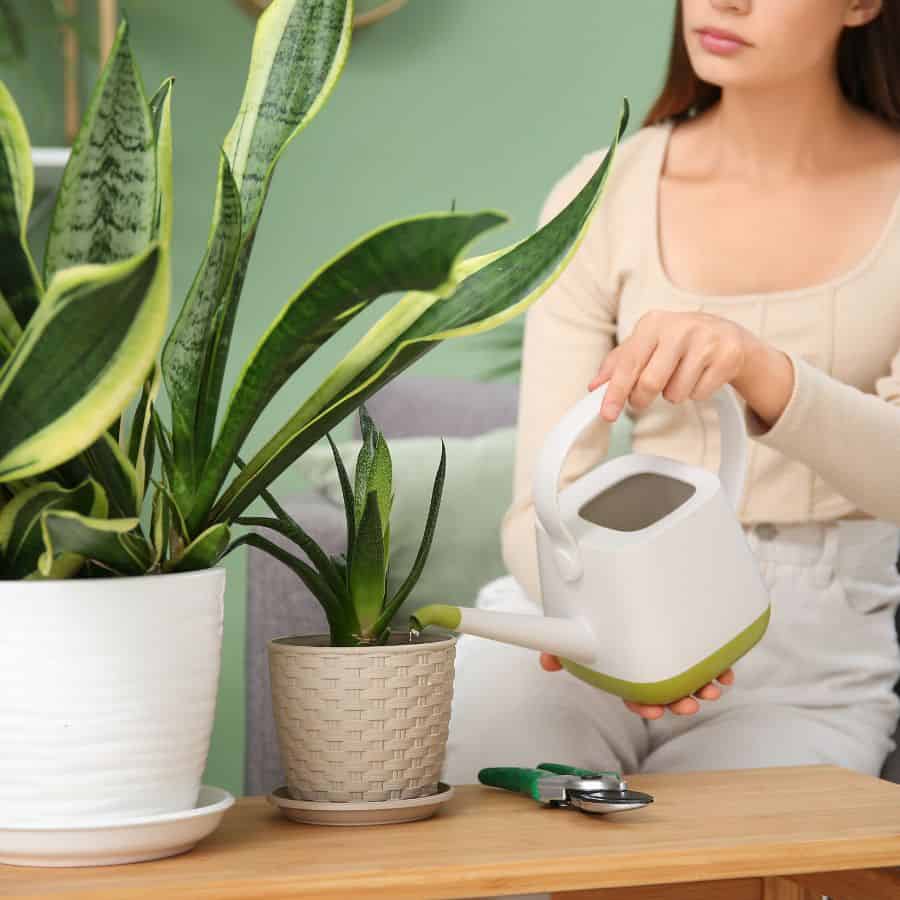
- Snake & ZZ Plants: 14-21 days. The real trick with these tough plants is holding back. Mine actually did better when I watered less often.
- Pothos & Philodendrons: 5-7 days, 7-10 days in winter. These easygoing vines are forgiving, but still need regular attention.
- Peace Lily: 4-7 days. This one droops dramatically when thirsty, then perks right back up after watering. Keep soil moist but not soggy.
- Monstera: 7-10 days. These popular plants can get root rot quickly if you’re not careful.
- Aloe Vera: every 2-3 weeks. This one stores water well. Treat it like that low-maintenance friend who’s fine checking in occasionally.
- Spider Plant: 7-10 days. These like to dry out slightly between waterings. Not too wet, not too dry.
Signs Your Plants Need More (Or Less) Water
Plants can’t tell you directly when something’s wrong, but they show pretty clear signs if you know what to look for.
Here’s something worth knowing: seasonal changes really affect watering needs. During winter, most plants slow down and need about half as much water as during the growing season.
- Yellow leaves + soggy soil = Too much water
- Brown, crispy leaf edges = Not enough water
- Mold on the soil surface = Way too much water
- Wilting despite wet soil = Root rot (you’ll need to repot)
- Slow growth + leaf drop = Watering schedule isn’t right
Better Watering Techniques
The difference between new and experienced plant owners usually comes down to technique. Here are some approaches that actually work:
- The Finger Test: Stick your finger 1-2 inches into the soil. No moisture? Time to water. Still damp? Check back later.
- Bottom Watering: Place pots in a shallow tray of water for 10-15 minutes. This lets plants drink from the bottom up.
- Water Quality: Many plants don’t like chlorinated tap water. Let water sit overnight before using, or collect rainwater.
- Drainage Matters: Every pot needs drainage holes. Without them, water has nowhere to go, and roots sit in moisture.
- Morning Watering: Water early in the day so excess moisture can evaporate. This reduces fungal problems.
Adjust for the Seasons
Here’s what matters most: don’t treat winter the same way you do summer. Plants slow down during winter’s lower light and cooler temperatures.
Your watering schedule should change with the seasons. During winter, most houseplants need watering about half as often as in summer. This one change can make a big difference in how your plants do.
When in doubt, remember this: most houseplants recover from underwatering much better than from root rot. If your plant looks slightly droopy but the soil is bone dry, it just needs a drink.
Your Action Plan
Ready to improve your plant care? Start here:
- Check each plant’s specific needs (use the guide above)
- Get a moisture meter if the finger test feels tricky
- Set calendar reminders to check plants, not necessarily water them
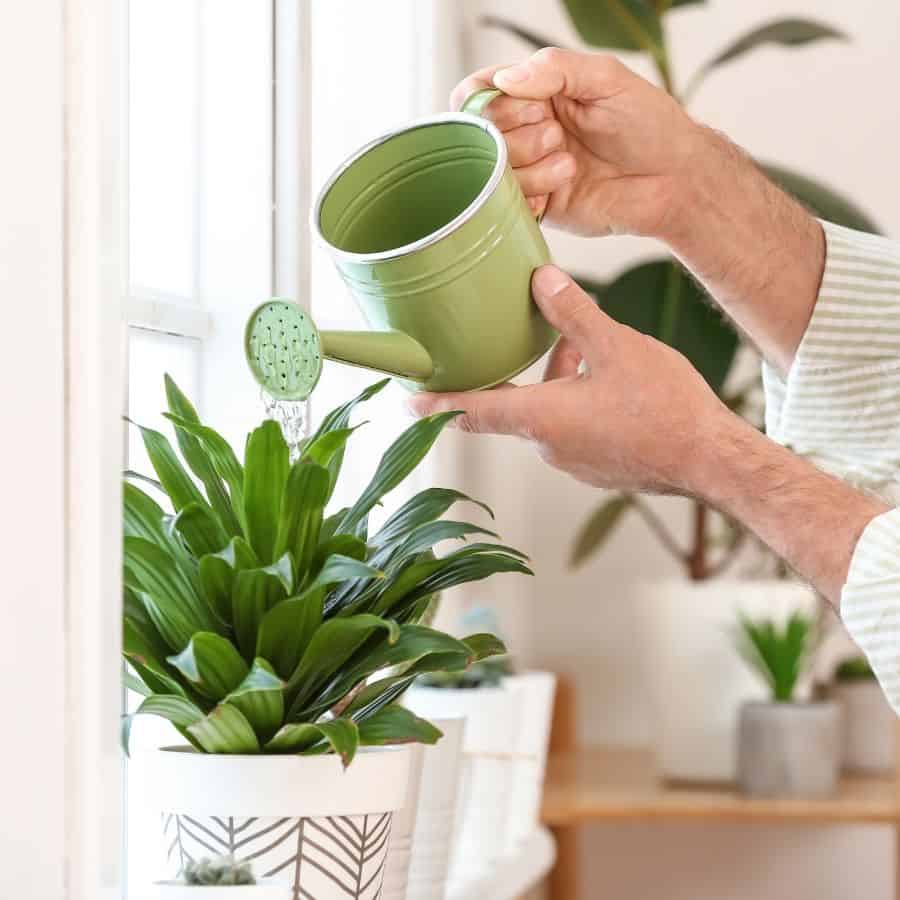
- Water the soil, not the leaves (unless you’re misting tropical plants)
- Remember: there’s no perfect universal schedule. Watch your plants and adjust
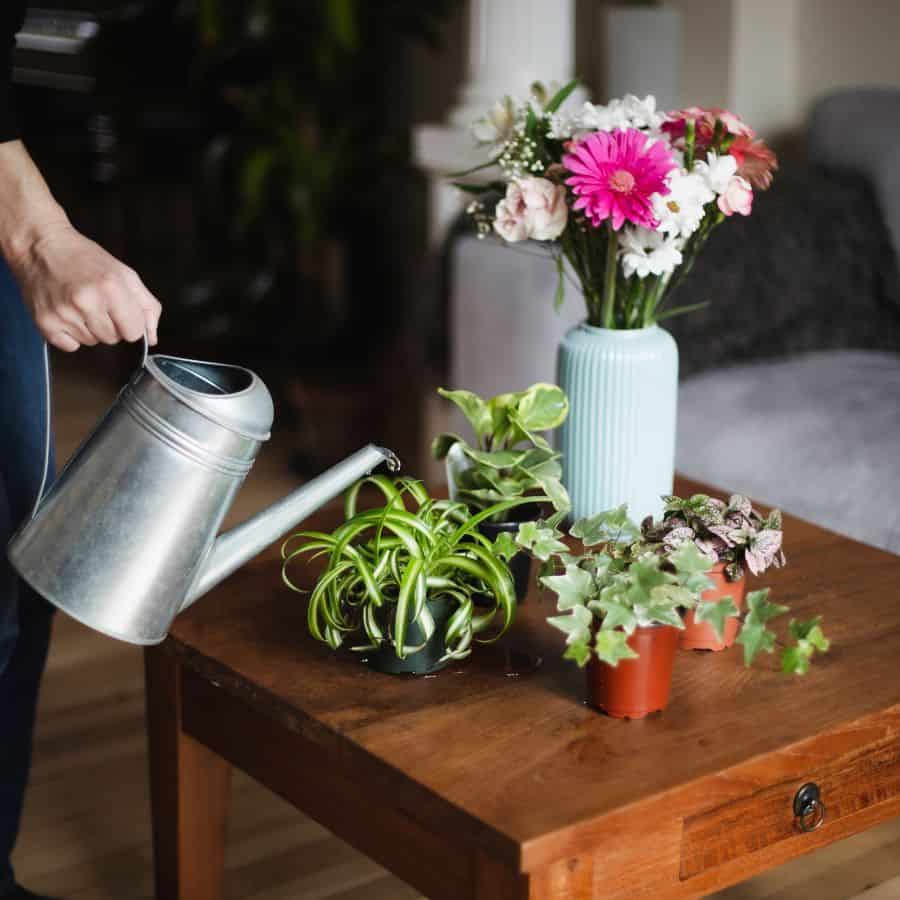
Your houseplants don’t need a perfect schedule. They need someone who pays attention to what they actually need. With these tips, you’ll get better at reading your plants and knowing what they’re asking for.