That plant you’re about to rip out of your garden? It might just be nature’s medicine.
I was shocked to discover that many of the “weeds” we wage war against are potent healing powerhouses with centuries of medicinal use.
Before you reach for the weed killer, let me introduce you to your backyard pharmacy!

The “Weed” Misconception That’s Costing Your Health
What exactly makes something a weed? Simply growing where someone doesn’t want it. That’s it!
This narrow definition has caused us to overlook botanical treasures that traditional healers have valued for generations.
Think of these plants as the misunderstood rebels of the plant world. They show up uninvited but bring gifts that could transform your health.
Like that friend who crashes your party but ends up being the life of it, these “weeds” deserve a second chance.
The game-changer for your health isn’t at the pharmacy. It’s growing between your paving stones and at the edges of your lawn.
According to a study from the Journal of Ethnopharmacology, over 70% of modern pharmaceuticals were originally derived from plant compounds. Mother Nature figured out medicine long before we did!
10 “Weeds” That Deserve VIP Treatment in Your Yard
1. Dandelion: The Detox Superstar
That yellow flower your lawnmower targets? It’s a nutritional powerhouse that supports liver function and aids digestion. Every part is usable, from the vitamin-rich leaves in your salad to the roots that make a coffee-like detox tea.

Forget what you’ve heard about dandelions being just a nuisance. They’re actually one of the most nutritionally dense greens you can eat!
2. Purslane: The Omega-3 Gold Mine
This succulent ground-crawler contains more omega-3 fatty acids than some fish oils! With its lemony crunch and impressive levels of vitamins A, C, and E, purslane transforms ordinary salads into nutritional dynamite.
In fact, NASA has even considered it for space cultivation because of its exceptional nutritional profile!
3. Stinging Nettle: Worth The Sting
Yes, it hurts when fresh (nature’s way of saying “respect me!”), But once cooked, nettle loses its sting and delivers iron levels that put spinach to shame.
It’s like the tough-love trainer of the plant world. A little intimidating at first, but ultimately transforms your health with its anti-inflammatory and allergy-fighting properties.
4. Plantain (Not The Banana!)
This oval-leafed plant is a first-aid in your backyard. Crush a leaf and apply it to insect bites, cuts, or rashes for immediate relief.
Your skin is trying to tell you something important when it calms down after you apply plantain. This plant contains compounds that reduce inflammation and draw out toxins.
5. Chickweed: Skin’s Best Friend
This delicate, star-flowered plant soothes irritated skin conditions like eczema and psoriasis.
Its gentle nature makes it perfect for sensitive skin issues, while also providing a mild, nutritious green for salads. Think of it as nature’s dermatologist, working from both inside and out.
6. Red Clover: Hormonal Harmony
Those pretty pink-purple flowers aren’t just for bees! Red clover contains phytoestrogens that may help balance hormones and ease menopausal symptoms.

It’s like having an endocrinologist growing wild in your meadow, offering support during hormonal transitions without a copay.
7. Yarrow: The Ancient Healer
Used on battlefields to stop bleeding for centuries, yarrow deserves respect! This feathery-leaved plant reduces fever, aids digestion, and accelerates wound healing.
The secret most plant experts won’t tell you is that yarrow is as effective for some ailments as conventional first-aid supplies. Achilles himself used it in the Trojan War!
8. Lamb’s Quarters: Wild Spinach
Often mistaken for just another weed, this plant contains more calcium, protein, and vitamins B1 and B2 than cabbage or spinach.
It’s literally gourmet food that volunteers to grow in your garden without asking for special treatment or pest control.
9. Daffodils: Memory Protectors
These aren’t just pretty faces! Compounds in daffodil bulbs are being studied for treating Alzheimer’s disease.
While you shouldn’t eat them (they’re toxic in large amounts), their presence in your garden could contribute to future medical breakthroughs.
10. Violets: The Gentle Healer
These dainty purple flowers pack anti-inflammatory power. Both flowers and leaves can be used in teas and salves to treat respiratory issues and skin conditions.
They’re like the quiet healers of the plant world; unassuming but remarkably effective.
How to Become a Backyard Medicine Hunter
Before you start harvesting nature’s pharmacy, follow these essential guidelines:
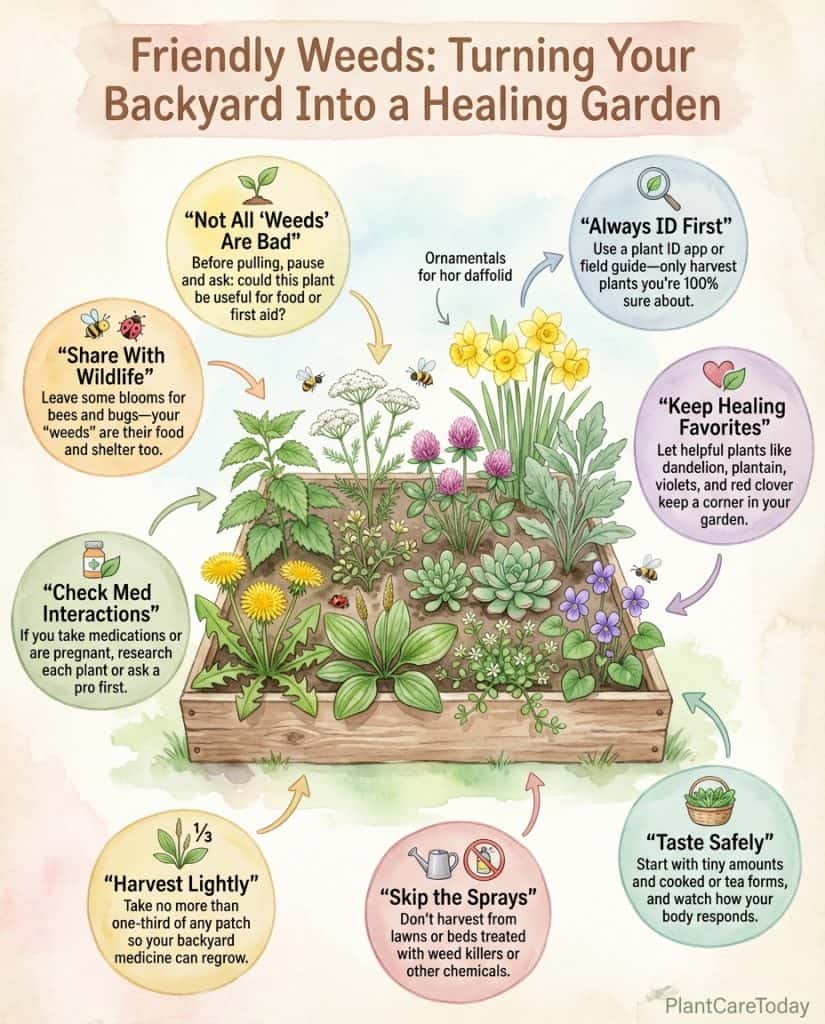
- Identify with certainty: Use multiple field guides or plant ID apps (like iNaturalist or PlantNet) to confirm
- Harvest ethically: Never take more than 1/3 of a plant population
- Avoid contaminated areas: Stay away from roadways, areas sprayed with pesticides, or where pets frequent
- Start slowly: Begin with external applications before ingesting any new plant
- Research contraindications: Some plants interact with medications or medical conditions
Remember, even Hippocrates said, “Let food be thy medicine.” He just didn’t specify that some of that food might be growing between your paving stones!
From Weed War to Wellness Revolution
The difference between amateur and pro plant parents is simply recognizing the treasure hiding in plain sight. Instead of battling these resilient plants, we can partner with them to improve our health and build a more sustainable relationship with nature.

When you stop seeing “weeds” and start seeing allies, your entire yard transforms from a battlefield into a sanctuary of healing potential. These plants survived without human care for thousands of years – imagine what they can do with a little appreciation!
Next time you’re about to pull that uninvited plant from your garden, pause and ask: “Could this be medicine?” Your body, and our planet, will thank you for it.