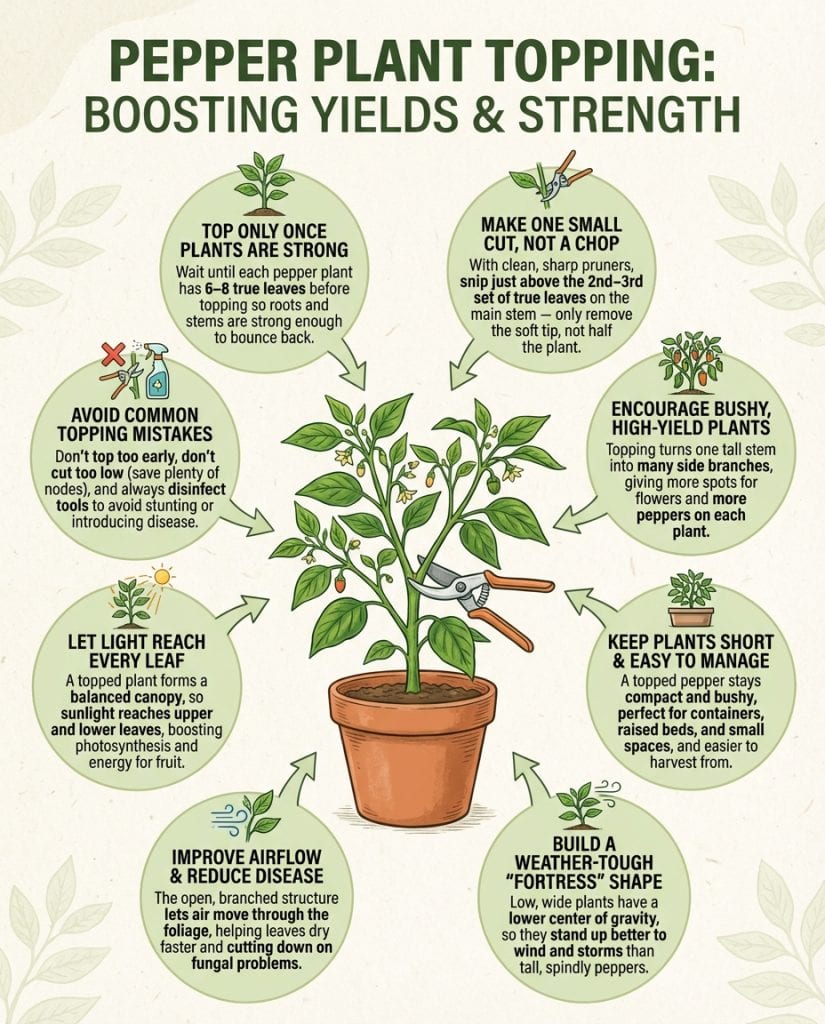
Here’s something that might shock you: cutting off the top of your pepper plants can actually make them produce twice as many peppers.
I know it sounds completely backwards, but this technique, called “topping,” is one of the best-kept secrets among professional growers.
Most gardeners baby their pepper plants, afraid to make a single cut. But the truth is, your pepper plant is desperately waiting for you to give it this crucial haircut. Let me show you exactly why this works and how to do it right.

The Science Behind This Surprising Technique
When you top a pepper plant, you’re tricking it into thinking it’s been damaged. The plant’s survival instinct kicks in, and it responds by producing multiple side branches from each node below the cut.
It’s like breaking a river into multiple streams. Suddenly, you have water flowing everywhere instead of just one direction. This branching creates a dramatic transformation.
Instead of one tall, spindly stem struggling to support a few peppers, you get a bushy powerhouse with multiple stems, each capable of producing flowers and fruit.
The photosynthetic surface area increases dramatically, giving your plant more energy to allocate to pepper production.
1. Explosive Yield Increases Through Strategic Branching
Here’s where the magic happens: each new emerging branch becomes a pepper-producing machine. While an untopped plant might yield 10-15 peppers, a properly topped plant can produce 25-40 peppers or more.
I’ve seen gardeners nearly fall over when they count their first harvest from a topped plant. The difference is spectacular. Those lateral shoots don’t just grow. They bloom profusely once they establish themselves.

2. Perfect Height Control for Any Space
Forget struggling with pepper plants that tower over everything else in your garden. Topping gives you complete control over your plant’s height, making it perfect for containers, raised beds, or indoor growing.
This is especially crucial if you’re growing in a limited space. A compact, bushy plant fits anywhere and won’t shade out your other crops. Plus, you can reach your peppers without a ladder or risking plant damage.
3. Weather-Resistant Plant Architecture
Tall pepper plants are like skyscrapers in a hurricane. They’re just waiting to topple over. But a topped plant develops what I call “fortress architecture” – low, wide, and incredibly stable.
The lower center of gravity means your plant can weather storms that would snap untrained plants in half. I’ve watched topped plants survive winds that devastated their tall neighbors.
4. Disease Prevention Through Better Airflow
Fungal diseases love stagnant air and crowded foliage. When you top your pepper plants, you create an open canopy structure that allows air to circulate freely around every leaf and stem.
This airflow is like having a natural ventilation system for your plant. Moisture doesn’t linger, and disease-causing organisms can’t establish themselves as easily. Your plant stays healthier throughout the entire growing season.

5. Maximum Light Penetration for Vigorous Growth
On tall, untrained pepper plants, the lower leaves often remain in shade, becoming weak and unproductive. Topping creates a balanced canopy where every leaf gets its fair share of sunlight.
Think of it like opening the blinds in a dark room. Suddenly, every part of your plant is energized and contributing to pepper production. More light equals more photosynthesis, which equals more peppers.
6. Earlier Fruiting and Extended Harvest
Here’s something that surprises even experienced gardeners: topping can trigger earlier flowering in many pepper varieties. When you redirect the plant’s energy from vertical growth to lateral development, it often shifts into reproductive mode faster.
This means you’re picking peppers sooner and for a longer period throughout the season. It’s like getting a head start on your harvest while extending the finish line.
The Step-by-Step Topping Process
Timing is everything with this technique. Wait until your plant has 6-8 true leaves; this ensures the root system is strong enough to support the upcoming growth.
Use clean, sharp scissors or pruning shears (disinfect them first!). Find the main stem and cut just above the second or third set of true leaves. Make your cut just above a leaf node – this is where your new branches will emerge.
Here’s the crucial point: you’re removing only the top growth tip, not half the plant. Less is more with this technique. After cutting, watch for new shoots to emerge from the nodes below. Within 1-2 weeks, you should see your plant transforming into a bushy specimen.
Critical Mistakes That Kill Results
The biggest mistake I see is gardeners getting trigger-happy and topping too early. A young plant without enough leaves will struggle to recover and may become permanently stunted.

Another disaster is cutting too low on the stem. You want to preserve as many nodes as possible for branch development. And please, use clean tools. Dirty cutting implements can introduce diseases that will devastate your plant just when it’s most vulnerable.
Your Pepper Revolution Starts Now
This single technique can completely transform your pepper-growing success. The secret most gardeners never discover is that pepper plants want to be pruned. They’re genetically programmed to respond with vigorous growth.
Start with one or two plants this season to see the dramatic difference. Once you witness the incredible results, you’ll never grow untrained pepper plants again. Your harvest will thank you, and your neighbors will be asking for your secret.