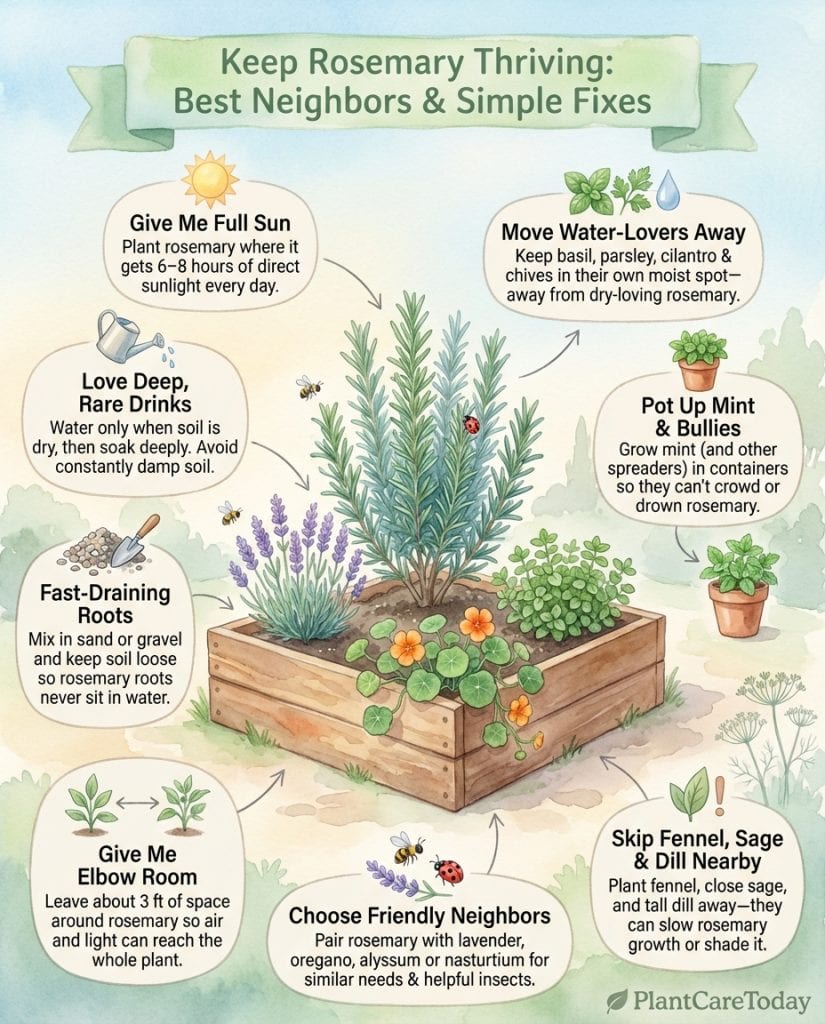
Your lush, fragrant rosemary could be secretly suffering right under your nose! That disappointing, withering rosemary might not be your fault after all. It could be the herb equivalent of toxic roommates.
I was shocked to discover that planting the wrong herbs nearby can transform your thriving rosemary into a struggling, sad-looking plant faster than you can say “herb garden disaster.

Rosemary’s Diva Demands: What Your Mediterranean Queen Needs
Rosemary isn’t just any herb. It’s the Mediterranean queen with specific requirements. This aromatic powerhouse thrives in conditions that mimic its native coastal habitat: blazing sun, well-drained soil, and, here’s the kicker, it absolutely hates wet feet.
Think of rosemary as that friend who loves hot yoga and despises rainy days. It demands:
- At least 6-8 hours of direct, unfiltered sunlight
- Soil with excellent drainage (pH between 6.0-7.0)
- Space to stretch. It can grow up to 4 feet tall and wide!
- Infrequent but deep watering (drought-tolerant once established)
The secret most plant experts won’t tell you is that rosemary needs breathing room. Crowded rosemary is like a person stuck in a packed elevator, stressed and more susceptible to disease.
The Hostile Takeover: Why Mint Is Rosemary’s #1 Enemy
If rosemary had a nemesis, it would be mint. This seemingly innocent herb is actually a garden thug in disguise! Mint’s aggressive underground runners will launch a hostile takeover of your garden faster than you can blink.
Mint requires moist soil. The exact opposite of what rosemary needs. When these two share space, it’s like forcing a desert cactus and a tropical fern to share the same pot. Disaster is inevitable.

Even worse? A University of California study found that mint can spread up to 4 feet in a single growing season. That’s enough to completely engulf your precious rosemary!
The Moisture Menaces: Basil, Parsley, Cilantro & Chives
These four herbs might seem innocent, but they’re secretly conspiring against your rosemary with their water-loving ways.
While rosemary thrives on neglect, these moisture-demanding divas need frequent watering that will leave your rosemary drowning in despair.
- Basil: Needs rich, consistently moist soil. Watering basil adequately means slowly drowning your rosemary.
- Parsley: Craves cool, damp conditions that create a fungal paradise for rosemary’s roots.
- Cilantro: Bolts in heat but demands moisture, creating a lose-lose situation for nearby rosemary.
- Chives: Form dense, water-hogging clumps that compete with rosemary’s root system.
Forget what you’ve heard about planting these herbs together for convenience. Your rosemary is trying to tell you something important: “Keep those water-lovers away from me!”
The Chemical Warfare Specialists: Sage & Fennel
Some herbs don’t just physically compete. They fight dirty with chemical warfare! Both sage and fennel engage in allelopathy, a form of biological warfare in which they release growth-inhibiting compounds into the soil.
Fennel is particularly notorious. Its deep taproot system doesn’t just compete for water and nutrients; it also helps it withstand drought.
It actively sabotages neighboring plants. A 2018 study from Cornell University found that fennel can reduce the growth of neighboring herbs by up to 40%!
Sage, despite sharing similar Mediterranean origins with rosemary, still secretes compounds that can inhibit rosemary growth when planted too closely together. It’s like having two divas sharing one spotlight; neither will perform at their best.

The Space Invaders: Thyme & Dill
While thyme shares rosemary’s love of dry conditions, its creeping growth habit creates a suffocating ground cover that can strangle rosemary’s base.
Think of thyme as that clingy friend who doesn’t understand personal space; fine in small doses, but overwhelming when too close.
Dill presents a different spatial challenge. Its feathery foliage can grow up to 3 feet tall, creating shade where your sun-loving rosemary desperately needs light.
Additionally, dill’s delicate canopy reduces air circulation, making your rosemary a breeding ground for powdery mildew and other fungal diseases.
Most people make this mistake with their rosemary: they underestimate the amount of space mature herbs actually require. Your plants aren’t just competing for soil. They’re fighting for light and air, too!
The Rosemary-Friendly Garden: Perfect Companions Instead
The game-changer for your rosemary isn’t what you think. It’s not about fancy fertilizers but about choosing the right neighbors. Rosemary actually thrives alongside these Mediterranean companions:
- Lavender: Shares identical growing conditions and repels many of the same pests
- Oregano: Another drought-tolerant Mediterranean herb that won’t compete for water
- Alyssum: Attracts beneficial pollinators while staying low to the ground
- Nasturtiums: Act as sacrificial plants, drawing aphids away from your precious rosemary
The primary difference between amateur and professional plant parents is understanding plant compatibility. Your garden isn’t a random collection. It’s a community where relationships matter!

Rescue Your Rosemary: The Action Plan
Is your rosemary already suffering from bad company?
Here’s your rescue plan:
- Immediately relocate any of the 10 offending herbs to at least 3 feet away
- For mint and other aggressive spreaders, consider replanting in containers
- Prune any damaged or diseased portions of your rosemary
- Check soil moisture. If it feels wet, hold off on watering until completely dry
- Apply a light layer of pebbles or gravel around your rosemary to improve drainage
With proper companions and care, your rosemary can transform from struggling to spectacular in just one growing season.
Your herb garden isn’t just about growing plants. It’s about creating a harmonious ecosystem where every plant can flourish!